“How much will the new tariffs cost globally? How much will it add to the price of a car? How much more will it cost Canadians? For that matter, what will it cost Americans? Or the British, or the Germans? 300% tariffs one week, 40% the next week for no apparent reason, how much after that? Big news – used cars could be selling for as much as new cars! And what about the fuel to power them?”
“And – oh yeah – what about people who are poor? Anywhere? Everywhere?”
The price of everything. The cost of everything. The Cost of Discipleship.
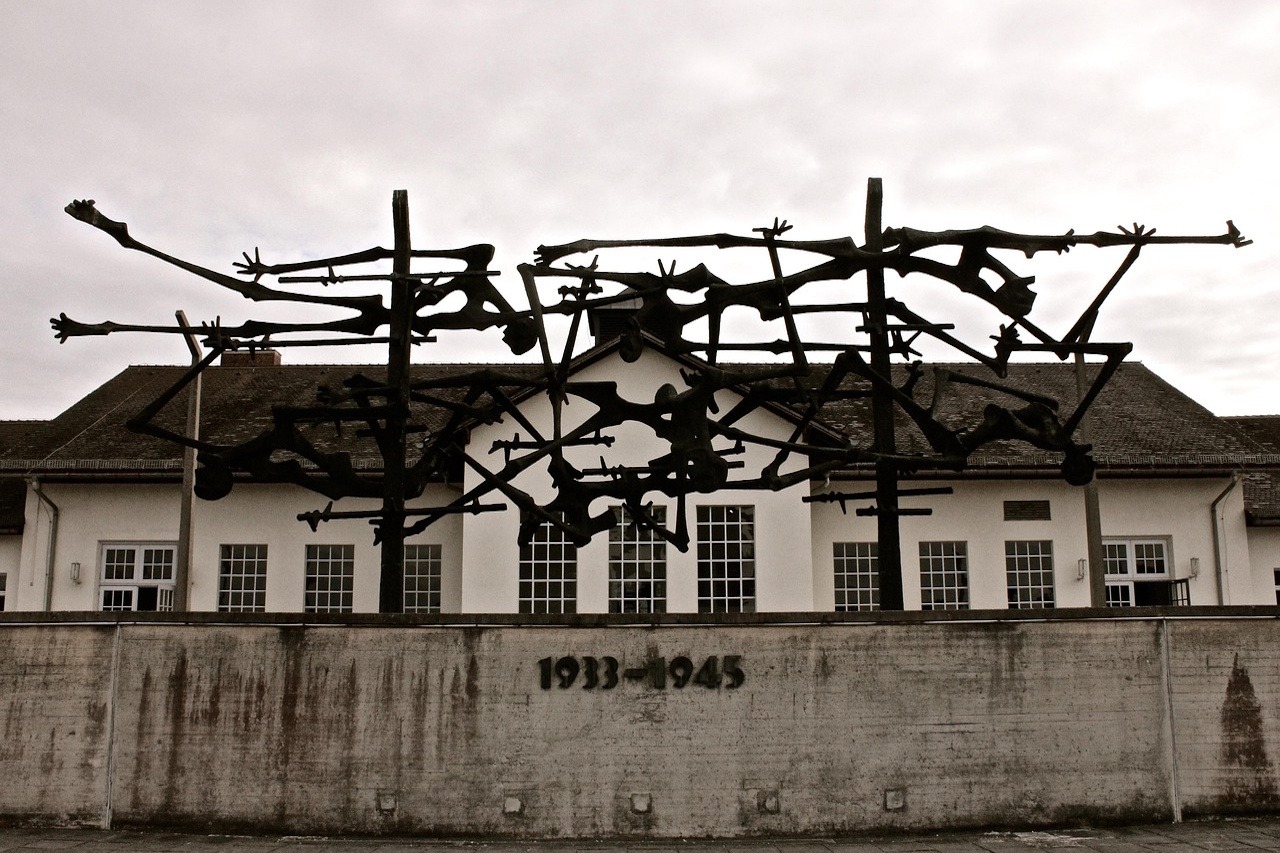
That was the title of a thought-provoking book by Dietrich Bonhoeffer, a German Lutheran theologian and pastor, who was to pay the ultimate price for standing up to an evil governmental regime. Bonhoeffer was a prodigy, completing his doctorate in theology at a young age and teaching at Union Theological Seminary in New York, when he made a fateful decision to return to his native Germany, just as the National Socialist party came to power.
The enforced ideology of the Nazi party provoked a crisis in the Lutheran church. One significant faction called themselves “German Christians” and sought to negotiate an accommodation with Hitler’s policies. Bonhoeffer however aligned with the resistance movement, the “Confessing Church.” He helped establish and taught at an alternative seminary until it was closed down. Eventually he was arrested and imprisoned because of his contacts with the movement to assassinate Hitler, and was executed in prison shortly before the end of the war.
The “cost of discipleship” is not a mere rhetorical flourish on the part of a preacher in front of a safe congregation. It’s not always about a cost that’s a bit higher than one would normally pay, and thus requires some careful consideration. This “cost” is more like leaping into a whirlwind with no idea where you’ll land.
If there’s a theme tying together the readings for two rather different Sundays, it’s precisely about the cost of making a commitment to live according to the model, the example and the values of Jesus, even knowing how much trouble (to put it mildly) Jesus would get into. It could be as simple as crossing Samaritan territory, destination Jerusalem, given how much the people of Samaria hated the people of Israel.
Our Lukan Gospel illustrates with several anecdotes how Jesus tried to make clear to would-be adherents that they would have to leave a good deal, if not everything, behind. In a social context in which kinship ties mattered greatly, the cost was not only personal loss on the part of the follower. It meant refusing to take responsibility for one’s primary obligations. Aging parents depended on adult males in the family for support, which is why in Scripture a widow without a son was assumed to be financially destitute. Nothing is said about whether these men who approached Jesus had parents or children, or what their families’ fate would be. And in these anecdotes nothing is said about what the men finally decided.
The cost of discipleship was no less for Peter and Paul, and many other first-generation Christians who spoke openly about their faith in the risen Christ.

There’s an element of hyperbole here that shouldn’t obscure what the text may be telling us in our own lives, in today’s radically different historical and social contexts. Our call may not lead us to prison or to execution. It might lie instead in the nature of our everyday decisions — the way we speak, and act, and treat others. It might mean speaking up in contradiction to an unjust remark, knowing that what we say won’t be well received. It might mean becoming involved in practical action – a cooperative relief project, a street demonstration, posting on social media, an involvement in government. It could mean recognizing, and crossing, the line between charity and social justice.
To live honestly and consistently in the spirit of Christ is not a passing option among other options. Like prophetic obedience, it may involve significant risk. It definitely involves a readiness to follow one’s conscience with courage.
Christian commitment doesn’t work very well on a half-hearted basis. And yet, a wholehearted commitment carries a reward of its own – a whole heart.
© Susan K. Roll
*Edited and expanded from the Reflection of June 26, 2022.
Susan Roll retired from the Faculty of Theology at Saint Paul University, Ottawa, in 2018, where she served as Director of the Sophia Research Centre. Her research and publications are centred in the fields of liturgy, sacraments, and feminist theology. She holds a Ph.D. from the Catholic University of Leuven (Louvain), Belgium, and has been involved with international academic societies in liturgy and theology, as well as university chaplaincy, Indigenous ministry and church reform projects.