
I enjoy collecting lector bloopers.
Not out of Schadenfreude, you understand, just because they can be very funny.
But this one wasn’t exactly a blooper – more like a slip and fall.
The first reading was from Isaiah chapter 66, the verse was 11. The reader had been proclaiming the reading smoothly and unremarkably enough, until she reached the word “breast.” Then she sort-of sprawled all over the embarrassing word and it came out something like “breaugh.”
(Just as well that the original Hebrew word, translated as “nipple,” wasn’t used!)
Perhaps it was contextual – this took place in rural Vermont some 25 years ago. Still, if there are “seven words you can’t say on television,” there may be words that you can’t say in church. Maybe it’s not that they’re dirty, just highly intimate.
Female-identified imagery for God is not a contemporary invention. If we probe, we can find traces of profoundly beautiful images and analogies that work inclusively to encompass a very full range of human experience. In this Sunday’s first reading and Gospel, we have two different but complementary illustrations of potentially female-friendly religious concepts.
Read on a surface level, the parental tenderness and compassion of God in Isaiah 66 is simply breathtaking. The rich nourishment of abundant breast milk, poured out like gushing rivers of water, symbolizes life itself in a parched desert climate. A suffering and repentant people, dragging home from exile and in desperate need of comfort and consolation, are fed to their fullness by the very body of the holy city, then comforted and nourished in turn by their God.
But nestled in the middle is the sentence,
“I will extend prosperity over her like a river, and the wealth of the nations like an overflowing torrent.”
Think about that. Who are “the nations?” All of humanity who are not of the Hebrew people, presumably. And where does their “wealth” come from? It wasn’t voluntarily surrendered. This has to refer to plunder (see Isaiah 9:3) taken in conquest: booty, stolen goods, treasures and household possessions, maybe even enslaved persons.
The part of this passage that needed to be clearly articulated wasn’t so much the word “breast,” it was the ambiguity (to say the least) of the source of this wonderfully generous comfort. It was stolen as the spoils of war.
In the Gospel, Jesus is shown expanding the scope of his mission beyond the group of twelve key disciples (“twelve” being the number that could call to mind the twelve tribes of Israel, meaning this was an internal Jewish movement.) Now the number of missioners is up to 70 or 72, depending on which source you read. “Seventy” was the number of distinct countries in the known world at that time, so the mission now encompassed the entire world. And those called to go forth in pairs may well have included the women who travelled with the entourage anyway.
This text shows us an affirmation of the inclusivity of the disciples sent out on mission, in spite of its often unwelcoming, grueling, even dangerous circumstances. The messengers might be persecuted for their message, even killed. Yet already in Luke 8:1-3 the twelve original disciples, and the women who were both patrons and disciples of Jesus, were named together. In Luke 24:33 women and men as a group heard the news of the resurrected Christ. Of course, in John 20 Mary Magdalene was commissioned as the “apostle to the apostles” that set in motion the mission to tell of Christ crucified and risen. There may be a whole history of women’s courage that has slipped into the shadows of history.
Is there a thread tying the first reading and the Gospel together? Maybe it has to do with a safe place. A place of refuge, of comfort, of nourishment. In Isaiah this was Jerusalem. For those who walked with Jesus, “going up to Jerusalem” meant foreboding — walking straight into mortal danger. The source of comfort lies deeper – the shalom of wholeness, the “peace that passes all understanding.”
The seventy-two of them travelled in pairs. When you’re on a crucial mission, it always helps to walk with a trusted companion.
© Susan K. Roll
*Greatly revised from the Reflection of July 3, 2022.
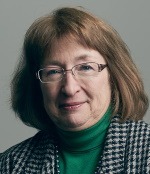
Susan Roll retired from the Faculty of Theology at Saint Paul University, Ottawa, in 2018, where she served as Director of the Sophia Research Centre. Her research and publications are centred in the fields of liturgy, sacraments, and feminist theology. She holds a Ph.D. from the Catholic University of Leuven (Louvain), Belgium, and has been involved with international academic societies in liturgy and theology, as well as university chaplaincy, Indigenous ministry and church reform projects.