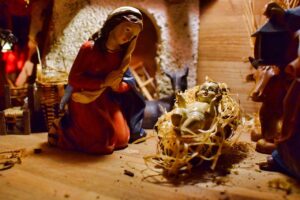

The child gasped in horror.
“Also such a beast!”
One of my theology professors told this true story to illustrate what could happen when a religious educator of young children, perhaps a catechist or a Sunday School teacher, naïvely assures the children that God is a Father, not knowing what a child’s experience of their own father might be like. (The quote sounds a bit awkward because the prof was translating from Flemish.)
Calling God Father (or even Mother) could prove upsetting or even damaging if a person had not grown up with healthy, supportive parenting. Think of Indigenous children in residential schools deprived not only of parenting but of their culture and language. Children with alcoholic, abusive, troubled or absent parents. Children without parent substitutes to help fill the gap. Street children. Runaways. Children with no one to love them.
One wonders whether this helps explain why Jesus gave several examples of healthy, responsive parenting. It was as if he had to clarify that a loving parent (or friend) would listen attentively and respond to the request, especially if the petitioner were persistent.
Many readers of this Reflection are already aware that Jesus spoke an ancient language called Aramaic, closely related to ancient Syriac. What he would have said here is not Abba, not Father. It was Abwoon, a word referring to a nurturing parental figure that is not gender-specific. What Jesus would have said is more like “Loving Parent.” Some years ago I confirmed this with a friend, an academic specialist in ancient Syriac. I asked him whether Abwoon was sex-specific. He shifted from one foot to the other, hemmed and hawed a bit, and finally conceded that yes, Abwoon does not mean specifically a male parent.
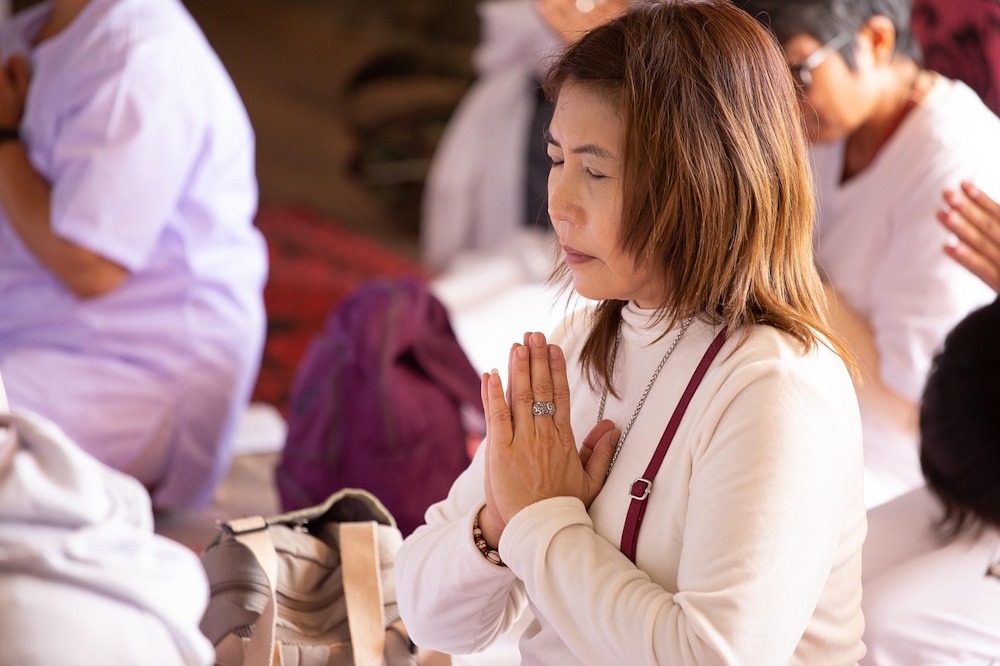
Luke’s version of Jesus’ prayer-model leaves out several elements in Matthew’s, such as “Your will be done.” Luke’s simpler model starts with two prayers that honour the Holy One, and follows with three that address human need. The use of the plural shows that these three were composed with community prayer in mind, not individuals praying on their own. Luke speaks of “daily” bread as if to help us remind ourselves how dependent we are on the beneficence of the creation around us, and that we can never afford to take food, clean water, good weather, or any other necessity of life for granted.
Forgiving sins or debts (different words in Greek but not in Aramaic) reminds us of the necessity to make justice, to build justice, to right wrongs, to forgive debts, not just once but as a perpetual repair of the earth and the relationships of its inhabitants. And finally, the community prays for strength to persist in hard times, to be saved “in” (not “from”) the time of trial.
This prayer-model starts with praise and thanks, then gradually opens out into a recognition of the organic interdependence of all living things on this planet, the only planet we know (…so far…) The living biosphere provides what we most need, and requires in turn our willingness not to poison it, damage it or allow a few people to hog the riches meant to be shared by all. All is gift. All material necessities, all time, all living relationships – all is gift.
And this in turn expands the prayer beyond a superficially simplistic list of requests addressed to an omnipotent God. More than merely a prayer of supplication, the prayer shifts shape into a holy breath.
Regarding prayer as a form of intercession to God to meet our needs and requests, my favourite expression comes from a world-famous, highly regarded and now quite elderly British philosopher:
You can’t always get what you want.
You can’t always get what you want.
You can’t always get what you want.
But if you try sometimes, you just might find
You get what you need.
© Susan K. Roll
*Edited from the Reflection of July 24, 2022.
Susan Roll retired from the Faculty of Theology at Saint Paul University, Ottawa, in 2018, where she served as Director of the Sophia Research Centre. Her research and publications are centred in the fields of liturgy, sacraments, and feminist theology. She holds a Ph.D. from the Catholic University of Leuven (Louvain), Belgium, and has been involved with international academic societies in liturgy and theology, as well as university chaplaincy, Indigenous ministry and church reform projects.