
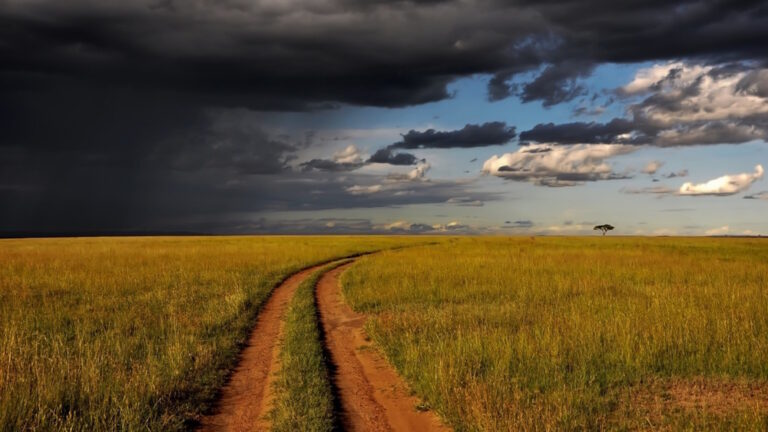
“When you see a cloud rising in the west, you immediately say, ‘It is going to rain’ and so it happens. And when you see the south wind blowing, you say, ‘There will be scorching heat,’ and it happens.
You hypocrites! You know how to interpret the appearance of earth and sky, but why do you not know how to interpret the present time?”
–Jesus of Nazareth
“Ya don’t need a weatherman to know which way the wind blows.”
–Bob Dylan
The text we’re going to play with today comes right at the end of the Gospel reading in the Revised Common Lectionary used by the Anglican church and most mainline Protestant denominations, verses 54-56. The Gospel in the Roman Missal for this Sunday stops at the line just before. We won’t speculate on the reason. Even Lectionary experts can’t always fathom what takes place in the minds of those who set up the Sunday readings.
What’s ironic about the fact that this text doesn’t crop up in the RC Lectionary is the fact that the “signs of the times” became a significant theological category at Vatican II. Think about how amazing it is (or was, in 1965) to learn that the church is not static in nature, but dynamic, just as the entire cosmos created by God is by nature dynamic. A dynamic church engaging with a rapidly evolving and often confusing world — how exciting! At the same time, not everyone was excited. Many were dead scared. Some still are.
But all Christians need to read the signs of the times in context, then and now. It’s fair to imagine that the early followers of Jesus of Nazareth would be confronting anger, misunderstanding, and deep disappointment if they abandoned their family responsibilities to follow this upstart wandering preacher. Kinship duty was the foundation of their entire social system. If the family divisions were already happening during the lifetime of the historical Jesus, they were certainly growing sharper and more contentious as the young Christian movement spread out.
“A hard rain’s a’gonna fall.”
“Hypocrite!” comes off as a harsh judgement, but what it means is that there are two different things going on, and a swath of denial in between. We can know a reality at some level, but we mentally jig it, reinterpret it, or just plain block it out. The Flemish have a cute expression, “door de vingers kijken,” to look through the fingers. Hold up your hand in front of your face, spread your fingers until what you see is partly blocked. Then you say,
“Oh my! I was looking. Right. At. It. And I never saw anything.”
Of course it feels threatening to be forced to confront what we don’t want to see. It can undermine our often tenuous positive self-image. And yet, how much worse when we don’t see what we, and our families, our communities, and our world, need us to see? And part of what we need to see honestly, here and now, has to do with the weather. In our time it’s not just a metaphor, it’s real. Our earth is paying dearly for decades of ecological damage, in droughts and floods, intense and unbearable heat, famine, even new viruses and infections. Add to that the large-scale aggression of mass murder and war, one-on-one violence — and we needn’t go on. We need only look around us to see evidence that scares us with every bit of the urgency of Jesus’ accusation to the people of his own time and his own land.
The good news is that our earth, created by the Holy One, provides us with the resources to engage the threats to its natural, life-giving, health-sustaining existence. Just move your fingers a little to the side and keep looking. Watch for the signs of the times that tell us what needs to be done, now. Listen for the voices of those who bring special expertise, of those who suffer the most and cry out for justice. And feel the hope that cascades like a breeze on the breath of the Spirit.
“The answer, my friend, is blowin’ in the wind.
The answer is blowin’ in the wind.”
© Susan K. Roll
*Revised from the Reflection of August 14, 2022.

Susan Roll retired from the Faculty of Theology at Saint Paul University, Ottawa, in 2018, where she served as Director of the Sophia Research Centre. Her research and publications are centred in the fields of liturgy, sacraments, and feminist theology. She holds a Ph.D. from the Catholic University of Leuven (Louvain), Belgium, and has been involved with international academic societies in liturgy and theology, as well as university chaplaincy, Indigenous ministry and church reform projects.

An exact explanation with the insightful suggestion of using clear observation and seeking answers through various means. Well done. Thank you for the encouragement. I enjoyed the use of an old song refrain. Now I must keep observing through sight and sound.