If you have an undemanding friend who always comes through for you and adds lots of flavour to your life, then you will understand garlic! Equally comfortable in Asian stir-fries, Italian sauces and Indian curries, garlic is an essential ingredient in kitchens around the world.
There are two main groups of garlic. The long braids of garlic bulbs/heads hanging in Italian or French kitchens are softneck garlic (Allium sativum). In our climate, most gardeners grow cold-hardy hardneck (Allium ophioscorodon). It has a stiff centre stalk and a flowering stem called a “scape.” The main types of hardneck garlic are Porcelain, Purple Stripe and Rocambole and within these types, there are several varieties varying in appearance and flavour with names like Music, Yugoslavian, and Spanish Roja.
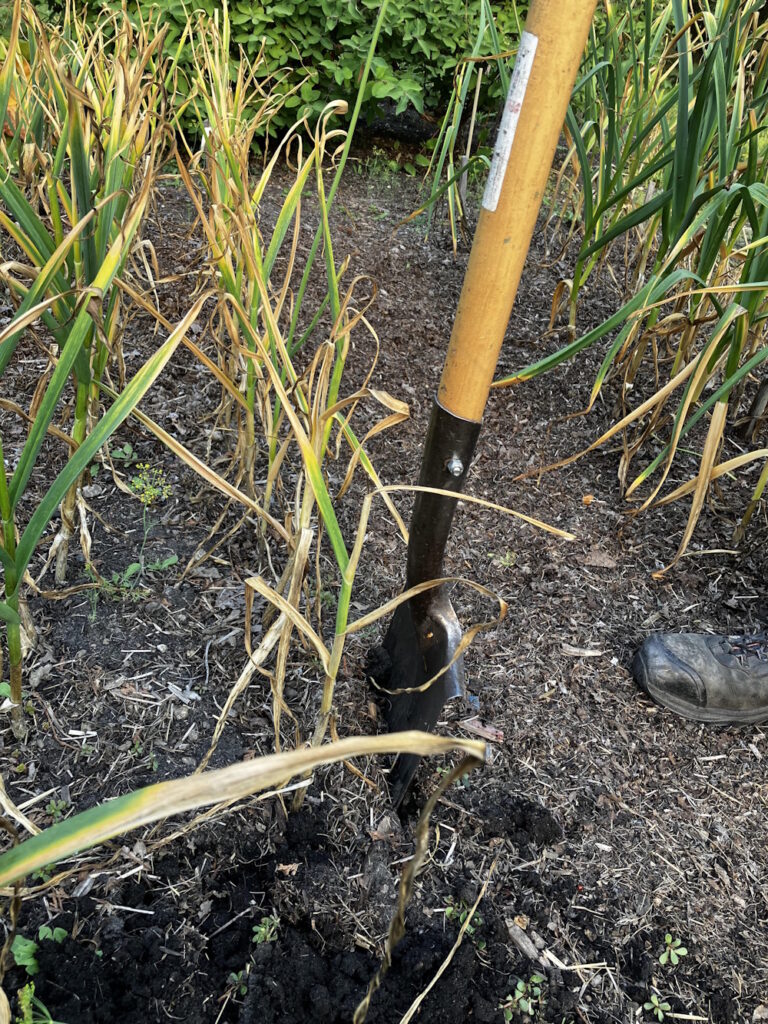
Garlic ready to harvest
Planting
The ideal time for planting this low maintenance crop in most of Canada is mid to late October. The goal is to plant the cloves while the soil is still warm enough for some small roots to start, but no shoots emerge above soil level before winter. Full sun and well-draining moist soil, enriched with lots of compost and a tablespoon (15 ml) of bonemeal for each clove will give it what it needs. To protect the cloves from frost, I plant them 4 inches (10 cm) deep and mulch with 6 inches (15 cm) or more of dry, chopped leaves.
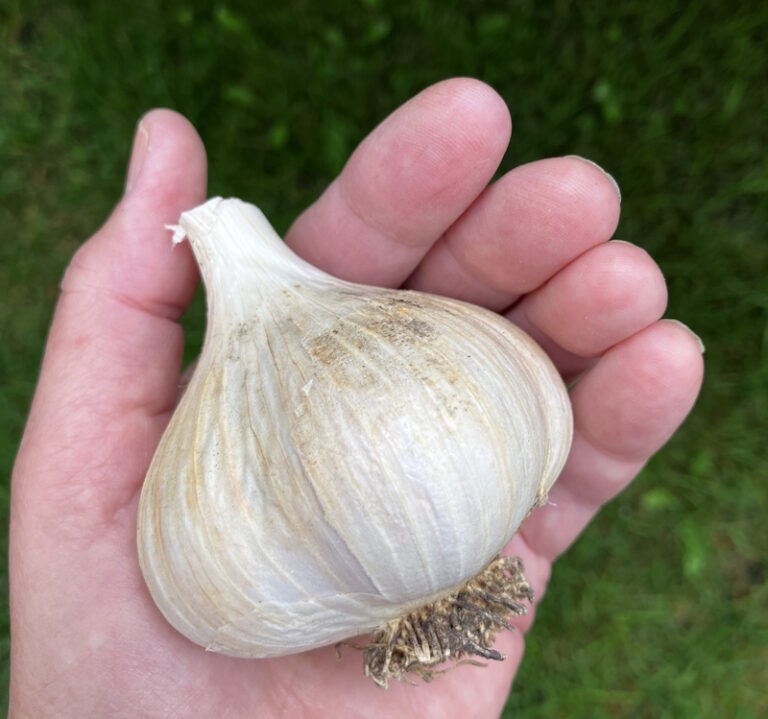
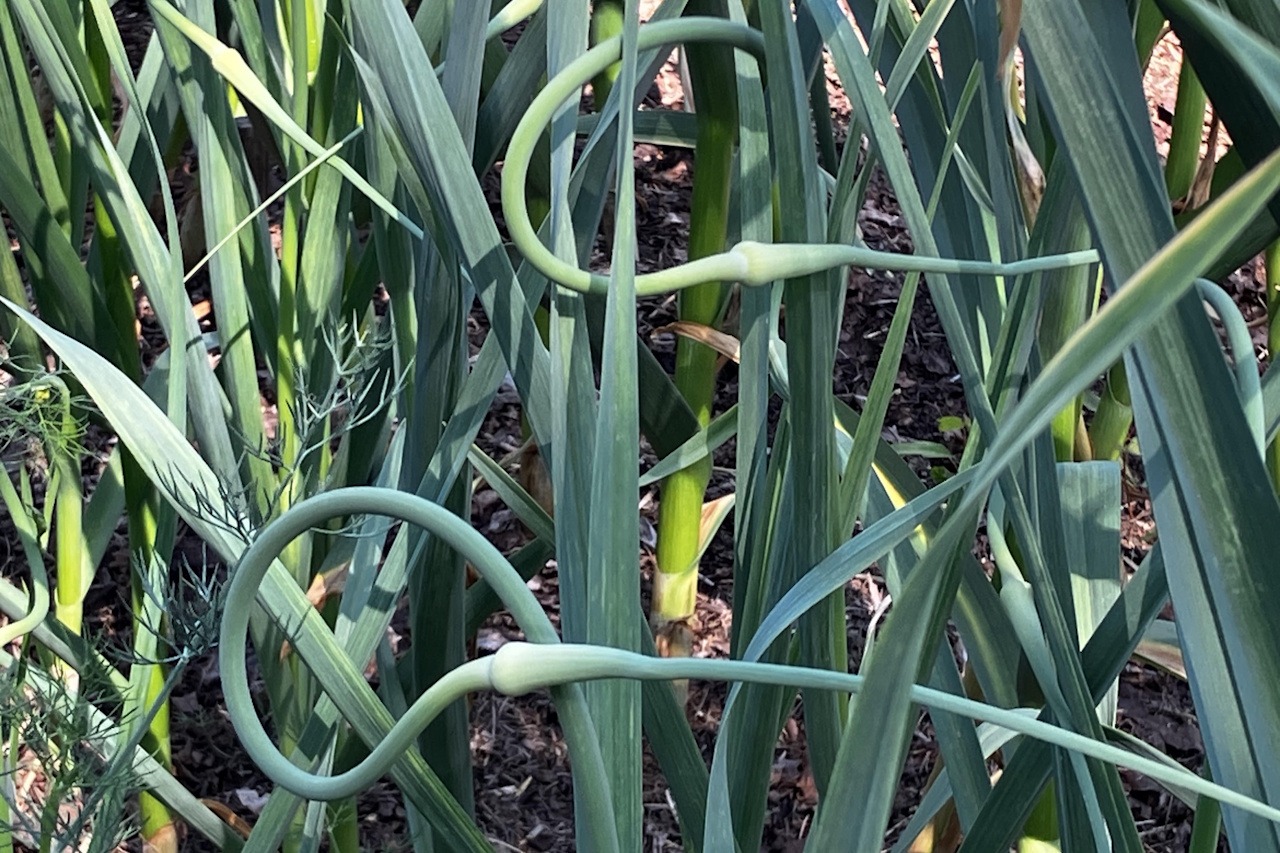
When snow has melted, I gently remove the mulch and watch for green shoots to emerge. Once the little green shoots are all up, I replace the mulch to conserve moisture and control weeds. If it’s hot and dry, I water every week or two until mid-July and remove the scapes1 before flower heads form to direct the energy to bulb development. In late July/early August when most leaves are yellow, I dig them and cure for 2-3 weeks in a dry, well-ventilated place out of sun. Once cured, I cut the stalks an inch or so above the bulb and store in a dry, dark place.
Garlic curing
Tips for success
Larger cloves yield larger heads of garlic.
Separate cloves just before planting, being careful not to damage the foot of each clove where the roots will grow.
Do not remove the papery covering of the cloves.
Plant each clove pointed end up.
Save the best heads from your crop to replant and keep the cycle going.2
Garlic trimmed and ready for storage
Most garlic sold in our stores comes from China or California. We can reduce our carbon footprint by growing our own. Once you’ve experienced the superior taste of homegrown garlic, it may become an essential in your kitchen too.
“There are five elements: earth, air, fire, water and garlic.”
–Louis Diat, French-American chef
1 Garlic scapes have a milder flavour and can be stored in a refrigerator for 2 months or more. I’ve used them in stir-fries, pesto, and in a finishing salt.
Wendy spent a good part of her adult life moving with her husband, never staying long enough to see an apple tree mature and bear fruit. When they retired, developing a food garden and planting hardy ornamentals became a passion. Weaving her previous studies in nutrition with her current interest in gardening has become a stimulating and life-giving activity.




Welcome back Wendy, you were missed!
Thanks for this, Wendy! I have never tried to grow garlic before and now know where to look for tips!!
Great blog, Wendy! I love growing garlic and always appreciate new tips.
The last quote is so true.