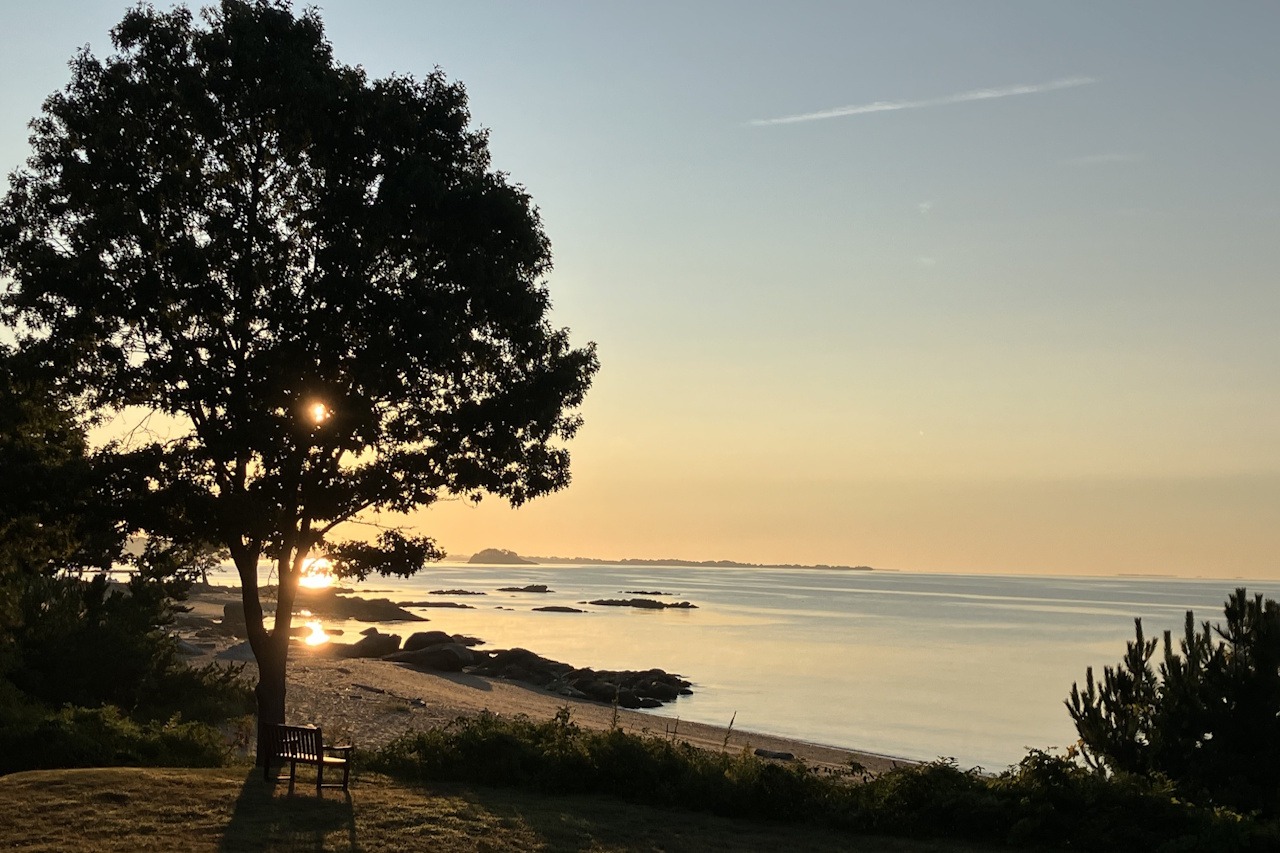
This past week, I have been at Mercy by the Sea, a retreat and conference center in Madison, Connecticut, on the shores of Long Island Sound (pictured above).
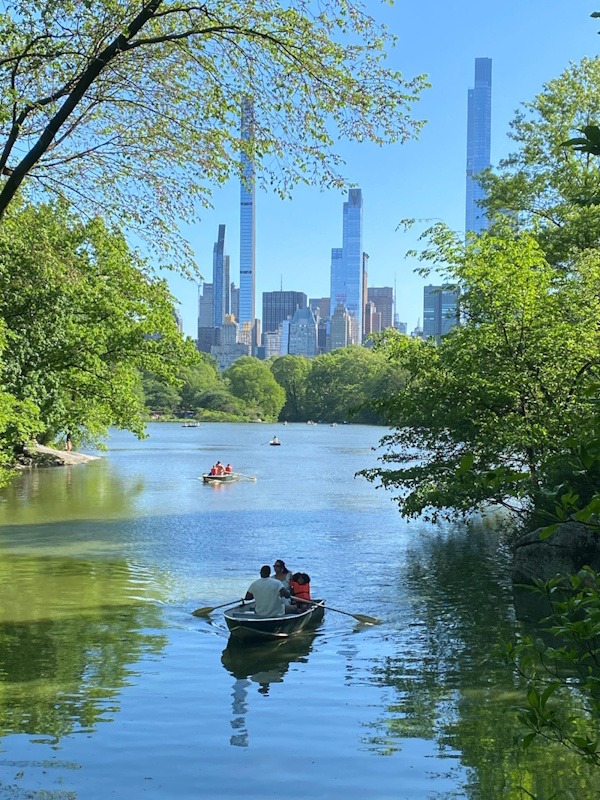
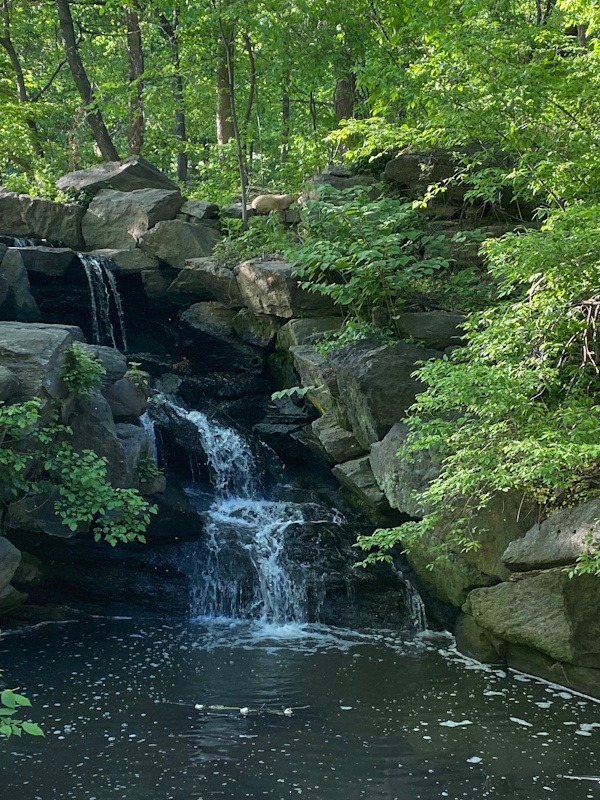
One of the popular attractions of New York City is Central Park, a surprisingly vast 843-acre oasis situated squarely in the midst of densely populated Manhattan. Measuring 4km by 0.8km, this “green lung” provides an estimated 40 million visitors1 annually with a multitude of opportunities for relaxation and enjoyment: from strolls through formal gardens or wooded hills, to rowing a boat onto the Lake, selfies at some of the city’s most filmed locations, a visit to the Metropolitan Museum of Art, a bird’s eye view from Belvedere castle, ice or roller skating as the season permits, meadow picnics, summer concerts – the list goes on!
It’s just over two years since I began to live in New York, and I delight still in occasions that take me to the park’s vicinity and the chance to explore yet another aspect of its beauty. Earlier this summer, however, my attention was also caught by a petition offered during Sunday Eucharist at St Francis Xavier parish in remembrance of the community that had been vacated by the creation of Central Park. And my exploration took a more sobering turn.
I learned, first of all, that Manhatta had been homeland to the Lenape people who had occupied the land for centuries. The arrival of Dutch colonists in the 17th century led eventually to their forcible displacement, moving them west and north, primarily to Oklahoma, Wisconsin and Ontario, Canada. Lenape legacy in New York City is visible still in their trade route, Wickquasgeck, which became Brede weg, later Broadway, but most traces of their existence have otherwise vanished.2
I learned, too, that, in 1825, Seneca Village was founded in the northern part of Manhattan, one of the few places in New York at the time where free African Americans could own property. By the 1840s, this had become a stable settlement of about 225 working-class people, a vibrant multi-ethnic community of African Americans, Irish and German immigrants, comprising 50 homes, three churches, burial grounds and a school for African-American students.3
During the 1850s, however, the city began planning for a large municipal park in Manhattan, setting aside 775 acres of land for this purpose. The newly created law of Eminent Domain was used to displace around 1600 inhabitants of the area, including Seneca Village, which was demolished. The community dispersed and never relocated elsewhere. Effectively, Seneca Village was erased. Not only was this haven for Black New Yorkers, which had provided stability and a sense of community, destroyed, but the African American landowners lost their right to vote since that was tied to property ownership at the time. It wasn’t until the 1990s that efforts to recover the forgotten history of Seneca Village were initiated.4
This past week, I have been at Mercy by the Sea, a retreat and conference center in Madison, Connecticut, on the shores of Long Island Sound. The grounds are beautiful and the views spectacular. Near the room where I have been making my retreat, is the Tower Room, which Henri J.M. Nouwen frequented for his writing while teaching at Yale University.5
In our group’s orientation to the retreat, it was acknowledged that the center is situated on the traditional territory of the Quinnipiac and Hammonasset people.6
One day, I promised myself, I will learn their stories, too.
1 Greensward Group, LLC, “About CentralPark.com,” accessed September 13, 2025, https://www.centralpark.com/about .
2 Colleen Connolly, “The True Native New Yorkers Can Never Truly Reclaim Their Homeland,” Smithsonian Magazine, October 5, 2018, https://www.smithsonianmag.com/history/true-native-new-yorkers-can-never-truly-reclaim-their-homeland-180970472/ .
3 Hannah Gerson, “Central Park’s Secret History,” The Daily Plant, February 9, 2004, https://www.nycgovparks.org/news/daily-plant?id=18599 .
4 Ibid.
5 Mercy by the Sea, “Tower Guest Room,” accessed September 13, 2025, https://www.mercybythesea.org/meeting-space/accommodations-guest-rooms/tower-guest-room/ .
6 Mercy by the Sea, “Visit,” accessed September 13, 2025, https://www.mercybythesea.org/visit/ .
Claudia Stecker is a Sister of Our Lady of the Missions (RNDM). She was missioned to the Philippines in 1997 and worked as an educator, first, in Cotabato, at Notre Dame University, and, later, in Manila, at Asian Social Institute. Her subject areas included pastoral sociology, leadership, music and education. Claudia was also employed by Kuya Center for Street Children where she took part in establishing a microfinance initiative among urban poor families. Over the years, Claudia served the congregation, too, in leadership, formation and finance management, returning to Canada in 2021. From 2023, she has been missioned to New York, USA, where she serves as a host community member in a LifeWay Network safehouse for women survivors of human trafficking.

God bless you, Claudia and thank you for educating we, the blog readers, about the true nature of Central Park! I had no idea of its physical, immensity nor its rich history! Good for you to have shared all this, which is now a denied past, by the country’s present leadership. I will never look at Central Park in the same way as I did before! Thanks for researching an iconic part of New York City!
Beautiful photos Claudia! I used to live in Harlem, and I had no idea of the full history of Manhattan. Thank you!