If you travel west from Winnipeg, Manitoba on the Trans- Canada highway you traverse a relatively flat expanse of Canada’s prairie landscape; mile after mile of vibrant fields growing wheat, barley and canola. At about the 500 kilometer mark another highway turns North and descends into a valley stretching as far as the eye can see. Undulating hills in shades of burnt umber, gold and green mark the beginnings of what is known as the Qu’ Appelle Valley, an oasis of rich farmland, beautiful lakes and historical towns and villages.
The valley was born fourteen thousand years ago during the last ice age, when most of Canada’s land features were formed. It was created when the melting glaciers left so much water they carved a channel. This channel eventually evaporated leaving rolling hills of sediment and the bodies of four lakes; Pasqua, Echo, Mission and Katepwa. It is the territorial home of the Nakoda, Saulteaux, Cree and Lakota First Nations and of the Metis. The name Qu’Appelle is said to have originated from the Cree word Kâ-têpwêt meaning “the river that calls”.
A few weeks ago, I turned off the Trans-Canada highway and dipped down into that valley on my way to a gathering in the tiny Metis village of Lebret. The occasion was a celebration of the RNDM’s return to one of their first Missions in what was then the Northwest Territories of Canada.
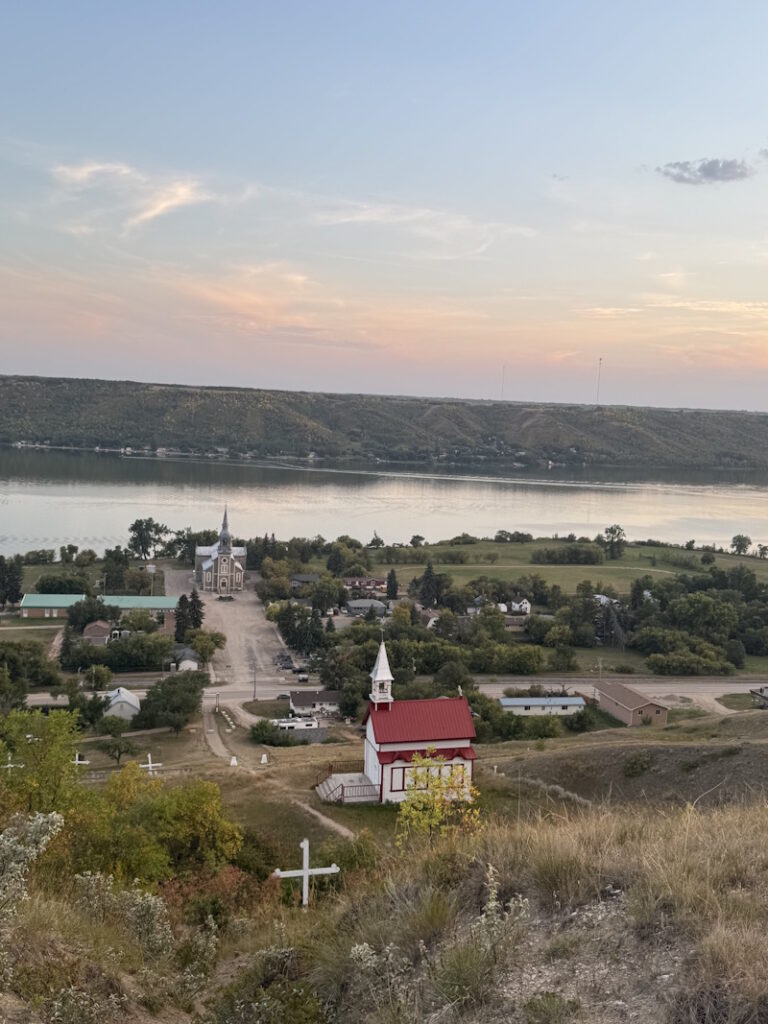
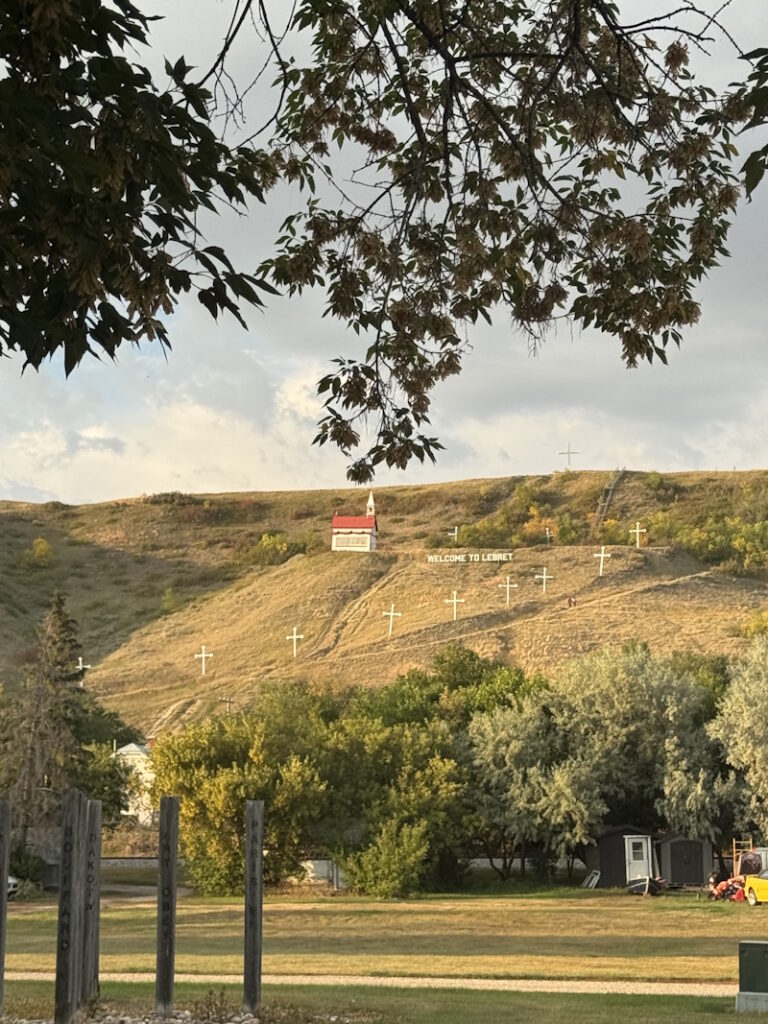
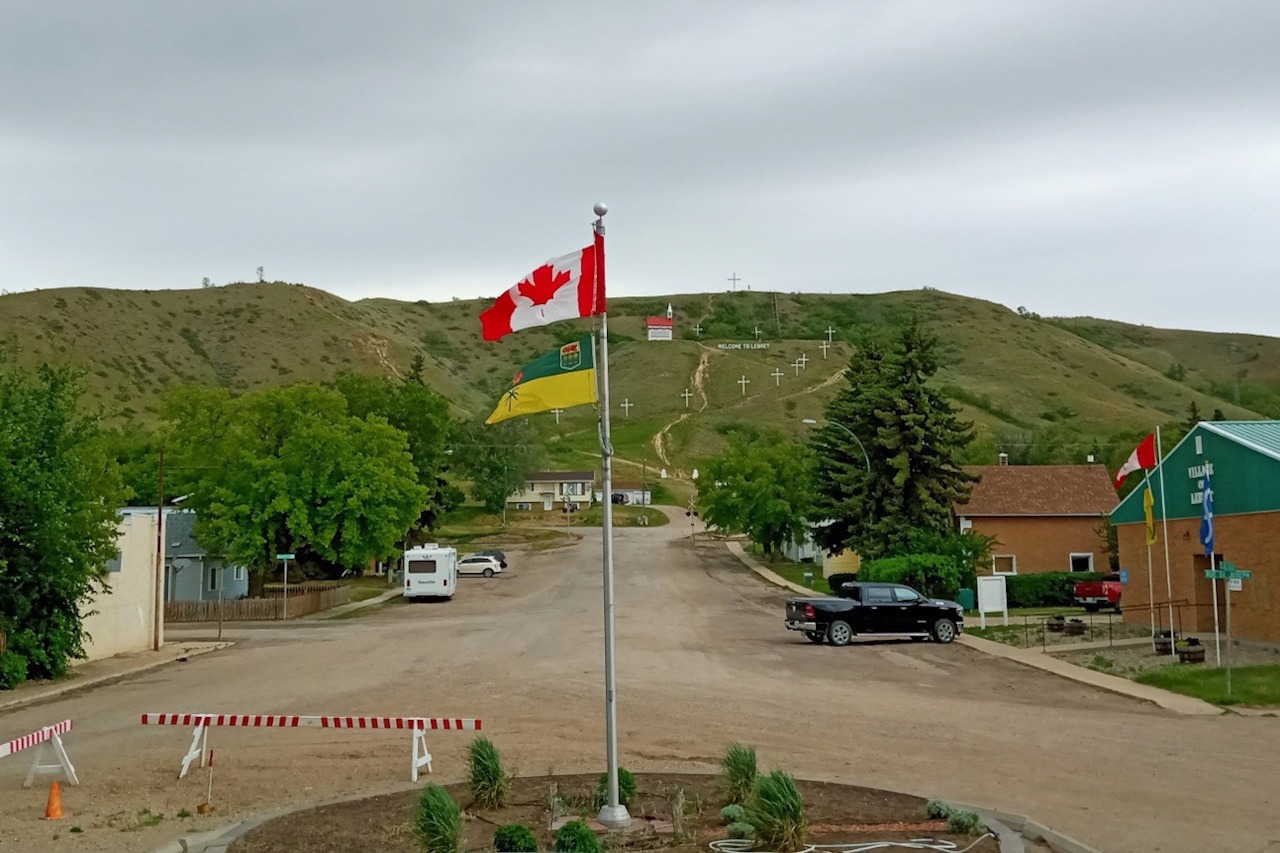
Lebret, nestled on the shores of Mission Lake, is a tiny jewel of a place, with a statuesque stone church rising up from the edge of the lake and a tiny wooden chapel perched near the top of a hill facing it. To reach the chapel you climb a winding path along which are posted the fourteen stations of the cross and at the very top of the hill stands a large cross. Further along, on another hill, silhouetted in white stones, is the image of a large bison, an animal sacred and indispensable to the early lives and livelihood of the first people of this beautiful land. The two structures, the cross and the buffalo are indicative of a relationship that has spanned almost a century and a half, and which is entering a new and exciting phase.
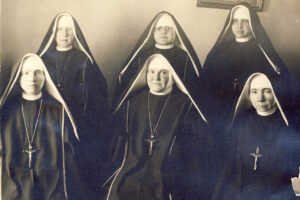
I had traveled from Winnipeg with four RNDM sisters to celebrate the renewal of the Mission that opened in Lebret in 1899 and lasted 74 years. The house-warming we were attending was to mark the RNDM’s return to the community and the community’s desire to renew and rekindle that historical relationship. As part of the celebration, RNDM sisters who had once lived and taught in Lebret, came to see the new location, as did local members of the community and other invited guests. It was an afternoon of stories and laughter and a few tears. First Nation, Metis and even members of the Myanmar community in Regina attended.
I sat with one striking man, with gray hair tied in a braid, who told me he was a retired Royal Canadian Mounted Police officer. Among his many assignments dealing with drugs and biker gangs he had headed up the Security detail that provided protection for the Governor Generals of Canada. His stories had me spell-bound. Here was a quiet, unassuming giant of a man, sipping coffee in this tiny village talking about trips to Africa and beyond and meeting a who’s who of political and royal fame.
I knew nothing about the history of Lebret or the public school and convent the sisters had once occupied so it was a history lesson for me and a trip down memory lane for many of them and their guests.
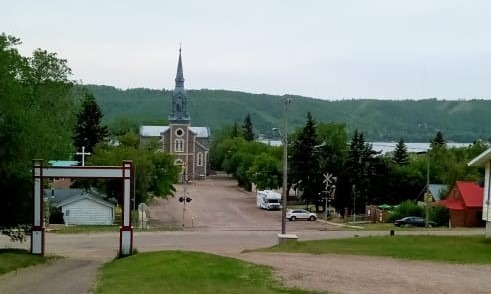
Lebret today has a church, a post office and not much more. Cottages dot the shoreline and villagers travel up the road to the town of Fort Qu’Appelle for groceries. A train rattles the mission house as it crawls past the village twice a day. At night it is so quiet it feels as though everyone, including all of Mother Nature, has bedded down for a long, deep sleep.
The three sisters who have taken up residence there are all from different cultures and are familiar with life is smaller villages. It was apparent that they had already sparked new and exciting relationships with the people of Lebret and surrounding areas.
Their joy and enthusiasm for life was, and is, infectious. I left their home, nestled snuggly in the Qu’Appelle hills, with a sense of belonging to a much more connected world than before. As if I had entered into a conversation that had begun long ago and was just as vibrant and inspirational as it was a hundred years ago when it began. I didn’t know until later that the date for the arrival of the first sisters in Lebret was Sept 3, 1899. None of the sisters who planned the welcoming ceremony were aware of the exact day when the planned their event for Aug 30th, 2025. Happy coincidence ? I don’t think so.
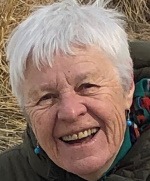
Bonnie Dickie lives in Winnipeg, the Elm capital of Canada. In a previous life she worked for CBC in Yellowknife, NWT before moving South to freelance as a documentary filmmaker. Her work has taken her across the Arctic as well as China, Africa and Spain. Today she is semi-retired and aside from her dog walking exploits is focused on learning to play the ukulele-a talent she has yet to fully grasp.

What a great telling of the Lebret story, Bonnie! I have happy memories of trips there and specifically a summer spent with the older sisters of the community as the younger went on retreats and holidays. It was a time of blessing for me. Thanks for reminding me of wonderful memories! I have been and will continue to pray for this renewed mission and for the sisters who are and will be part of it.
Bonnie, you have painted such an inviting picture of Lebret — its physical beauty, its interesting history and geography, its fascinating inhabitants, the hospitality being offered and the joy accompanying this revitalized mission of the RNDMs. A welcome story of Light. Thank you!