Did you, by chance, grow up with the older English version of this parable that speaks of “The Pharisee and the Publican?” And wonder what a publican was?
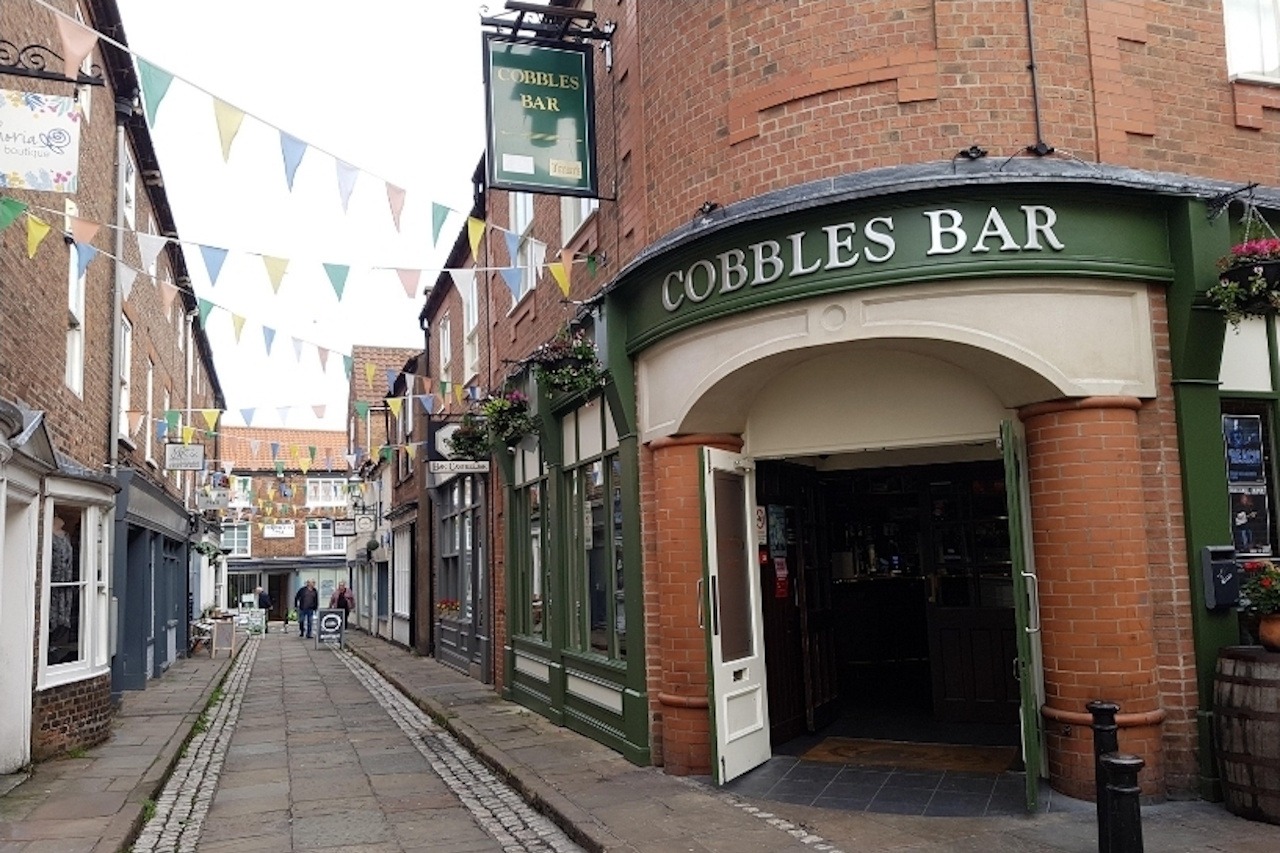
I did. And in my teens I got the answer from a popular CTV program that was broadcast from 1967-1977. “The Pig and Whistle” was a half-hour musical variety show, set in a fictional English pub and taped in the studios of CFTO Channel 9 Toronto, before a live studio audience. The jovial host, John Hewer, in character as the pub owner, proclaimed himself “a humble publican.”
And I thought, So that’s it! It’s the Pharisee and the Bar Owner!
Well, not quite, not at all in fact. The more accurate translation you’re likely to hear today is “tax collector” or “toll collector.” It’s been sanitized. The real issue was that these men were self-enriching traitors, “collaborators” in the World War II use of the term. They were agents of the occupation Roman government empowered to collect heavy taxes from the local population, and then add on a surcharge to keep for themselves. They got away with it because they had the might of imperial Rome behind them. They were bitterly resented by their own people. In the Gospels they are lumped together as “tax collectors and sinners.”
Just the kind of folks Jesus sought out.
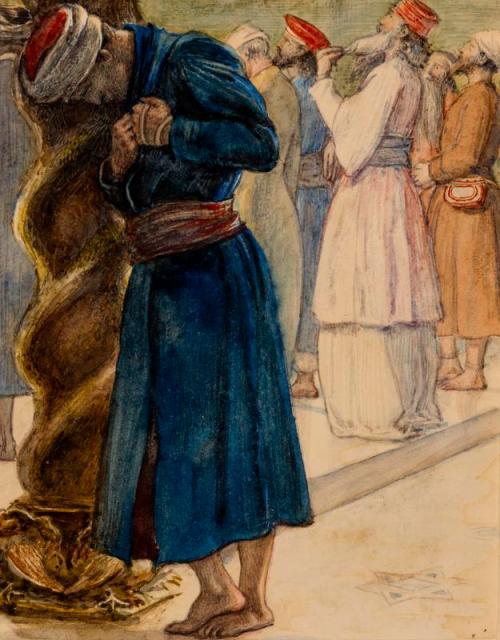
This is a story unique to Luke that presents two fictional characters – caricatures in fact, illustrating two polar extremes. Luke regularly excoriated the Pharisees so this character was a perfect fall guy for hypocrisy and pretense. He basically prays to himself, listing all the reasons why he’s a model of perfect obedience to the law. He’s got this. In the language of customs officers, he’s got “nothing to declare.”
And then there’s the poor schmuck half-hiding in the back. He hasn’t got it, and he knows that. His prayer has a quality of heart-searing honesty that’s utterly foreign to the Pharisee. He shows striking courage in assessing his character and his actions, an appraisal that was undoubtedly accurate. This despised figure in his own society becomes the one whose sincere repentant prayer, born out of shame and regret, yet coloured by a desperate hope, is heard.
This is classic Luke. Already in Luke 1:52, in the canticle of Mary, we see “the mighty cast down from their thrones and the lowly lifted up.” The issue is less about grovelling self-abasement than about reform. And about the nature of prayer. And about the nature of God, for that matter. The living presence and power of God works in the overturning of systems of oppressive hierarchy that allow some to exploit others, enriching themselves at their expense; and in the overturning, to affirm the God-given dignity of each person so we meet face to face, eye to eye.

We don’t know whether the tax collector would follow through on a change of heart and behaviour – the story ends with the simple contrast of characters. For that matter, we don’t hear much self-awareness on the part of the Pharisee. But one hopeful takeaway is that it’s never too late to reverse course if you need to. As commentator Dominik Schmitt writes, wherever you are in your life, it’s never too late to give your life a new direction. Today, here and now, we can open ourselves to transformation in the Spirit. Today we can begin to confront injustice. Today we can take to the streets if we need to, with placards and frog costumes if that’s what it takes, to effect change. And today we can begin to set our talents and gifts at the disposal of the Spirit to enact justice, in our hearts and in the world.
Anyone can do it. The Jesus we know, who did not hesitate to invite himself to dinner at the homes of socially marginalized persons such as tax collectors, surely wouldn’t have rejected a bar owner. These were his people.
Many years ago, a friend invited me to join him at a gay bar, and I remember looking around and thinking, Yeah, Jesus would be here. And undoubtedly was.
© Susan K. Roll
*Revised from the Reflection of October 23, 2022.
Susan Roll retired from the Faculty of Theology at Saint Paul University, Ottawa, in 2018, where she served as Director of the Sophia Research Centre. Her research and publications are centred in the fields of liturgy, sacraments, and feminist theology. She holds a Ph.D. from the Catholic University of Leuven (Louvain), Belgium, and has been involved with international academic societies in liturgy and theology, as well as university chaplaincy, Indigenous ministry and church reform projects.

