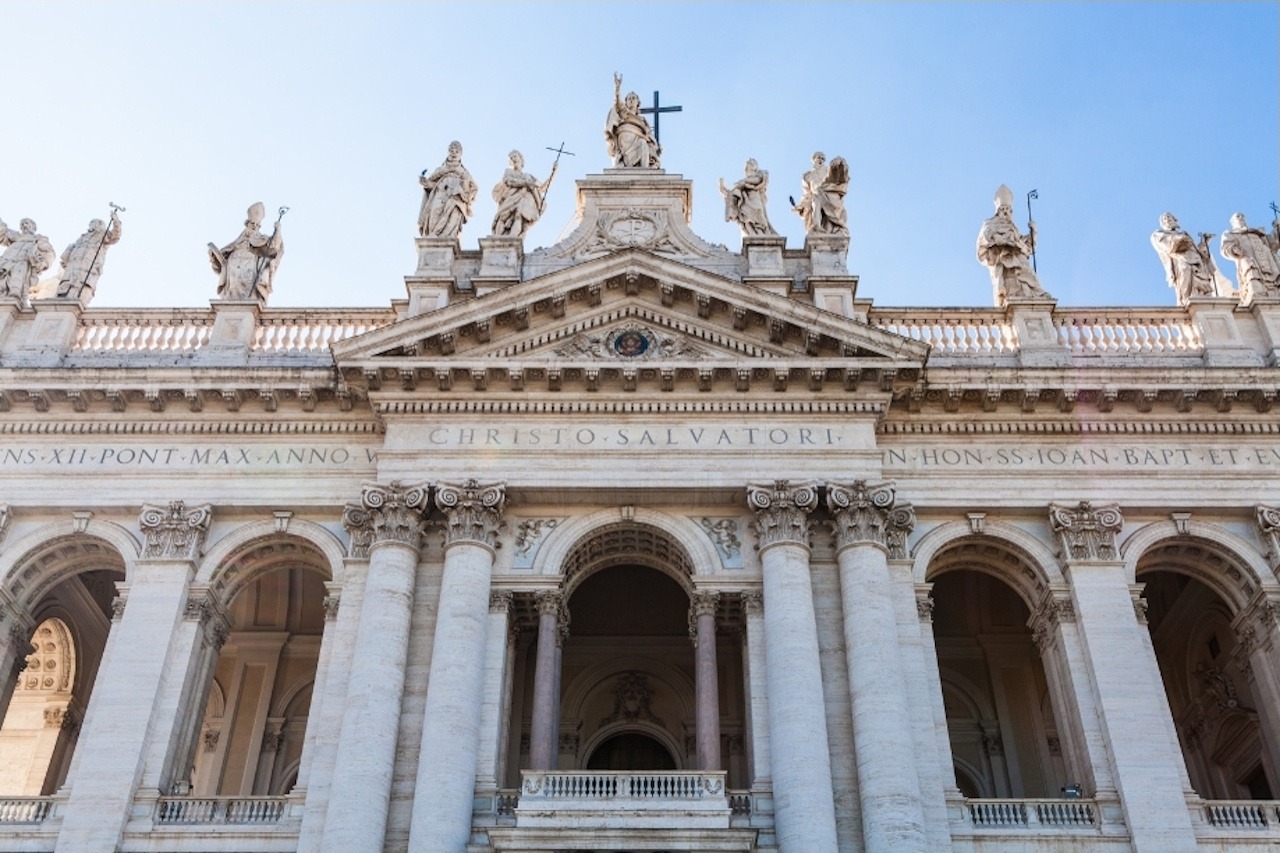
It’s a church. Well OK, a very impressive church with deep historical roots. But its dedication was not mentioned in historical sources before the eleventh century. And more to the point, why does the Feast of the Dedication of the Basilica of St. John Lateran in Rome on November 9th rank as a feast of the Lord, and thus take precedence over the particular Sunday of the Year, when November 9th falls on a Sunday? What does it have to do with Christ? He didn’t institute it.
Catholic liturgical historians face a challenge to explain how the ranking of solemnities and feasts lines up in such a way as to overlay this particular feast on the Sunday. It appears to contradict a principle from the Constitution on the Liturgy of Vatican II, “Other celebrations, unless they be truly of greatest importance, shall not have precedence over the Sunday, the foundation and core of the whole liturgical year.” (SC §106).
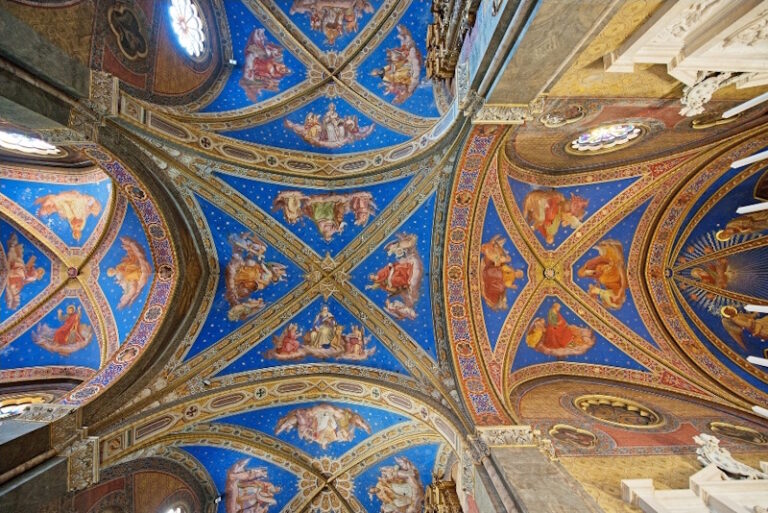
The earliest Christians needed to be somewhat nomadic in their worship space due to the sporadic but deadly threat of government persecution. Only in the third century do we find wall decorations and renovations indicating that a certain house may have served for Christian worship on a permanent basis. Once our ancestors were able to put down roots in particular buildings that could be publically identified as Christian worship space – that is, beginning in the mid-fourth century – they often chose sites previously used for non-Christian worship. Their pre-Constantine forebears would have been horrified. Even today one can find all over Italy examples of churches dedicated to Mary built over a temple to Minerva, and called “Santa Maria sopra Minerva,” Saint Mary above (or literally, on top of) Minerva. In Rome a small altar to Mithras was found in the excavations below St. Peter’s Basilica, as well as a meeting room for Mithras cult adherents under the church of San Clemente.
A fifth-century document, the Hieronymian Martyrology, lists dedication dates for the Roman basilicas of St. Mary Major, St. Michael, St. Peter in Chains and St. Lawrence, but the dedication date for the Lateran basilica only appears in the eleventh century. The reason why this date leapfrogged, so to speak, over the others had to do with the Lateran’s status as the cathedral church of the Bishop of Rome. The Pope lived next to the Lateran Basilica then, and its dedication date was celebrated with great festivity in Rome, a feast that was made universal in the Roman Missal of 1570. The Lateran was thus the seat (cathedra) of the patriarch of the Roman Church, and a symbol of unity to Roman Catholic Christians worldwide.
In 2008 this feast also fell on a Sunday. I had been asked to write an article on its history and rationale for the online newsletter of the Canadian Conference of Catholic Bishops. So I was chugging away on my liturgical sources when suddenly something hit me. And it hit me hard.
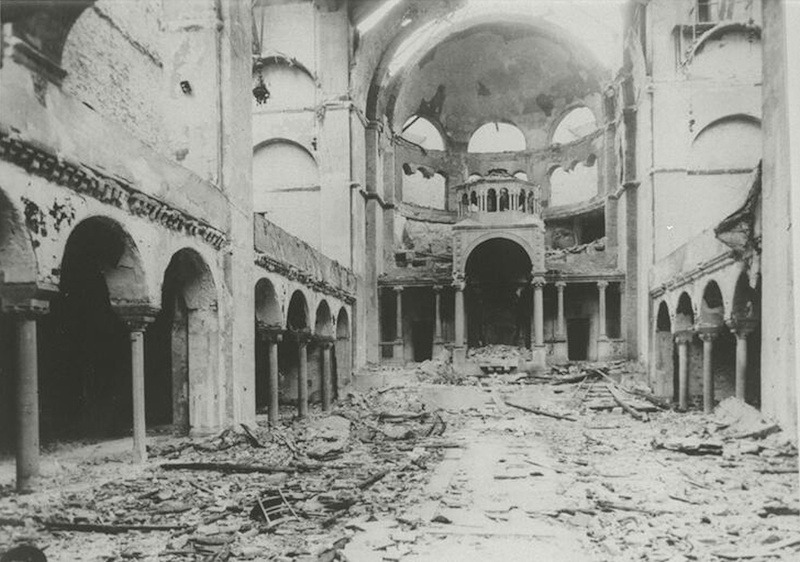
In 2008 the feast of the Dedication of St. John Lateran fell on the same day as the 70th anniversary of the Reichspogromnacht in Germany. This was formerly called “Kristallnacht,” the “Night of Broken Glass.” Beginning on November 9, 1938, the National Socialist government of Germany launched a carefully engineered campaign of nationwide street riots, burning of synagogues, burning and looting of businesses owned by Jews, and the public abuse, humiliation and deportation of thousands of German Jews. This was one more step toward the Shoah or Holocaust, the attempted genocide of all persons of Jewish ancestry in Europe. And on November 9, 1938, the primary site of attack centred on their holy places. More than 1000 synagogues in Germany went up in flames.
In our own time, the dark clouds of fascism are gathering rapidly around the world. Christians can find resources for conscientious resistance in the Scripture readings for this Sunday. Jesus did not hesitate to let it rip when he saw the Temple profaned with commercial exploitation. In Ezekiel we see an inspiring vision of clean water flowing from all sides of the holy place to cleanse, purify, nourish and regenerate the healthy growth, the “greening,” of the whole land. 1 Corinthians urges Christians to see themselves as the holy place where the Spirit lives and works in and through them as a purifying and reforming community of faith.
Never doubt the power of courageous resistance.
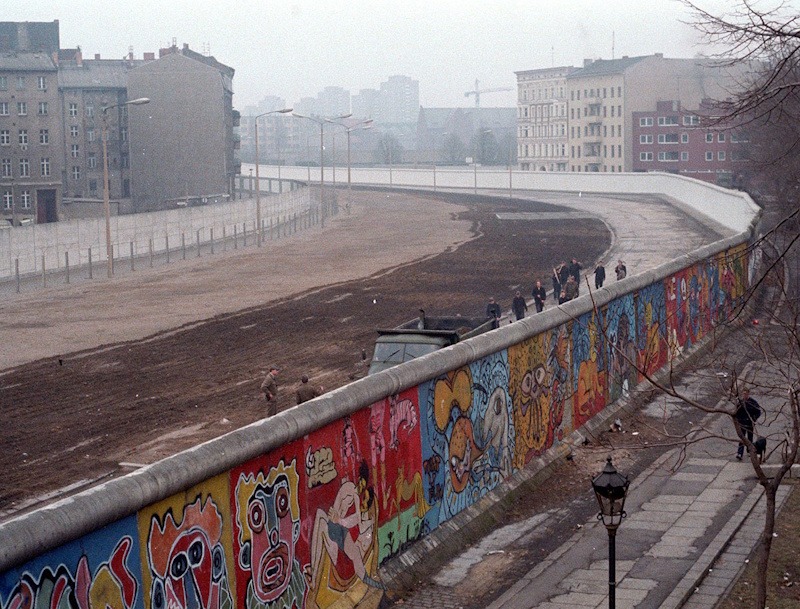
On November 9, 1989, the Berlin Wall fell.
© Susan K. Roll
Photo Credit: Image of the Berlin Wall Copyright 1986 by Thierry Noir. Some rights reserved.
License: https://creativecommons.org/licenses/by-sa/3.0/

Susan Roll retired from the Faculty of Theology at Saint Paul University, Ottawa, in 2018, where she served as Director of the Sophia Research Centre. Her research and publications are centred in the fields of liturgy, sacraments, and feminist theology. She holds a Ph.D. from the Catholic University of Leuven (Louvain), Belgium, and has been involved with international academic societies in liturgy and theology, as well as university chaplaincy, Indigenous ministry and church reform projects.

Thanks once again for your excellent reflection reminding the readers of the power of courageous resistance. We need that reminder in these present chaotic times. Your historical knowledge is greatly appreciated for the ways in which it enhances the quality of your reflections. Thank you for sharing your deep knowledge!