I had not heard of the Quinnipiac and Hammonasset peoples before they were spoken of in acknowledgment during my orientation to retreat at Mercy by the Sea.1 Once heard, however, their names found a place in my being throughout the week on those Connecticut shores. Each day graced by unique sunrise beauty, the rhythm of the tides moving in and out, Harvest Moon’s waxing and waning, skittering shorebirds, elegant egrets stalking their morning breakfast, cormorants spreading their wings to dry… I would gaze out to sea and wonder about the Hammonasset or Quinnipiac woman who might have been standing in my place to welcome dawn’s wondrous beauty.
The story is an all too familiar one. From what I can glean, the Northeast woodlands had been home to indigenous peoples, Quinnipiac and Hammonasset among them. They were hunters, foragers, fishers and grew corn, squash and beans. Early seventeenth century estimates the indigenous population of a 300 square mile homeland at around 4000. By the time English colonists arrived in 1638, the population had already declined by up to 90 percent due to the waves of smallpox, brought on by European contact, that decimated the communities. The colonists gradually purchased more and more of the land, forcing subsequent relocations. Though the community is no longer recognized as one of Connecticut’s tribes, some descendants remain today in Connecticut and other parts of the country.2 By the time the Sisters of Mercy took possession of shoreline property, opening a novitiate and a diocesan college, the land had changed hands numerous times.3
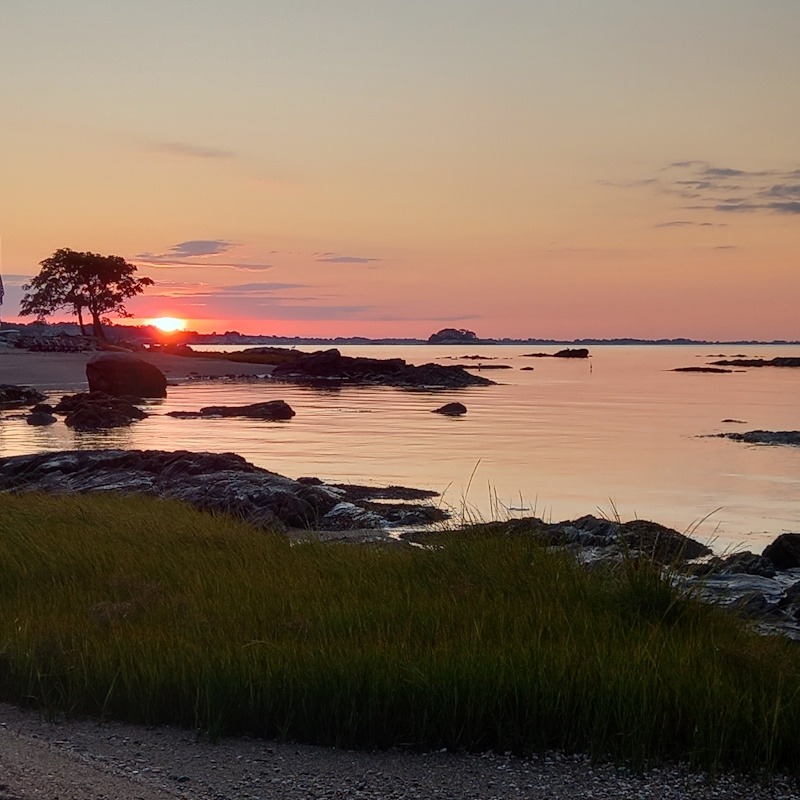
Most afternoons of my retreat, I found myself seeking out a patch of sand among the large Long Island Sound boulders left behind by glaciation, or a grassy mound beneath a majestic oak. Stretching out on my beach towel, I would wait and listen, yearning to palpably feel my Earth connection, beyond my mind telling me it is so. My settler being is keenly aware of a gap in this relationship, the superficiality of preoccupied life that only occasionally pauses to notice Earth sustaining every breath. Awareness is leading me to pay attention to indigenous voices, to language shaped by life lived in a profound interdependence with the natural world, and to feel my way toward the heart of this worldview. As I do so, I feel softer, more expansive, more connected – and I am grateful.
Recently, an article in the National Catholic Reporter caught my eye. On October 31, 2025, the Franciscan Sisters of Perpetual Adoration sold their spirituality center in Wisconsin to the Lac du Flambeau Band of Lake Superior Chippewa Indians, reportedly
“the first Catholic institution to return land to a Tribal Nation in the name of reparations for colonialism and residential schools.”
The Sisters sold the nearly 2-acre parcel of land for the same price they paid for it in 1966, $30,000, or just 1% of its current value. Franciscan president Sue Ernster spoke to tribal leader John Johnson Sr.,
“…As we place this land in your hands, we also place our gratitude and our friendship in your hearts.”4
The pathways to healing are many.
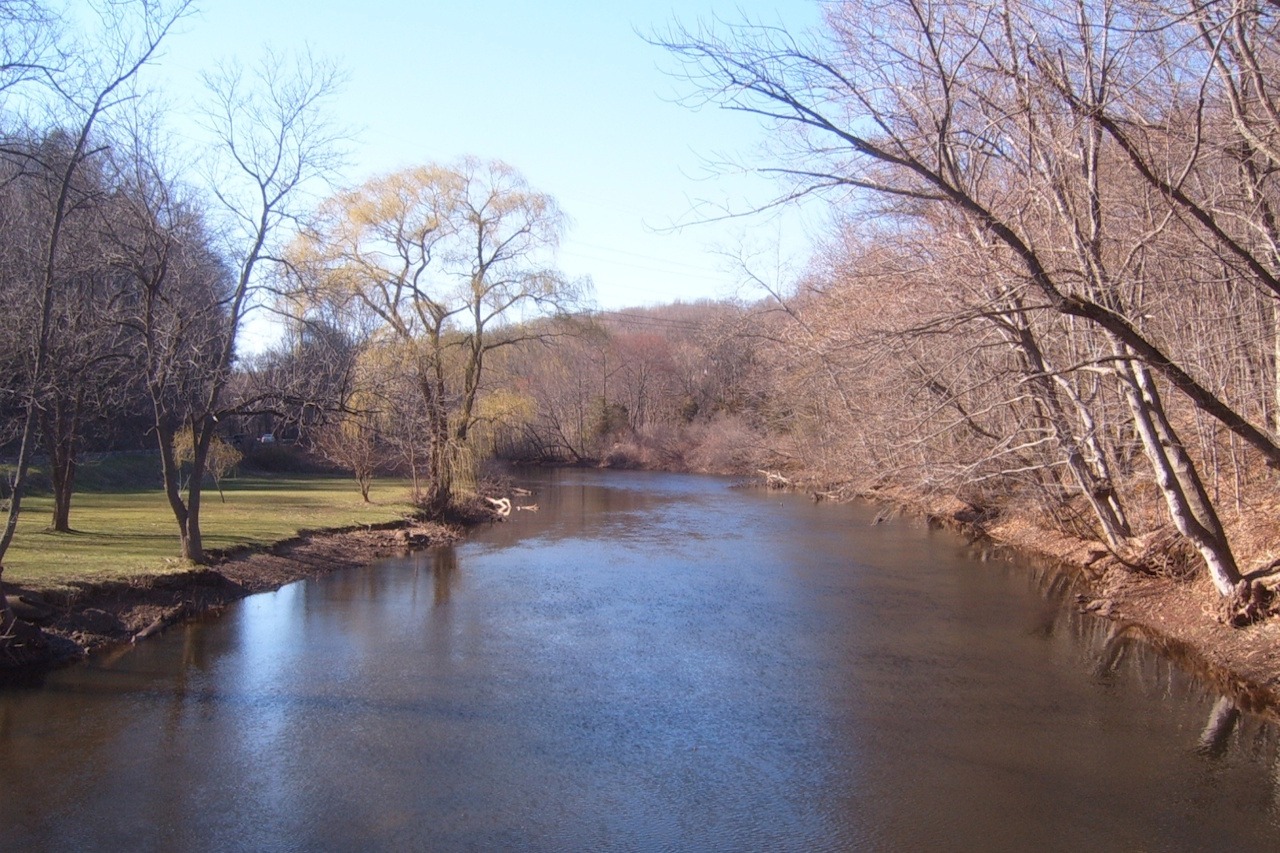
Photo Credit: The Quinnipiac River looking west into the Quinnipiac River Gorge by Arthur Dutra IV. Copyright July 7, 2006. Some rights reserved. Used with permission.
License: https://creativecommons.org/licenses/by-sa/2.5/
1 Mercy by the Sea, “Visit,” accessed December 12, 2025, https://www.mercybythesea.org/visit/. See also my blog, “Bridging the Past: Lest We Forget,” September 15, 2025, https://rndmcanada.org/2025/09/15/bridging-the-past/.
2 Paul Grant-Costa, “Quinnipiac: The People of the Long Water Land,” CT Humanities, April 1, 2021, https://connecticuthistory.org/the-people-of-the-long-water/.
3 Mercy by the Sea, “History of Mercy by the Sea,” accessed December 12, 2025, https://www.mercybythesea.org/about-us/history-of-mercy-by-the-sea/.
4 Dan Stockman, “In act of reparation, Franciscan sisters return land to Chippewa Indians in Wisconsin,” National Catholic Reporter, November 3, 2025, https://www.ncronline.org/act-reparation-franciscan-sisters-return-land-chippewa-indians-wisconsin.
Claudia Stecker is a Sister of Our Lady of the Missions (RNDM). She was missioned to the Philippines in 1997 and worked as an educator, first, in Cotabato, at Notre Dame University, and, later, in Manila, at Asian Social Institute. Her subject areas included pastoral sociology, leadership, music and education. Claudia was also employed by Kuya Center for Street Children where she took part in establishing a microfinance initiative among urban poor families. Over the years, Claudia served the congregation, too, in leadership, formation and finance management, returning to Canada in 2021. From 2023, she has been missioned to New York, USA, where she serves as a host community member in a LifeWay Network safehouse for women survivors of human trafficking.
Thank, you Claudia. There is so much in common in the Australian and Canadian stories of the need to build bridges. You highlight the importance of living with the stories and acknowledging the harm done. Today is a significant day in the State of Victoria as the Government will apologies to the aboriginal communities. Mary
Claudia, I so appreciate the insights you have shared here. This one especially hits home for me: “language shaped by life lived in a profound interdependence with the natural world, and to feel my way toward the heart of this worldview. As I do so, I feel softer, more expansive, more connected – and I am grateful.” I recently heard someone speak of the need we all have to be de-colonised and I understood immediately how this applies to the language I use, as well as my actions, in the invitation to shift my worldview.