
Before there was a feast of the Nativity of Christ, there was a feast of Epiphany. Just not in the same geographic regions.
The origins of Christmas are still obscure, with two or more hypotheses competing for currency. One of these stressed the importance of symbolic numbers and calculations of the date of the birth of Christ. The other presupposed some sort of influence of the December 25 winter solstice date, and the fact that it had been used in the Roman Empire to mark the birth of various other divinities: Mithras beginning in the first century, or the “Invincible Sun” from the year 275. In any case, there is no evidence that Christians anywhere in the ancient world marked the birth of Jesus in the flesh with distinctive worship before the mid-fourth century. They thought only pagan rulers such as Pharaoh or Herod celebrated birthdays.
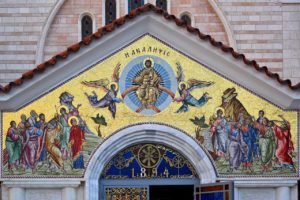
Epiphany, however, arose in the Eastern churches and spread to Gaul, under the titles Theophania (the manifestation of God), Epiphania (appearance), Genethlia (birth) or Photismos (the coming of the light.) The feast might celebrate the birth of Christ, the coming of the magi, his baptism in the Jordan, his first miracle at Cana, or more than one of these. It depended on which Gospel was read.
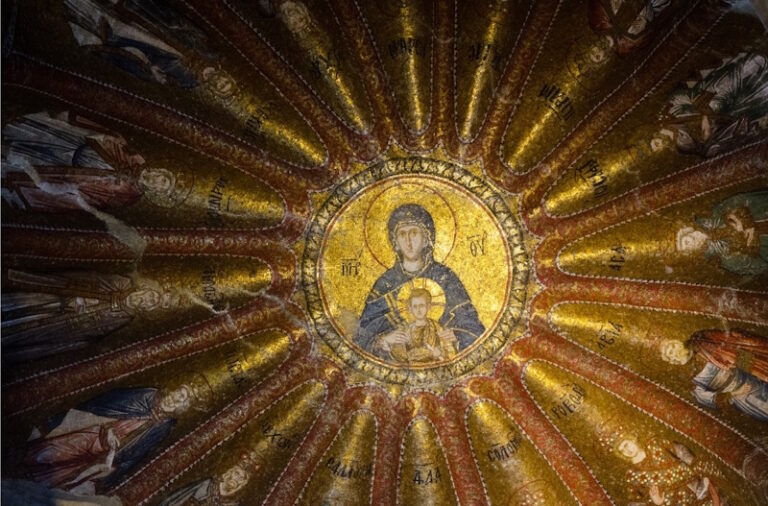
This feast could have originated as early as the second century, although the documentation dates to the fourth. We do have a report that the Emperor Julian, mentioned last week for his persecutions of select Christians in the years 361-363, was present for a liturgy to mark Epiphania in the city of Vienne in Gaul (modern day France.) Why would a virulently anti-Christian emperor come to church on a high Christian feast day? The sources don’t say.
What’s remarkable and sort-of amusing are the lengths to which Eastern bishops went to persuade, if not force, their congregations to adopt this newly imported Nativity feast. Apparently there was much opposition because, after all, these church communities celebrated their own feast day, so why should they tag a foreign feast onto their calendar that duplicated the general idea of their own?
In the year 386, John Chrysostom, patriarch of Constantinople (who was removed from office and run out of town twice, but that’s another story) went to great lengths to persuade them. He first claimed that:
1) “everyone has always known” when Jesus was born (not true: evidence from 2nd century Egypt cites five possible dates in the year, and a document from 243 C.E. states flatly that he was born “on March 28, which was a Wednesday that year.”)
2) The date can be proven from the census records in Rome (there was no worldwide census on record, ever). And
3) the date can be calculated from Elizabeth’s and Mary’s pregnancies assuming that Zachariah was High Priest at the High Holy Days (which he wasn’t.)
Eventually the Eastern churches adopted the Nativity feast, and the Western churches adopted the feast of Epiphany, but with a different twist: the West separated out the story of the coming of the Magi and applied it to the January 6 feast with a distinct but related theme: the universality of Christ.

There’s a lovely poignancy in the story of the wise foreigners who came so far to honour the divine child. But to try to see the Epiphany through the Christian communities in which it originated, we might do better to focus on the cosmic Christ, and the impenetrable mystery of the Incarnation of the divine in human flesh. The Gospel reading from John, used for the Christmas Mass During the Day in the RM, and this Second Sunday of Christmas in the RCL, point us to the theme of light.
“The light shines in the darkness, and the darkness did not overtake it. … The true light, which enlightens everyone, was coming into the world.”
Our ancestors, in their own times and cultures, found light, hope and great energy in walking into that brilliant light, and letting it bathe them. So can we.
“Rise up in splendour! Your light has come.”
© Susan K. Roll
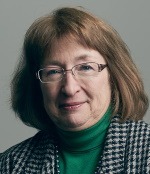
Susan Roll retired from the Faculty of Theology at Saint Paul University, Ottawa, in 2018, where she served as Director of the Sophia Research Centre. Her research and publications are centred in the fields of liturgy, sacraments, and feminist theology. She holds a Ph.D. from the Catholic University of Leuven (Louvain), Belgium, and has been involved with international academic societies in liturgy and theology, as well as university chaplaincy, Indigenous ministry and church reform projects.