
Another year has arrived, and we continue to look in hope for change. We always pray that the New Year will bring us to another stage of transformation—yet as one world event improves, another falls into disarray. As we cheered ourselves singing Christmas carols, many would have drifted into another world of hope and promise: the voices of beautiful choirs and familiar tunes of our childhood allowed us, for those moments, to truly let go of fears and anxieties and to dwell in the images of that “Silent Night,” which, for a moment, became a comforting blanket.
I felt that I could stand at the “edge of what was and what would be.” Why? Because we sang of One who was faithful so many years ago, who still remains with us, and that “we would live for evermore” because of what happened on Christmas Day. For four weeks prior to Christmas, our liturgies promised that the Lord would come as “prophets have told.” Words from the Advent hymn The Day of the Lord Shall Come by John Bell and Graham Maule truly stayed with me:
“the lame of the earth shall leap, the dumb shall find voice … and the last shall be first; and nations for war no more,”
and to see in the face of Christ “all faces once ignored.” I believe this was a longing many certainly felt as those words were sung or heard—that we are ready for change. Change that has us standing on the edge of our present reality: that of war, discrimination, and inequality. Yet when we stepped into the New Year, we are still where we are—standing on the edge.

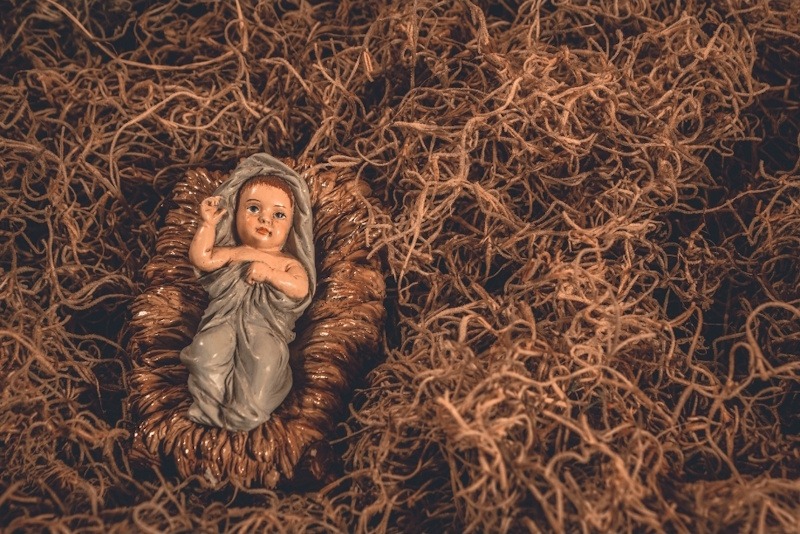
Yet one hope we can always rely on is that this childlike image of Christ in the manger will grow within us, enabling us gradually to feel his presence—as we sang:
“No ear may hear his coming; but in this world of sin, where meek souls will receive him, still the dear Christ enters in” (O Little Town of Bethlehem).
As we stand on the edge, let us, this New Year, step forward and allow the dear Christ to enter our lives, and perhaps we will experience change. Who knows—things might be better than what we have left behind.