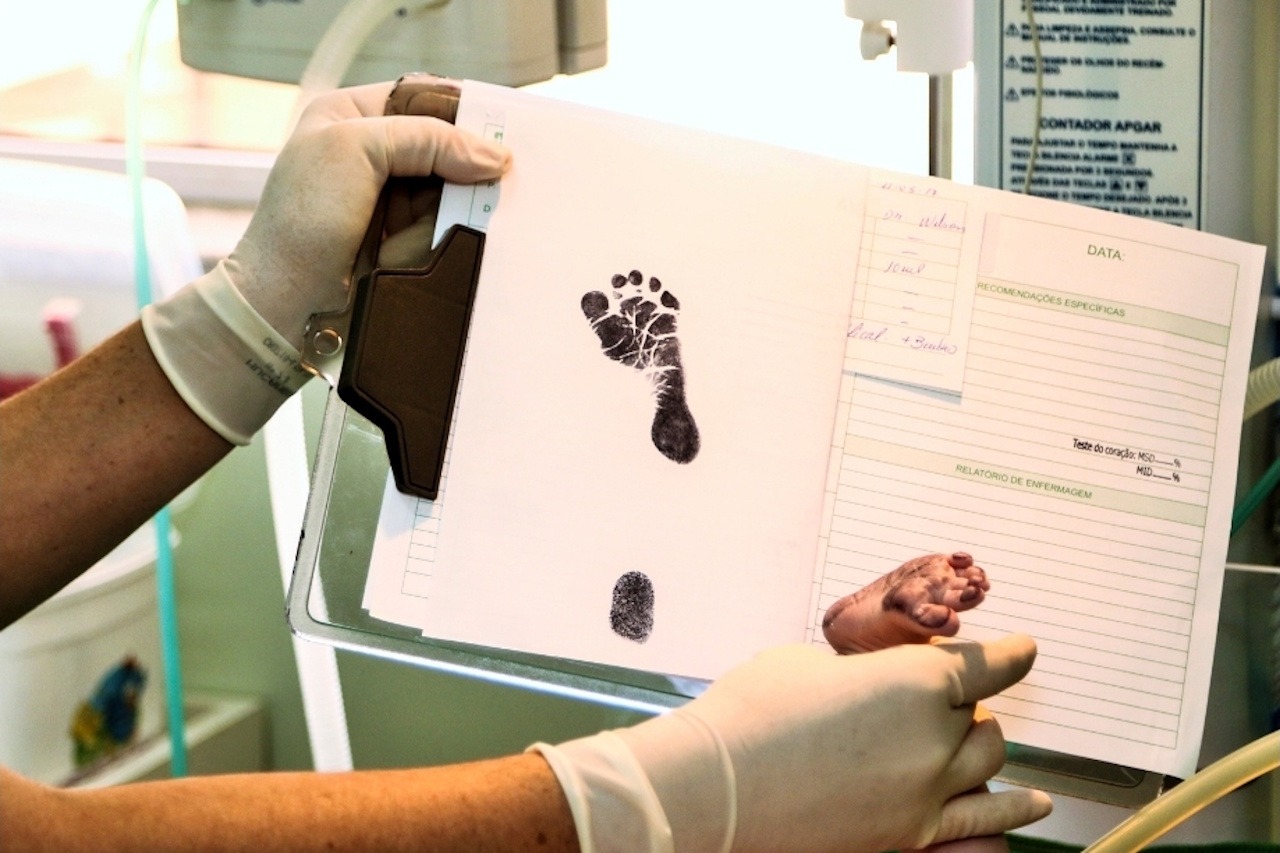
When you’re together with a group of friends in a comfortable atmosphere, it can be interesting to ask each one to share where their given name(s) came from, or why those names were chosen. The origin of our names can tell us a lot about how our identities were formed, before we were in a position to have anything to say about it.
In my case, I was the first granddaughter on both sides of the family, and it seems there was some discussion about the name, because my parents had each lost a sister under tragic circumstances. I could not be named for one deceased aunt but not the other without appearing to favour that side of the family. Finally they settled on Susan because the name was neutral … although one grandmother was heard to mutter, “I think we had an Aunt Susan on my side of the family…”
The name Jesus, “God saves,” appeared in a dream to Joseph, in the Gospel from Matthew we read on the Fourth Sunday of Advent. We can draw a few straight lines to this week’s readings about name, about recognizing identity (one’s own or others’), and one’s deep sense of call – one’s name in the heart of the Holy One.
Our reading from the second prophet called Isaiah testifies to a sense of calling rooted in the very beginning of the prophet’s existence. But was this really about this particular prophet? The language in Hebrew is the feminine singular, which was more commonly used to designate a whole people, usually “Zion” or “Jerusalem.” In this context the name, and the call to be a light to all the peoples of the world, is a collective one, not an individual possession.

Psalm 40 lends itself to a similar interpretation – is this a singular individual claiming the dignity of a personal call to announce good news to a whole people, or is it a dignity given to a people itself? The “I” might be collective here as well.
John the Baptist, oddly enough, does not recognize Jesus except by dint of the remarkable events surrounding Jesus’ baptism in the Jordan. In the gospel account of John they’re strangers, not cousins. John did not know who Jesus was, except for the vision of the baptism brought by Jesus in the Holy Spirit that transcends the baptism conferred by John with mere water. What we’re seeing here is a later generation of development in theological thought about the identity of Jesus, and about the nature of the salvation brought by “God saves.”
(Keep this in mind if you hear, “Doctrine does not change.” It most certainly does develop and evolve over time, often in ways that a prior generation couldn’t have imagined.)

In the words of Sr. Maria Boulding (+2009), a Benedictine nun of Stanbrook Abbey in England:
You yourself are God’s creative word of love. … The word within you is your own centre, your deepest reality and your freedom. It is God’s utterance of your new name, the name that reveals to you your destiny and meaning and all that you can become … There is a growing sense of identification between ourselves and this word, and in this we are sharing, in our fumbling way, in the experience of Jesus. He is the Word, yet as [human] he had to listen, and still does listen, to the Word that he is… This is what the gift of the Spirit is, this consciousness of identification with the Word within.
Addressed to “you,” a person, or “you,” a faith community? Maybe both?
© Susan K. Roll
*Edited from the Reflection of January 15, 2023

Susan Roll retired from the Faculty of Theology at Saint Paul University, Ottawa, in 2018, where she served as Director of the Sophia Research Centre. Her research and publications are centred in the fields of liturgy, sacraments, and feminist theology. She holds a Ph.D. from the Catholic University of Leuven (Louvain), Belgium, and has been involved with international academic societies in liturgy and theology, as well as university chaplaincy, Indigenous ministry and church reform projects.