Jesus had a way of absolutely flooring people. He was already attracting crowds by healing the sick, and now we see him sitting down and teaching for the first time in his public ministry. What he had to say was revolutionary.
Blessed are the poor in spirit? Blessed are the meek? That doesn’t make sense. Being poor, in spirit or anything else, is no picnic. Being meek makes you pathetic, and what’s worse, vulnerable. Is this good news? Is this even safe?
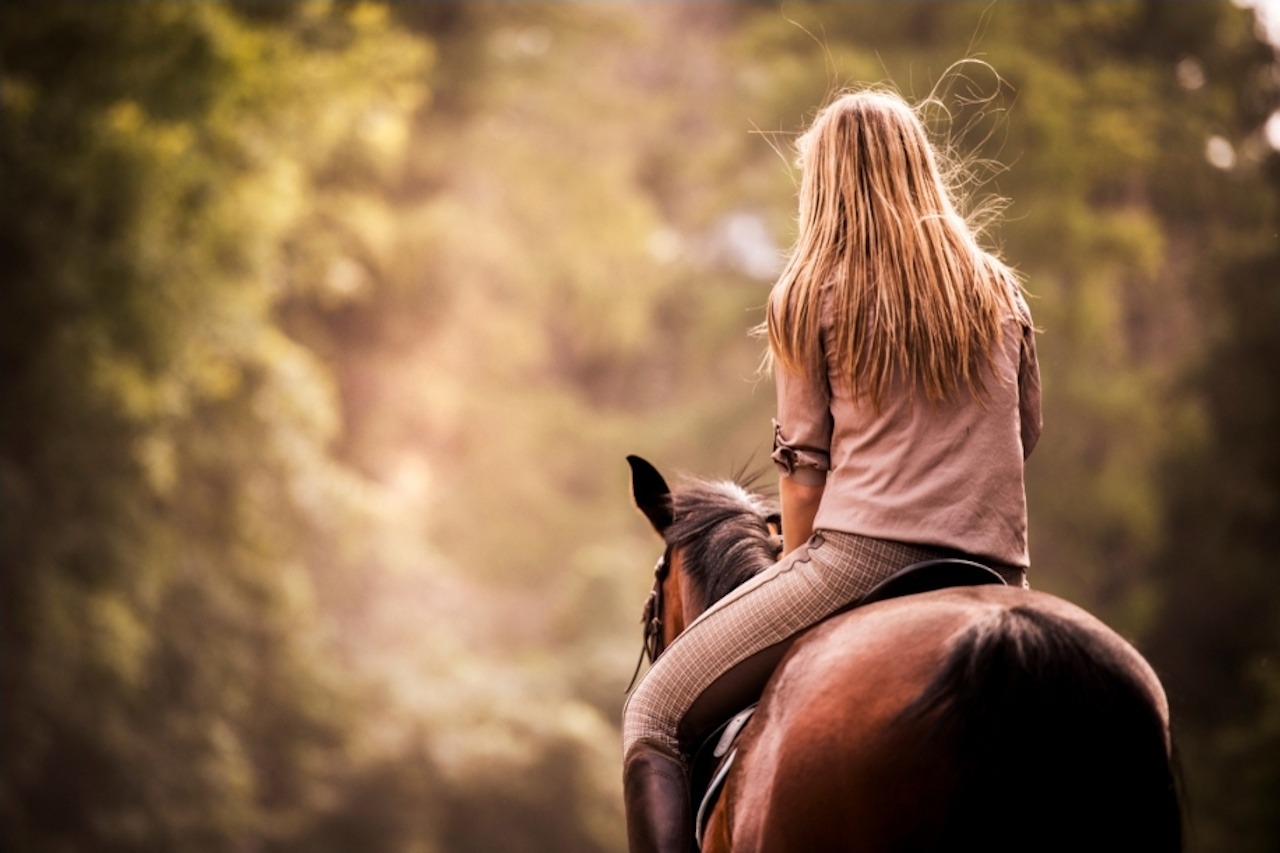
Scripture scholar Werner Weinreich compares the attitude Jesus asks us to take on to that of a horse. The Greek word that Matthew uses for “meek,” praeis, doesn’t mean a weakling or a compliant victim. This word was used of war horses, or horses who pulled chariots, who instantly and quietly obeyed the tug on the reins. There’s nothing weak about a tall, muscular horse. Yet the horse will comply with the rider’s commands when the two work together and the horse trusts the human.
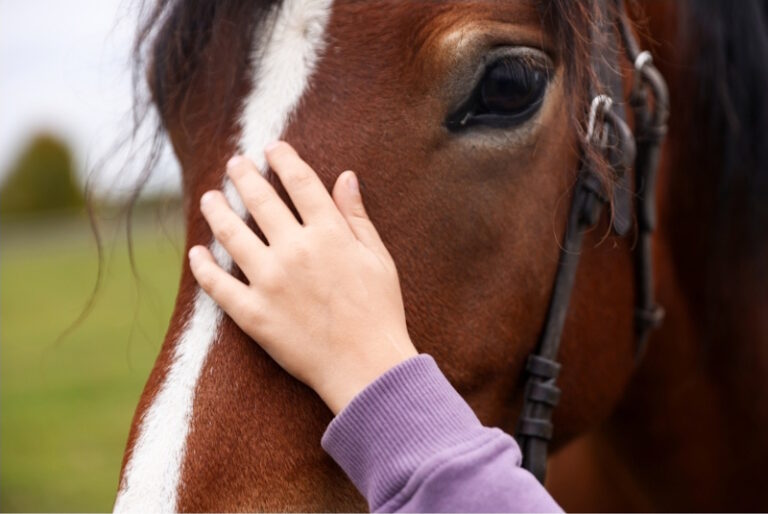
To become a real equestrian you need to begin riding at an early age – like age 2. I started riding lessons at age 69 — really, really too late. A mature person will tend to overthink the process. For several months I had been making progress and gaining confidence, until I tried to learn how to post a trot (moving up and down in the saddle to avoid crashing down on the horse’s back.) At that point I was keeping track of the reins in my hands, my feet in the stirrups, my legs against the horse’s side, my eyes ahead and my rear end in the saddle all at once, and I was giving the horse confusing commands. Finally my riding instructor shouted,
“If you’re not careful you could de-train the horse!”
And I was shocked. I didn’t know that an incompetent rider could actually damage the poor horse’s training.
Now this is how the image of a well-trained horse fits into the Beatitudes. The rider has to be in charge, and the horse has to be able to trust the rider. We’re the horse — strong, swift, noble creatures, capable of so much – but only when we can respond to the direction given by the rider. That requires attentive awareness.
And the rider – well, call the rider what you will, in the spirit of the twelve-step program term, “the God of our understanding.” God/de, the Holy One, Creator, Spirit, Mother, Father, Wisdom, Sophia for that matter—whatever you choose.
Let’s look again at a few of the Beatitudes through this lens:
“Blessed are the poor in spirit, for theirs is the kingdom of heaven.”
We can be blessed/happy/joyful when we can somehow hear the voice of the rider, but that means we have to get out of the way sometimes – to silence the noise all around us so we can hear.
“Blessed are those who mourn, for they will be comforted.”
Even with pain, depression or fear for the future so near, a space opens up for the Spirit’s presence. We might not have noticed it otherwise – or needed it so much.
“Blessed are the meek.”
For they’re not afraid to let go and let God.
“Blessed are the merciful.”
The more we can open up spaces of reconciliation, or dialogue, or forgiveness, the more Creator’s compassion pours into the space.
“Blessed are the pure in heart.”
With a sincere heart, we’re less likely to make mistakes by not hearing the voice of the Spirit. We can face mistakes, ask forgiveness, and move on. We’re not afraid to let Holy Wisdom take over.
“Blessed are the peacemakers.”
All human peacemaking reflects the Holy One.
“Blessed are you when they persecute you.”
For the early Christians, or anyone under threat, divine strength supplied what human strength lacked.
The poor, the needy, those who mourn, are all adjectives for the same people. And they’re all us, in different ways, or different circumstances, at different times in our lives. Even the most overlooked, least important persons can bring about the in-breaking of the living presence of the Holy One upon the earth. And that’s us too.
Finally, to give due respect to the intelligence of the horse: I was having trouble with Coco, the practice horse, toward the end of the lesson when she’d just go off on her own way and didn’t follow my commands. I thought I must be doing something wrong. Finally the instructor told me,
“She knows that a riding lesson lasts half an hour in the saddle. She’s heading toward the door of the arena that leads to her stall.”
And I had to laugh out of recognition. For years I had served as the chief negotiator and later union president of my local professors’ association. And Coco, bless her heart, was a union horse. She refused to work off the clock.
© Susan K. Roll
*Revised from the Reflection of February 5, 2023.
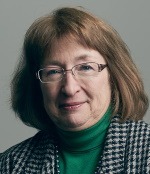
Susan Roll retired from the Faculty of Theology at Saint Paul University, Ottawa, in 2018, where she served as Director of the Sophia Research Centre. Her research and publications are centred in the fields of liturgy, sacraments, and feminist theology. She holds a Ph.D. from the Catholic University of Leuven (Louvain), Belgium, and has been involved with international academic societies in liturgy and theology, as well as university chaplaincy, Indigenous ministry and church reform projects.