
Reflection for the Fourth Sunday of Easter C
Readings: Acts 13: 14, 43-52 (RM) or 9: 36-43 (RCL); Psalm 100 (RM) or 23 (RCL); Revelation 7: 9, 14b-17 (RM) or 7: 9-17 (RCL); John 10: 27-30 (RM) or 22-30 (RCL).
There’s one core image. One image in this week’s readings, one theme. One that reverberates comfort, shelter and protection especially to those who need it most. But it’s a slippery image. The shepherd and the sheep are two different species. Sheep are vulnerable to predators. They fall into ravines. They need the shepherd. What’s slippery is when the image is applied by way of analogy to the lay members of the church and the clergy. It can lead to clericalism.
Let’s use the readings a bit differently. I’d like to look at the First Reading for this week in the Revised Common Lectionary:
Now in Joppa there was a disciple whose name was Tabitha, which in Greek is Dorcas. She was devoted to good works and acts of charity. At that time she became ill and died. When they had washed her, they laid her in a room upstairs. Since Lydda was near Joppa, the disciples, who had heard that Peter was there, sent two men to him with the request, “Please come to us without delay.”
So Peter got up and went with them, and when he arrived they took him to the room upstairs. All the widows stood beside him, weeping and showing tunics and other clothing that Dorcas had made while she was with them. Peter put all of them outside, and then he knelt down and prayed. He turned to the body and said, “Tabitha, get up.”
Then she opened her eyes, and seeing Peter, she sat up. He gave her his hand and helped her up. Then calling the saints and widows, he showed her to be alive. This became known throughout Joppa, and many believed in [Christ.] Meanwhile he stayed in Joppa for some time with a certain Simon the tanner.
New Revised Standard Version updated edition
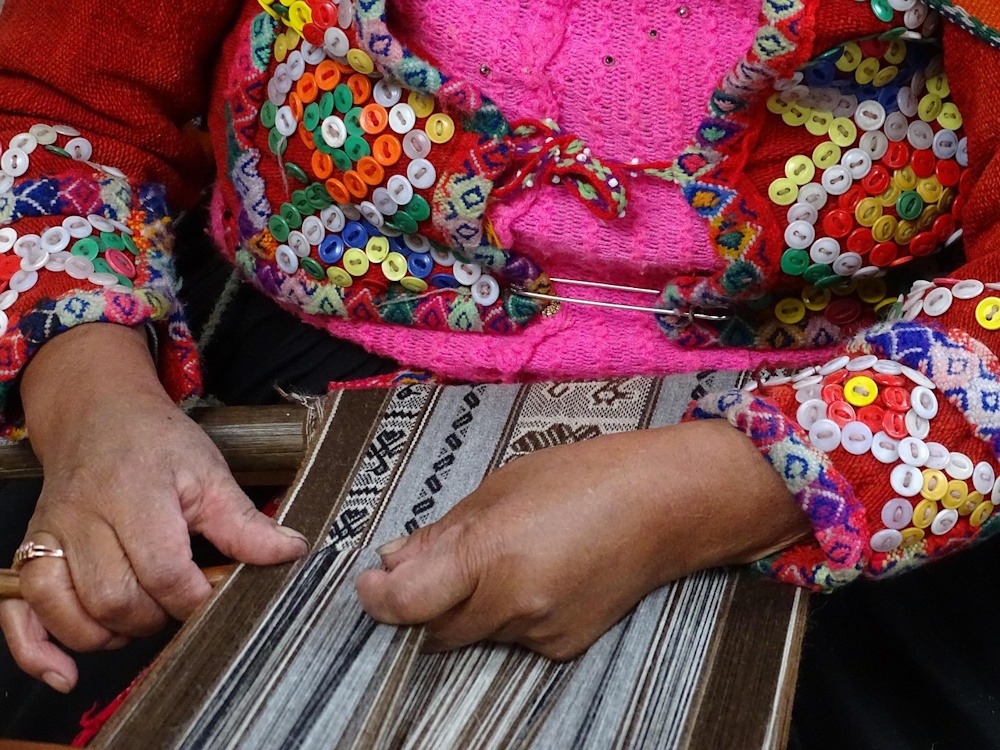
A few interesting aspects of the story that show up in the Greek but not in the translation: the name Tabitha/Dorcas means “Gazelle.” She was clearly able to source wool to spin and other materials to sew clothing to give away, not only to poorer members of her own faith community, but to anyone in need – the “widows” were clearly distinguished from the Christians.
Luke refers to her as a “disciple,” mathetria, the only time that the feminine form of the word is used in the New Testament. But in a sense she was a deacon as well, tending to the practical charitable needs of the poorest around her. Her diakonia was in her generous expenditure of her own resources, and her own skilled handwork, to provide clothing for those in need. And they clearly loved her.*
Luke’s original text in Greek uses the same word for “get up” and “resurrection.” Peter got up to travel to Joppa, and Dorcas rose up from her deathbed. Before Christ’s death and resurrection, a few of his disciples tried to pull off their own miracles, and failed. Now Peter knelt in prayer, and she came back to life. How, we don’t know. In Acts this was the second time Peter restored life to a deceased person. So the rehabilitation of Peter’s credibility is part of this story. From this flawed personality who was always getting it wrong, overreacting, misinterpreting or flat out denying Jesus, new life could flow out, restorative life, in the Spirit.
And so it can from us. Most of the time, the way we give life to others will be far less dramatic. It might be speaking words of encouragement and hope to someone who’s weighed down by grief or loss, illness or unsurmountable difficulties. It might be something practical, whether clothing, food, or a ride to an appointment.
There are ways to give life, in everyday ways, to each other. In a world increasingly damaged by economic and political instability, and fear for the future, where empathy has become a dirty word in some circles, even modest gestures of giving life to each other are nothing less than counter-cultural.
We don’t need to weave fabric or sew new garments to clothe another person in strength, hope and love.
© Susan K. Roll
*Carol A. Newsom and Sharon H. Ringe, in The Women’s Bible Commentary (London: SPCK, 1992), remark that, “when men take care of widows, Luke calls it ‘ministry,’ but when Tabitha performs the same services Luke calls it ‘good works.’” (p. 310)
Susan Roll retired from the Faculty of Theology at Saint Paul University, Ottawa, in 2018, where she served as Director of the Sophia Research Centre. Her research and publications are centred in the fields of liturgy, sacraments, and feminist theology. She holds a Ph.D. from the Catholic University of Leuven (Louvain), Belgium, and has been involved with international academic societies in liturgy and theology, as well as university chaplaincy, Indigenous ministry and church reform projects.