
“Hey, you got good stuff?”
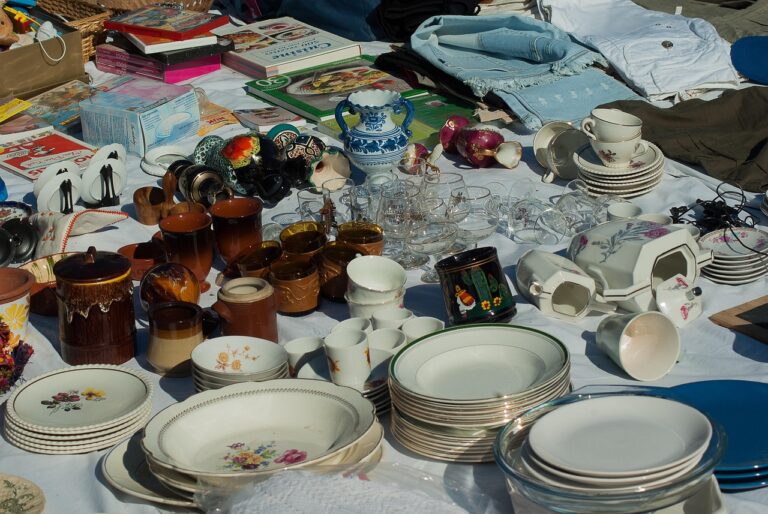
This time of year I’d hear that among my fellow foreign students in Leuven, Belgium, spoken to other students who had finished and were moving out. Most of the “stuff” had been secondhand to begin with. For almost all of these students, their life in Leuven had had a temporary quality from the start, and so did their furniture, kitchenware, bedding, even clothing. As a student I had had a black wool A-line winter coat I just loved. I left it behind for someone else to love.
The Gospel of Luke seems to have a thing about selling all one’s possessions and giving away the proceeds. The idea turns up in Luke 11:41 and 14:33, as well as in the Book of Acts. The author’s not thinking about, say, holding a garage sale of the stuff you decided you don’t need. For Luke, “all” means all.
So it’s not the same thing in Luke, even if the sellers end up donating all the proceeds to their local Christian community. Check out Acts 2:44-45 and 4:32-37. Or, if you want it darker, Acts 5:1-11, the story of Ananias and Sapphira.
Whatever Jesus himself might have said on the subject, this was clearly a characteristic of the first generation of Christians in his homeland. Granted, their sense of time was very different from ours. They expected Jesus Christ to return in glory next week, next month, maybe next year, but in any case “before all of those who are now alive will have fallen asleep.” In the face of the imminent parousia, the glorious second coming of Christ, you might not need all your stuff. And you certainly couldn’t cart it around with you if you were on the road telling anyone who would listen about a marvellous prophet of Israel who taught, healed, was crucified and rose from the dead.
Our Gospel passage might look at first glance like a set of instructions given by Jesus to the followers he addressed in strikingly, perhaps disconcertingly affectionate terms. The separate directives hang together, however, when you think about what kind of courage was necessary to leave familiar surroundings to proclaim a whole new belief system that was like nothing your hearers could recognize, and might incite them to anger. The point of reference and source of strength is faith – not credulity or resignation, but a deeply-rooted, all-encompassing conviction of God’s never-failing presence and incomprehensible love, no matter what happens. And the Holy One is nothing if not breathtakingly, unimaginably, generous – a “spendthrift lover,” as it says in an old hymn.
This gives us a platform for applying these words on a level that makes sense in our own lives, given that few are likely to take these words literally. If we can let go of unnecessary possessions, what else can we then release more easily? Fear? Anger? Obsession? (That’s one of my favourites. I have a habit of writing revisionist history in my mind as if the new story will somehow change the pain, or just the ragged edges, of the past.) Maybe just plain self-centredness. Or even better, anxiety: the “worn out money bags” that represent constant worry about how we’ll get and keep our supplies for tomorrow, or next week, or our old age.
Scripture commentator Matt Skinner writes,
“When Jesus declares ‘where your treasure is, there your heart will be also,’ he says that we can train our wills and our ways of thinking (for that is what the heart symbolized in his culture) through the ways we use our money. Spend it all on yourself, guess where your heart will go. Give to those in need, your heart will go where God wants it to go. Moreover, your heart will find God in the process. For there is a sacramental aspect to charity, in which God becomes present to givers through those who receive and need their gifts.”
And just imagine what you can accomplish with all that freed-up energy.
© Susan K. Roll
*Edited from the Reflection of August 7, 2022.

Susan Roll retired from the Faculty of Theology at Saint Paul University, Ottawa, in 2018, where she served as Director of the Sophia Research Centre. Her research and publications are centred in the fields of liturgy, sacraments, and feminist theology. She holds a Ph.D. from the Catholic University of Leuven (Louvain), Belgium, and has been involved with international academic societies in liturgy and theology, as well as university chaplaincy, Indigenous ministry and church reform projects.