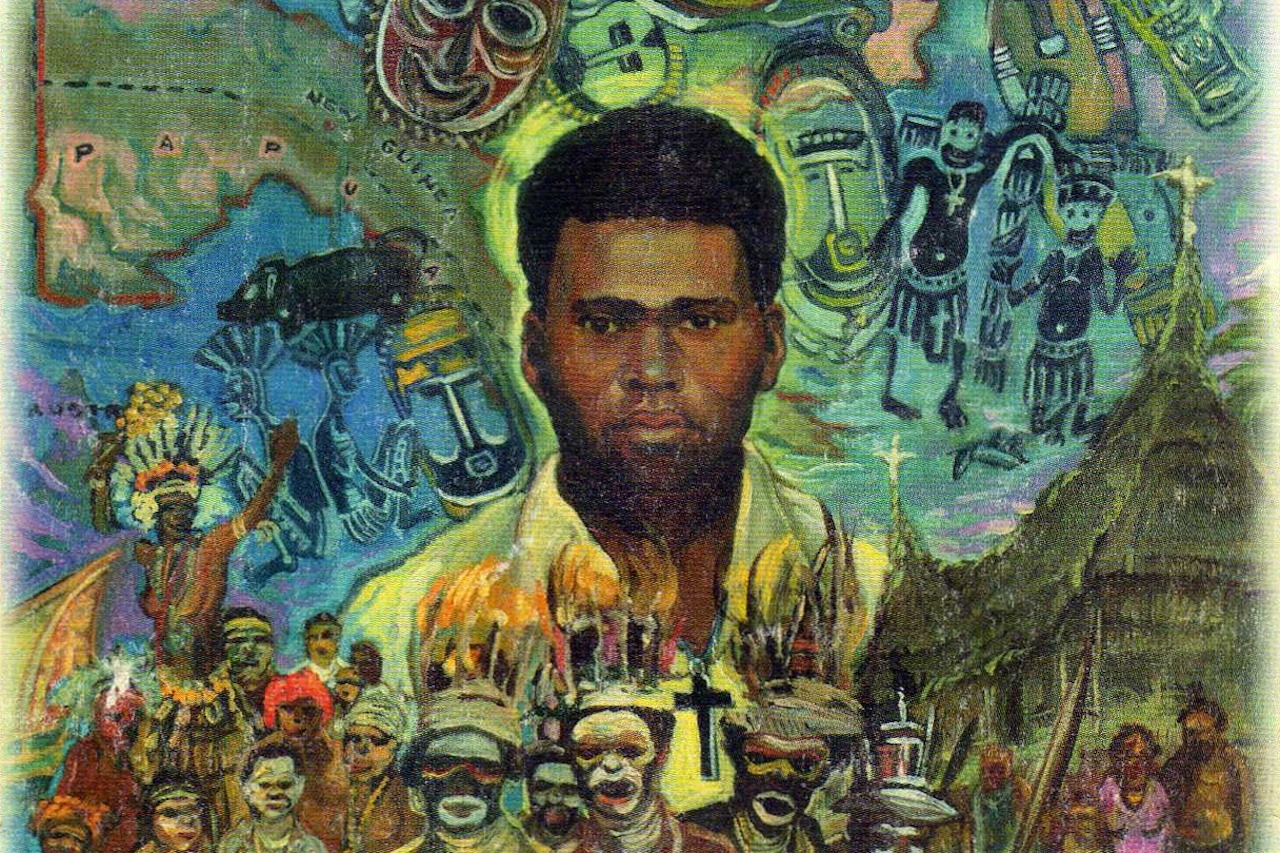
As we fast approach the canonisation of a Melanesian Catechist, Peter ToRot, it is a great move within the Church to recognise that local, indigenous people can offer something to the world, even many years after their death!
Story telling is a great ancestral gift to all cultures and in this case, for the people of Melanesia, especially in Papua New Guinea, where the origins of their people and distinct tribes are an essential means of existence.
Unfortunately today, with modem media and world invasion, even in the most remote villages and internal sacred areas, these innovations have changed the way culture is shared and passed to the next generation.
In the early 1940s Melanesia still had the gift of story that was basically their own, and shared in their own unique ways of bilas (dress), initiation, traditional dance and chants. Each tribe knew their origin and the purpose of their existence. Each new-born was given a specific name that established a relationship between them and their ancestors, often associated to the spirit world that held the secret of language, customs and to some extent, their features and purpose of existence – the “coastals” all knew who they were and knew their distinct difference to the those from the Highlands. This is very similar to the geographical difference that many cultures experience even among Europeans – the north and south divide.
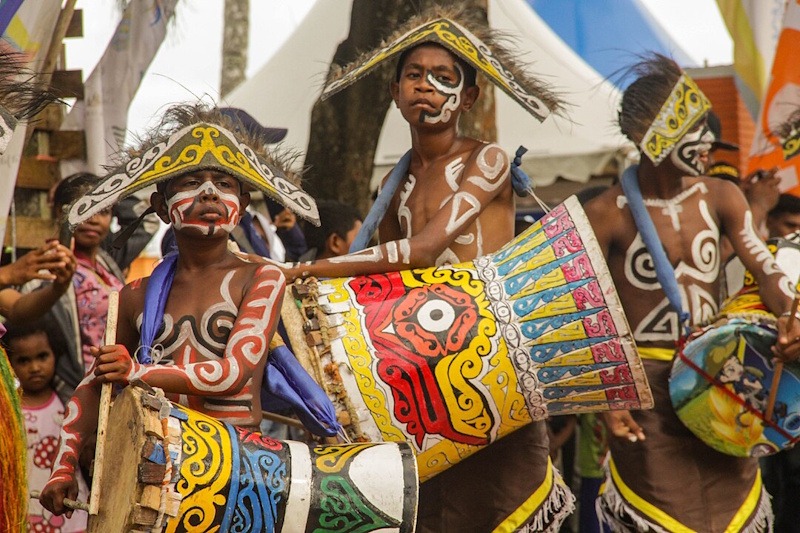
Today, as many cultures have crossed into new territories and become integrated, bringing a new way of life and communication, some traditional practices have become lost. In Melanesia, especially among the tribal societies, there is a struggle to hold on to what was once recognised as purely theirs: bilas now western dress, tokples now western language and many cultural practises now only for performance and entertainment.
On Oct 19, the Church, will recognise a simple catechist, who long before the Second World War, was happy to blend the Gospel story with that of his culture to support monogamous marriage and to prepare his local people for the sacraments of the Church which he loved to serve.
Many people lost their lives during the war years and our history books bear witness to the many heroic people during this period of history but in Melanesia, those who died often remain unknown. They were not part of the world story of war. This was the case until the local people of Rakanui, New Britain, blended into their cultural stories the life of Pita ToRot, who lost his life to preserve the culture of the local Church. The life of a simple indigenous catechist became a well-known story which has reached Rome.
For the first time Melanesia bears a Catholic Saint that will put them on the Liturgical map!
An ancestral gift to the Church.
Photo credit: “Penabuh Tifa dalam Suling Tambur” Copyright 2018 by Rian Tatuwo via Wikipedia. Some rights reserved.
License: By Rian Tatuwo – Own work, CC BY-SA 4.0, https://commons.wikimedia.org/w/index.php?curid=73711942


Thanks Rose Mary
The story of PNG as it moves to be ‘Modern Nation’ taking its part in the complex international scene is a reflection of what has happened with so many rich cultural traditions including that of Australia. We watched the recent celebrations of fifty years Independence from Australia alongside the signing of a mutual agreement in relation to defense and the receiving of a PNG Team into Australian Rugby!