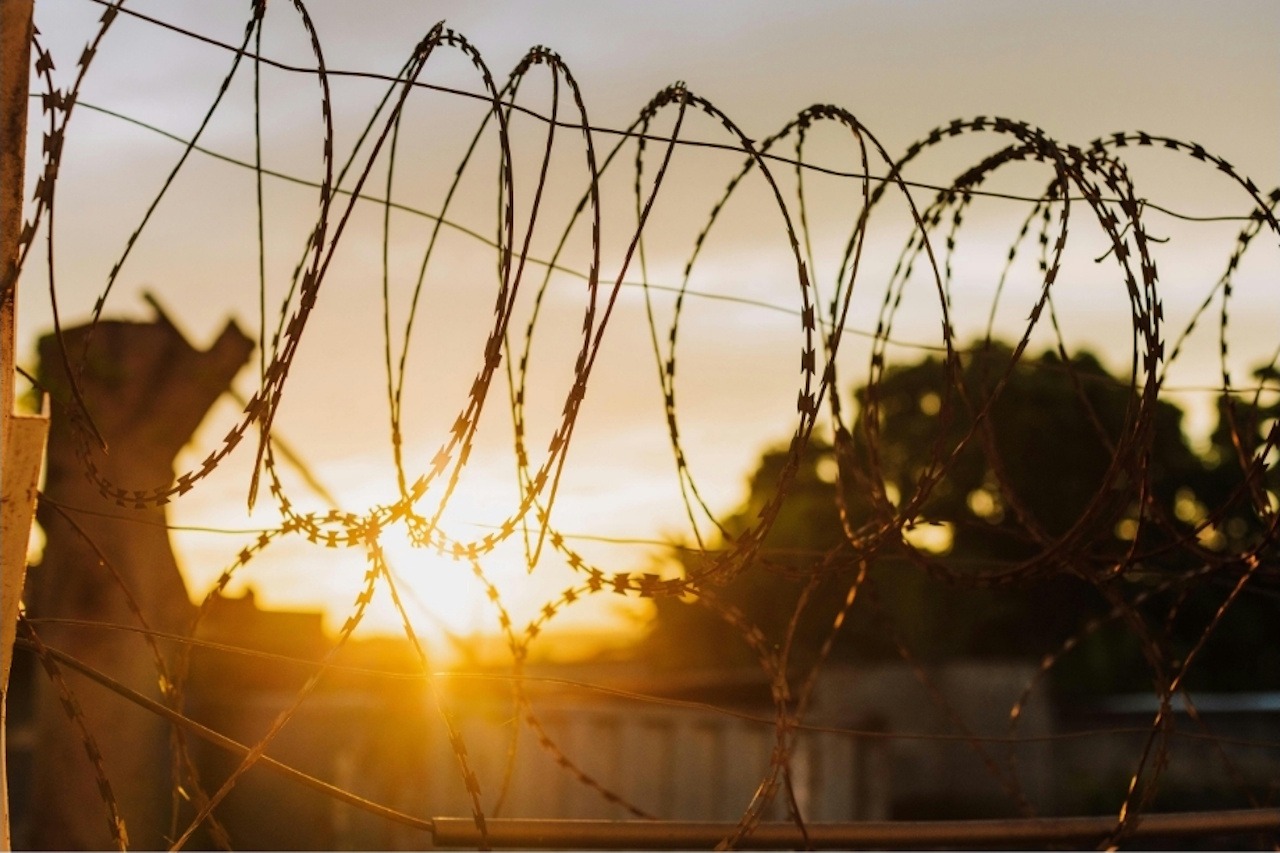
It was the sight of the barbed wire, half-submerged in the water, that got to me.
The river forms the national border’s natural boundary. There were the patrols along the riverbank. Then the wall, with a slippery surface. Then there was barbed wire strung in the water, difficult to see while they were swimming until they were almost upon it. The wire would tear at their flesh, in the dirty water.
Some border crossings can be easy. The officer asks what’s the purpose of your trip, how long will you be staying in our country, what are you bringing in, then they flip the passport back to you and you’re on your way.
Or they can be hard.
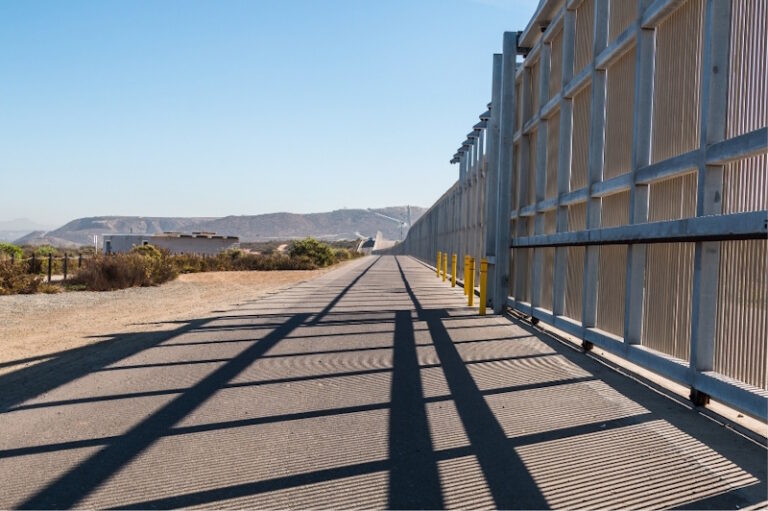
Negotiating the borderlands, or simply being a highly suspect foreigner in an unfriendly land, provides the setting for both our Hebrew Bible and Gospel readings, and for our world, today. Jesus and his party had to leave Galilee and cross Samaria to get into Judea, lands marked historically by mutual hostility.
When you read through the texts it’s actually quite remarkable that a young enslaved girl spoke up to her mistress, helpfully telling her that the famous prophet in her land could cure Naaman of his skin disease. Naaman was the commander of the Syrian army under King Aram. And just as remarkable was that Naaman was open-minded enough, or desperate enough, to go and visit the prophet, whom he wrongly assumed served on the staff of the king of Israel. And after following Elisha’s directions, he returned with his entire retinue to give thanks.
What’s not obvious at the end of this short reading was why Naaman believed that the God who had cured him could only be worshiped on God’s native soil – which is why he asked to take home several bushels of dirt. His own cultural prejudices blinded him to the fact that the God who worked healing miracles through the agency of the prophet in Israel, was not some tribal god bound to the land.
From the Gospel story we don’t know whether one or several of the ten men afflicted with a debilitating and contagious skin disease belonged to the Samaritan people that the Hebrew people despised. Jesus only remarks gently on the irony that the only one who turned around to return and thank Jesus for healing him, was a foreigner who belonged to a people considered as enemies.
Jesus wasn’t afraid of the borderlands, nor of crossing enemy territory for that matter. In John 4 he engages in a whole conversation with a Samaritan woman at the well, revealing himself to her as the promised Messiah. He gave her privileged knowledge that even his own disciples hadn’t guessed at that point.
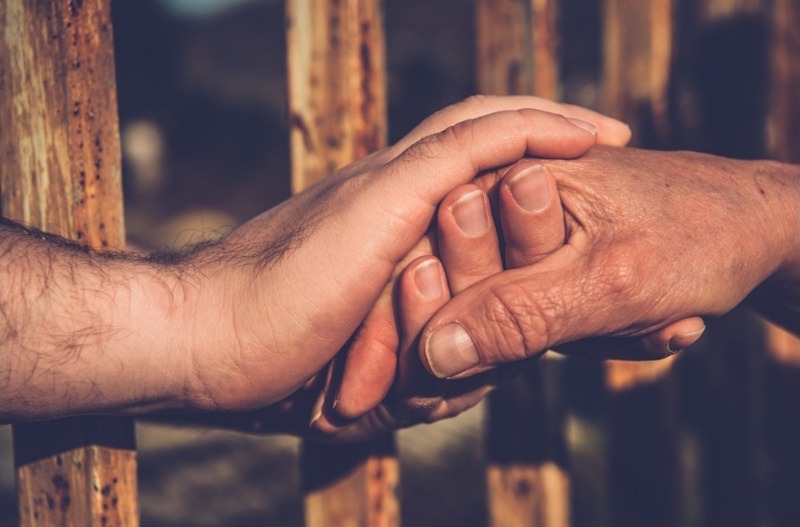
Several of Luke’s accounts can be grouped under the heading, “the Great Reversal.” God puts down the mighty from their thrones and lifts up the lowly. The rich man who ignored Lazarus and other destitute persons at his own gate languishes in eternal torment, while those who suffered poverty and disease find comfort in the afterlife. And here, an afflicted person who happened to be on enemy territory was healed – and returned with a grateful heart to give thanks.
The healing of the ten afflicted men appears in Luke as Jesus was making his way toward Jerusalem, where he would meet with, first welcome, then contempt, condemnation and execution as a criminal himself. On his own home territory.
Where did so many people get the idea that foreigners are, not just different in some ways from us, but threats? Since when did a tragically mistaken ideology affirm that people who cross the borderlands, if their skin is a certain color or they speak a certain language, are automatically criminals? How did it come to the point of incarcerating them under brutal conditions, in other foreign lands?
How are we called to live out our faith in increasingly threatening circumstances? Who are the prophets who can act as a source of welcome and healing? What are concrete ways in which we can model compassion, empathy and practical support? How do we clear away the barbed wire that sometimes entwines our hearts?
© Susan K. Roll
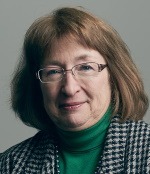
Susan Roll retired from the Faculty of Theology at Saint Paul University, Ottawa, in 2018, where she served as Director of the Sophia Research Centre. Her research and publications are centred in the fields of liturgy, sacraments, and feminist theology. She holds a Ph.D. from the Catholic University of Leuven (Louvain), Belgium, and has been involved with international academic societies in liturgy and theology, as well as university chaplaincy, Indigenous ministry and church reform projects.


Thank you once again, Susan for an outstanding, pertinent reflection! The questions at the end provide much fruit for thought! Our present day treatment of refugees in our country is a topic close to my heart so this article speaks volumes to me! Thank you! May your Thanksgiving be great wherever you spend it!