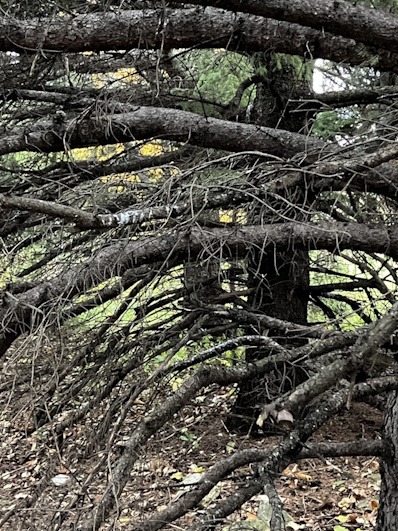
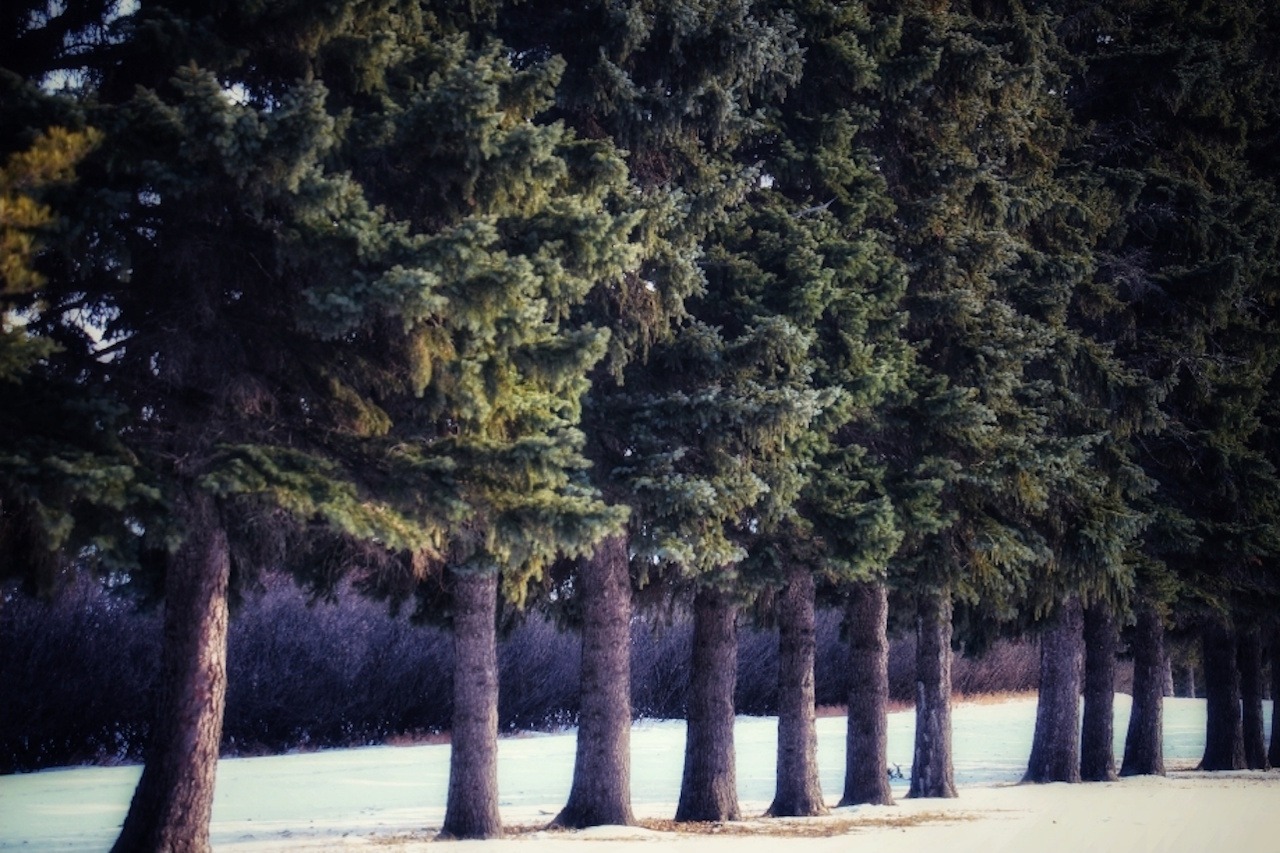
On October 15, a row of septuagenarian spruce trees that defined the Eastern edge of our property came down in one day. The serious forest fire season in Canada and a personal experience of fire loss in June heightened our awareness of our surroundings and compelled us to evaluate how “fire safe” our property is. We have noticed signs of these trees dying for several years but this year when we focused our attention on their health status and called in a well-respected arborist, we realized that postponing the decision to have them removed would only make the situation more urgent in the future.
Before these trees came down, we expressed our gratitude to them for all they have provided: an attractive all-season green backdrop to our garden, shelter from cold spring winds, privacy, and habitat for many species of birds, insects, and mammals.
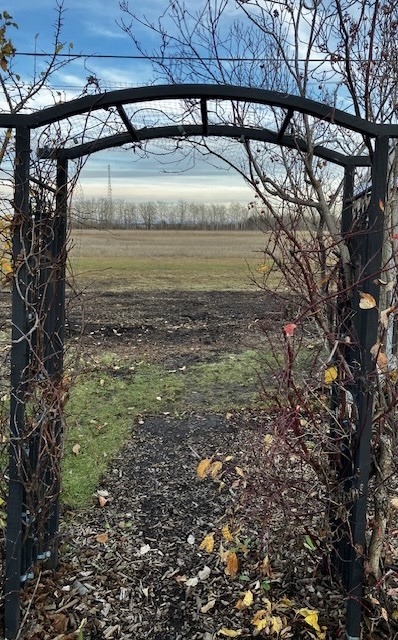
Now we look out onto a field with a small forest of aspens in the distance. The space immediately outside our property line is a well-used pathway for walkers and a route for snowmobilers in winter which reminds us that we will miss the gift of privacy the spruce trees gave us. But there is also open space with good soil on our property inviting us to consider possibilities.
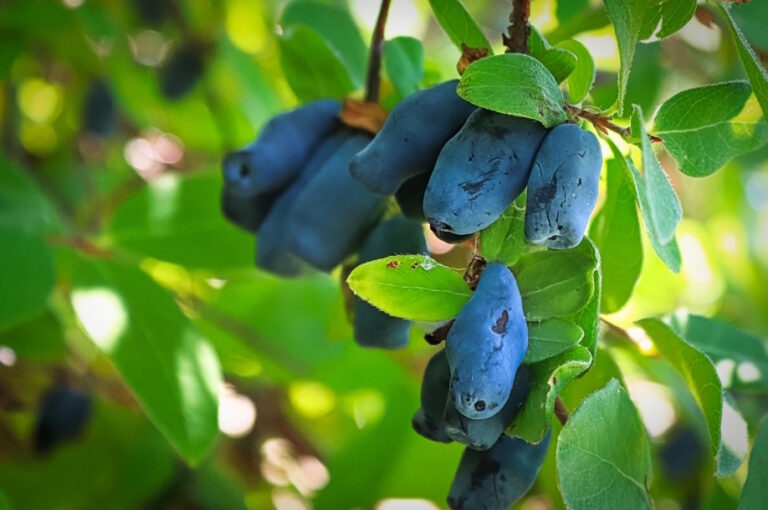
Close up of a haskap bush with berries
What Are Some Options that Come to Mind?
Planting a row of haskap bushes (Lonicera caerulea) along the line where the spruce trees stood would offer food for pollinators in early May and lots of nutritious berries for birds and humans in late June or early July. Choosing taller cultivars that grow to a mature height of 5 to 6 feet, such as ‘Berry Blue’ or ‘Aurora‘ would also restore some privacy as a “living fence.”
Planting a ‘food forest’ which copies the design wisdom of Mother Nature could help meet many needs of the human and more than human inhabitants of this property, with a focus on food needs.
Selecting certain native species of trees with a focus on sequestering carbon could be one of our responses to the challenges of the climate crisis. The biochemist and botanist, Diana Beresford-Kroeger, has provided a useful tree planting guide on her website to help choose appropriate trees for various regions.1
There will be a rare opportunity for all of us to hear this well-respected scientist speak and answer questions during a free online Zoom event on November 25, 2025. The title of this event is For Our Health and the Health of Our Earth. Registration for this online event is at: https://us02web.zoom.us/meeting/register/7jhgclnMRhWM2UPnIN1ZZg
The decisions we make will affect us, future owners of this property and the many seen and unseen species whose lives can be enriched by what will grow here. I am going to welcome winter this year and the opportunity it provides for us to slow down, do some serious research and focused thinking in preparation for what feels like an interesting and life-giving project next spring.
Wendy spent a good part of her adult life moving with her husband, never staying long enough to see an apple tree mature and bear fruit. When they retired, developing a food garden and planting hardy ornamentals became a passion. Weaving her previous studies in nutrition with her current interest in gardening has become a stimulating and life-giving activity.
Thank you Wendy… I found this an interesting reflection on possibilities which invite us to find new ways when faced with a loss or an ending… and the ability to always kive in an attitude of gratefulness even in those moments of loss.
Mary McInerney
4 months ago
Thank you Wendy.. I found this an interesting reflection on the possibilities which open at a time of loss or ending… and an invitation to live with an attitude of gratefulness even when all appears to be lost.
Lynda Browning
3 months ago
Thank you for a very thought provoking reflection. Also, thanks for including an invitation to a tree Zoom presentation.

Thank you Wendy… I found this an interesting reflection on possibilities which invite us to find new ways when faced with a loss or an ending… and the ability to always kive in an attitude of gratefulness even in those moments of loss.
Thank you Wendy.. I found this an interesting reflection on the possibilities which open at a time of loss or ending… and an invitation to live with an attitude of gratefulness even when all appears to be lost.
Thank you for a very thought provoking reflection. Also, thanks for including an invitation to a tree Zoom presentation.