
There’s a saying that goes, roughly,
“God created humanity in God’s own image. Then humanity returned the favour.”
This weekend Roman Catholics mark Saturday as All Saints Day, and pre-empt the regular cycle of readings on Sunday for All Souls Day. Protestants and Anglicans who use the Revised Common Lectionary celebrate this Sunday as All Saints (or might just use the readings for the 21st Sunday after Pentecost.)
How are saints recognized? Officially or unofficially? How do we know? What’s a saint anyway? How are they different from the holy and wise persons who radiate love, acceptance and serenity, or who undertake dangerous actions for the sake of others because of their faith, but don’t get the title?

I’d propose that praying to recognized saints for intercession for us or others goes back to the feudal system of the Middle Ages and its rigid hierarchy. By way of analogy to the social and political structures of the time, the belief developed that saints could be called upon in prayer as intercessors for Christians still alive on earth. That would make perfect sense in terms of the organization of such societies over the centuries in which political influence was gained, not by what you know, but who you know.
A highly-placed noble was in a position to make a case for special favours on behalf of someone in a lower position, to their overlord – duke, prince, king. And in turn they owed their overlord payment and military service. Patronage was the order of the day.
And it still is, particularly in nations or communities with a high degree of authoritarianism. Influencers have power, and so do faithful acolytes of dominant heads of state, if only through their degree of demonstrable loyalty and dependence on the top dog. If you know the right people, and they like you, you stand a better chance of getting what you want. Jockeying for favour points to corruption. And in societies not grounded solidly in the common good, or democracy, or justice for all, it runs rife.
Does God work like this? Here’s where our ancestors made God in their own image. An authoritarian head of state in their time would certainly work like this. In our time as well. Is God corrupt? That makes no sense. Is God accessible in prayer? Yes of course, but not like this.
This is where thinking has been evolving among more progressive Catholics who see the saints, not (or less) as powerful influencers with a monarch-God seated on the throne, but as honoured ancestors and models for the generations who come after. This is reflected in the title of Elizabeth Johnson’s 1998 book, Friends of God and Prophets, a quote from the Book of Wisdom 7:27, applied to the saints. In this spirit a Litany of the Saints might use as a response, not “Pray for us,” but “Pray with us.”
This shift in how we relate to the heroes and sheros who came before us, reflects a wide variety of contexts and the demands of their time and place. Sometimes it means defending poor or oppressed people at the risk of one’s own life. Sometimes it means persistent, undervalued or misunderstood labour to bring the work of Christ to fruition. Sometimes it means standing up to unjust power. Or sometimes simply reflecting wisdom, compassion and deep faith to one’s own family, friends and community.
A friend of mine tells a story about a young boy who travelled with his family in Europe, marveling at the beautiful stained glass windows in the churches and cathedrals. One day after coming home, he was in Sunday School when the teacher asked the children, “Who are the saints?” expecting them to shout out names.
This child replied,
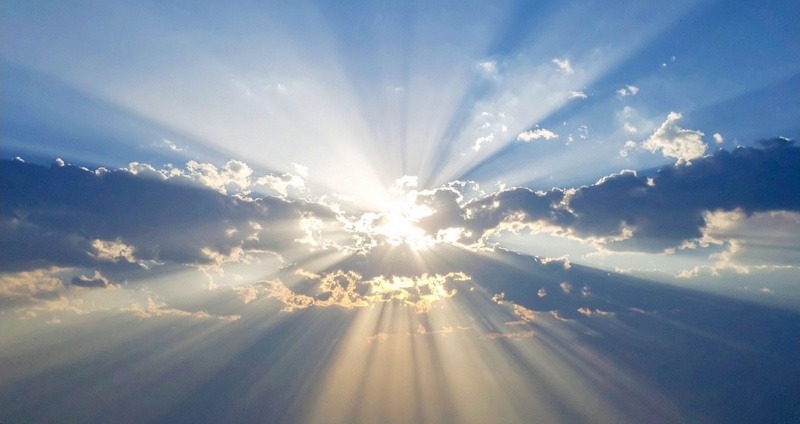
“They’re the ones that the light shines through.”
© Susan K. Roll

Susan Roll retired from the Faculty of Theology at Saint Paul University, Ottawa, in 2018, where she served as Director of the Sophia Research Centre. Her research and publications are centred in the fields of liturgy, sacraments, and feminist theology. She holds a Ph.D. from the Catholic University of Leuven (Louvain), Belgium, and has been involved with international academic societies in liturgy and theology, as well as university chaplaincy, Indigenous ministry and church reform projects.


Beautiful and informative! Thank you, Susan.
Oh how true! The ones through whom the light shines through! Thank you for demystifying saints and making them more recognizable.