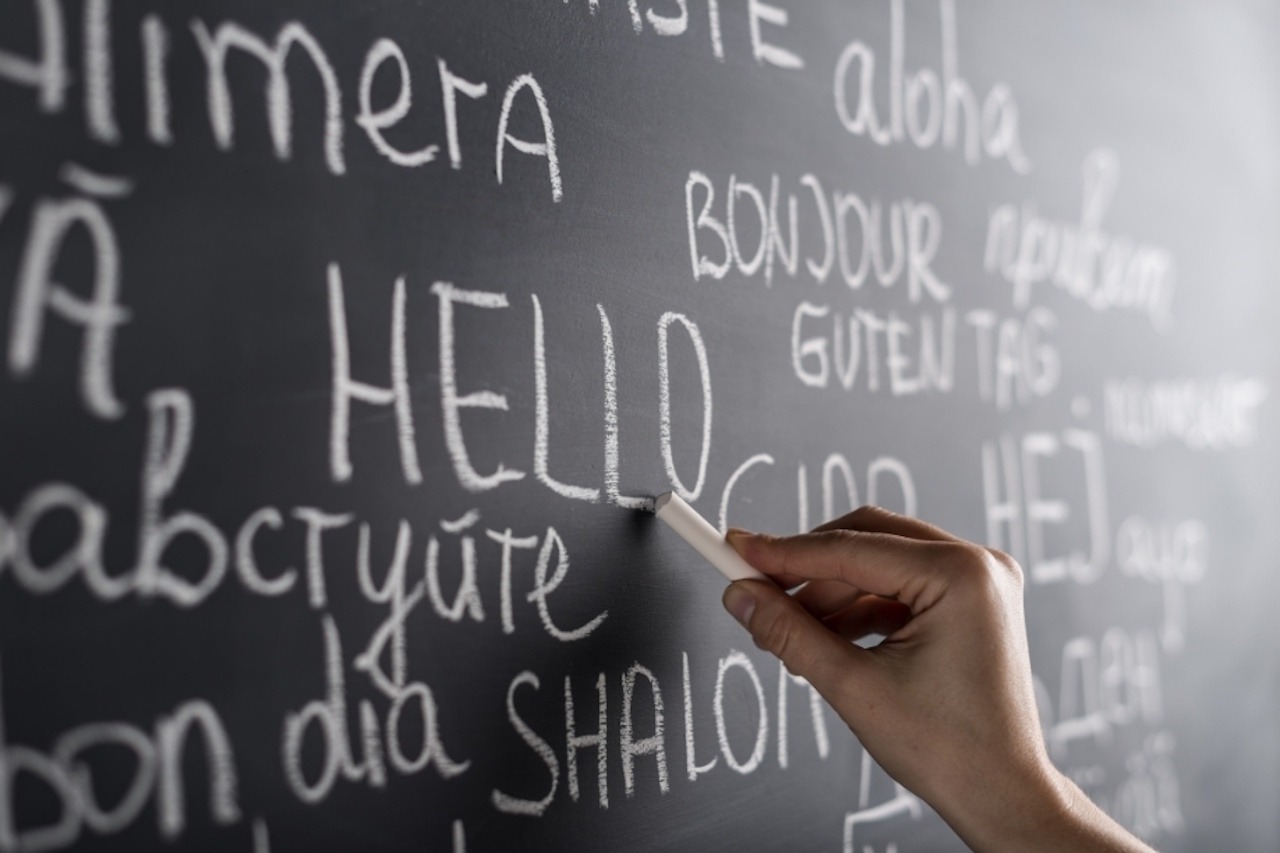
As I share life with three Vietnamese Sisters who are studying English, I am constantly reminded of the richness and complexity of language as a profound part of our identity and as a tool for communicating and building relationships.
There are many moments of confusion as we grapple to understand simple conversations and of laughter as we recognize a mispronounced word or a word in a wrong context or try to understand the complexity of grammar rules related to the use of different tenses. ‘It just sounds right’ does not help the one who is searching for the grammar rules to pass the test tomorrow.
These conversations have led me to ask questions about how I came to understand language especially in relation to myth and faith.
The Nursery Rhymes remain clear in my memory. What did they mean to me as a child? I can recall the illustrated pictures of ‘the Cow jumping over the moon’ and ‘the dish running away with the spoon’ What do they mean for my sister hearing them for the first time in a foreign language?

The answers to the Catechism questions remain clear but how did I understand them then and how have many lost meaning today remains mystery.
In many small groups recently the questions of religion and language have been raised.
Translation is certainly a wonderful tool to enable relationships between people of different cultures, but it also has its challenges and limitations.
As a child growing up in a Latin speaking Church we were told it was good to use a ‘dead language’ since it did not change but what does that have to say about being a Living Church in relationship with a Living God.

Recently I was given a translation of Our Father direct from Aramaic which opened up new horizons. Internet articles explain the Aramaic words ‘Our Father who art in heaven’ can mean ‘Our Source in the Cosmos’.
Abwoon meaning father also carries the sense of “breath of life” or “generative source,” blending masculine and feminine aspects of creation.
D’bwashmaya literally means “in the heavens” or “in the expanse,” not just a distant throne room but the living cosmic order surrounding us. This shifts the image from a remote king to a life‑giving presence immanent in creation.
The Aramaic text frames the prayer as a living, relational covenant:
God as Source and Sustainer of all life, not just a distant ruler.
A call to active cooperation in God’s will.
A plea for daily nourishment and inner freedom.
A commitment to forgiveness and unity with the divine.
A reaffirmation of God’s ultimate authority and the believer’s role in expressing it.
The Lord’s Prayer is not only a petition but a spiritual practice — aligning the heart, mind, and hands with the life‑giving presence of God in the cosmos and living out that alignment in daily life.
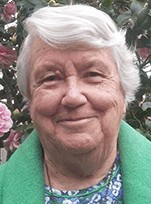
Mary McInerney has been an Australian RNDM for more than sixty years with experience of mission in education in Australia, member of General Council for twelve years and mission in Kenya. Now living in Melbourne, she is involved in archival work for the Province and has enjoyed opportunities to share her RNDM experience and knowledge of our Constitutions through various on-line programmes.


Thank you Mary, for your reflection on the “vagaries of language”. I particularly appreciated your insight that “The Lord’s Prayer is not only a petition but a spiritual practice”
I read today a comment from the Canadian Council of Churches, which reminded me of your Bog: “Canadian congregations are already culturally diverse. But diversity is not yet interculturality. The question is whether we have the words, the habits and the courage to be transformed by one another.”