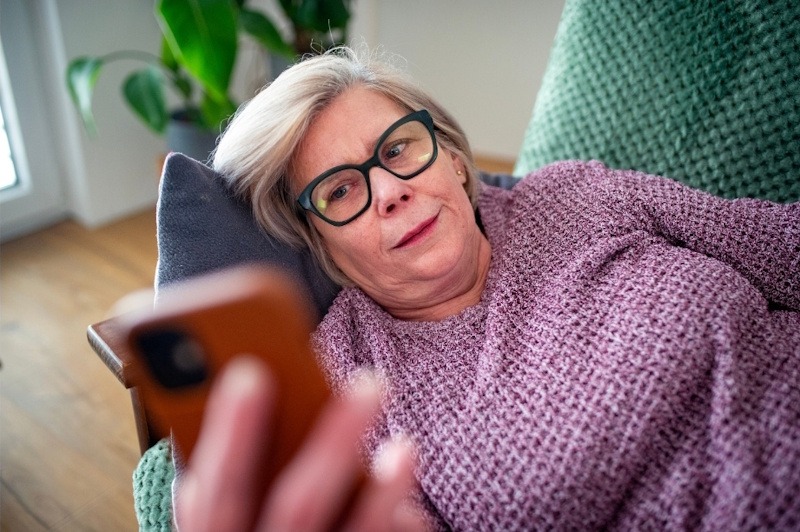
Even if we are not teenagers glued to our smart phones for hours everyday, 99% of us would probably have to confess to using social media. I own up to checking out Facebook every day. Occasionally I check into Youtube to find an opera production that I number among my favourites, or an older film that I want to see again. I also use, and this seems to be more and more frequent in these days of energy crises, Zoom and Whatsapp, which I understand are more properly defined as “communication tools” rather than social media. I certainly do not look at Trump’s misnamed “Truth” or Elon Musk’s “X.”
Why I like Facebook? I am part of two neighbourhood groups, three or four local groups concerned with care of the environment, and the local civil defence groups, those groups that warn us when dangerous cyclonic storms are approaching and what we should do.
Our neighbourhood groups are great at keeping us informed about life in our neighbourhood, both the good and the not-so-good. Someone might have spare garden produce, someone might be looking a ride into town as their car has broken down, we may be warned about burglaries in our locale, or there might be advice about the state of the roads after a storm.
I love our environmental groups and every morning check out the one devoted to New Zealand birds. This has more followers than any of the websites I go to as part of my daily routine. It is great to see that environmental concerns are capturing so many though not our government.
Initially, social media seems to have been intended as something out there that would help people, individually and collectively. That is still happening but how should we respond to the challenges coming our way, via “fake news” thanks to “X” or “Truth.” I am not all that IT savvy enough to have any answers, but hopefully there are others who perhaps could offer constructive ways on finding out the truth about situations. After all, we are disciples of the one who said:
Susan Smith RNDM is a lecturer emerita in The University of Auckland’s Department of Theology. Her PhD was on developments in Catholic missiology after Vatican II. After her retirement from The University of Auckland, Susan also provided NT modules for the University of Newcastle, Australia, and a Women in Leadership module for Duquesne University. Susan lives with another member of her congregation in Whangarei, New Zealand, where both are committed to exploring experientially what it means to live in an eco-community. Both are involved in neighborhood environment organizations. They are particularly interested in what might shape eco-spiritualities in New Zealand.