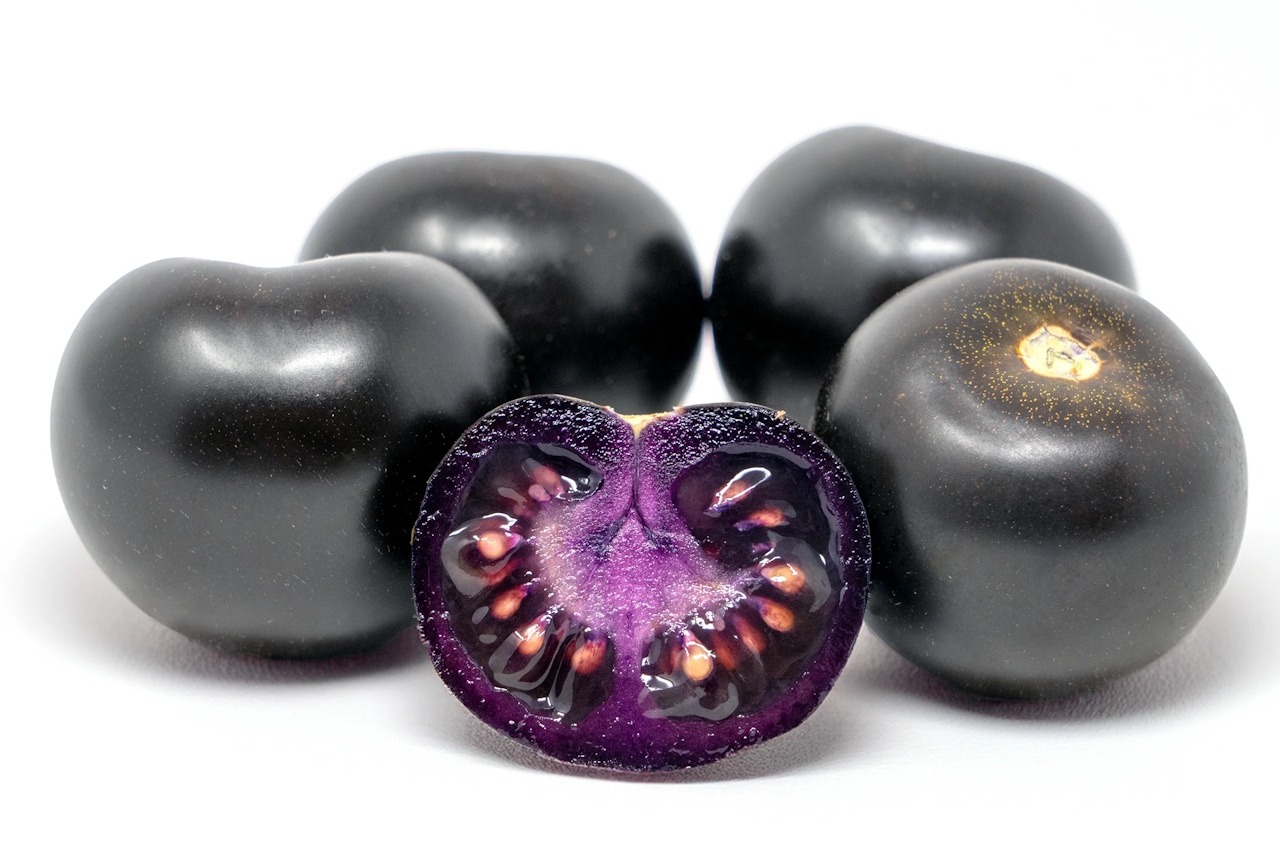
This question was posed last month at a local Seedy Saturday event during a discussion about a recently approved genetically modified (GM) tomato that is trademarked as The Purple Tomato™. This tomato has an enhanced purple colour because of genes taken from the snapdragon flower (Antirrhinum majus).
The Purple Tomato™ is being promoted for its anthocyanin levels. Anthocyanins offer benefits of antioxidants commonly available in many fruits and vegetables with a purple colour: eggplant, blueberries, haskap berries, and many other tomatoes such as ‘Pruden’s Purple,’ ‘Indigo Rose’ and ‘Cherokee Purple.’ Health Canada’s own research revealed that:
“the anthocyanin levels in the GM tomatoes are in the same range of other foods, including other tomatoes.” 1
The Purple Tomato™ is approved in Canada as a “novel food” because it has DNA from another plant species in it. As gardeners and consumers, is it our persistent desire for something new, the “novel,” that will tempt us to include this tomato in our growing or menu plans?
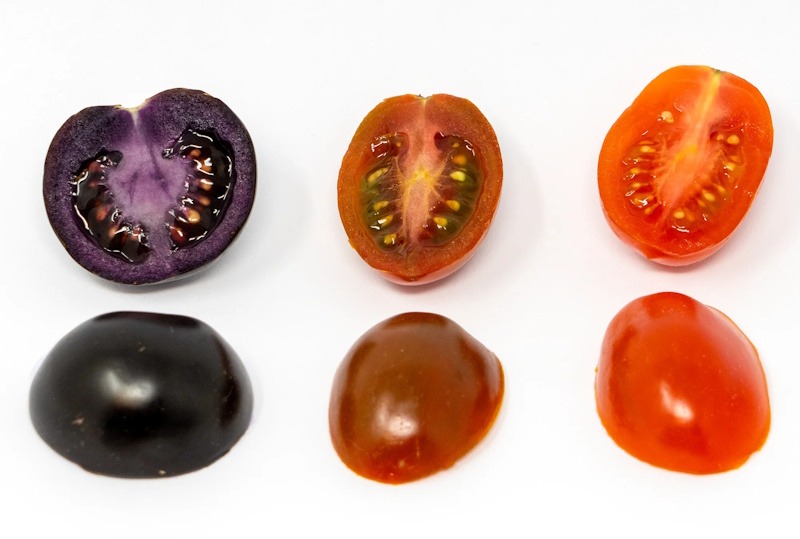
Side by side comparison of The Purple Tomato™ and two heirloom varieties (Courtesy: Norfolk Healthy Produce)
As a seed saver who has been gardening on the Canadian Prairies for many years, a red flag went up as I remembered the story of a Saskatchewan farmer named Percy Schmeiser2 who was taken to court by a large corporation for allegedly growing its patented canola without purchasing the seeds from the company. The trademark symbol, TM, after the name of this plant means that a patent is held by the company that genetically engineered it. What does this mean for gardeners across Canada who save and trade seeds with each other informally and/or at Seedy Saturdays? At the present time, the company is allowing us to save seeds of these tomato plants and regrow them, but we are not allowed to sell the seeds, plants or fruit.
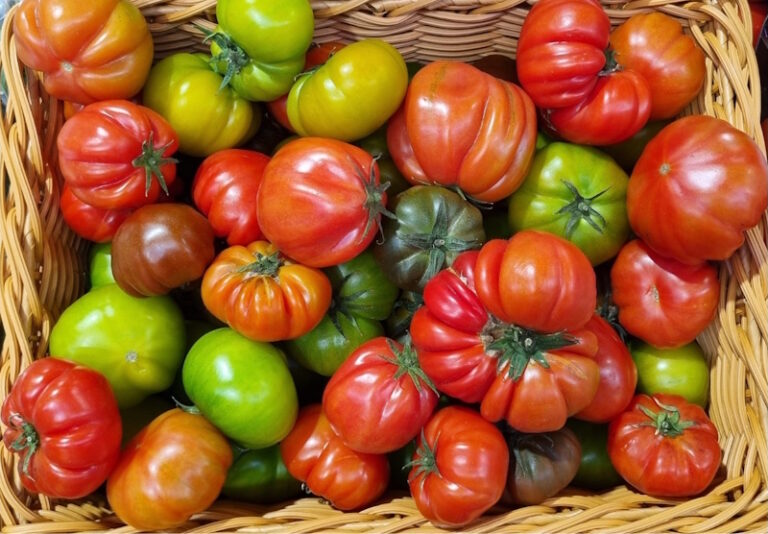
Non-GMO garden tomatoes
If these genetically modified tomatoes gain wide consumer acceptance, will the company withdraw this permission and require us to buy the seeds from them? What would this mean if the genes of this GM tomato enter into plants of other open-pollinated varieties that we’ve grown for generations? Although tomatoes are often self-pollinated by the wind, I have seen bees frequently enjoying the flowers of tomato plants in my garden, thereby sharing pollen across plants. Could I be sued for growing plants that have patented genetic material? With increasing food costs, we are being encouraged to grow some of our own food. What could this mean for food sovereignty? One of the pillars of food sovereignty is “localizing food systems”:
We need to reduce the distance between food providers and consumers, to reject dumping and inappropriate food aid, and resist dependency on remote and unaccountable corporations for food and seed.3
Is our vision for the future compatible with that of the companies that are using GM technology? The introduction of The Purple Tomato™ may be a watershed moment for us and invites us to ask these and other questions that arise. For further details, I urge you to read the article and watch the video from the Canadian Biotechnology Action Network (CBAN) referenced below.
Wendy spent a good part of her adult life moving with her husband, never staying long enough to see an apple tree mature and bear fruit. When they retired, developing a food garden and planting hardy ornamentals became a passion. Weaving her previous studies in nutrition with her current interest in gardening has become a stimulating and life-giving activity.
Thanks Wendy, this was interesting! It looks like a plum to me.
“You’ll own nothing and you’ll be happy.” (◔_◔)
Last edited 5 months ago by Rebecca
Jane Seniw
5 months ago
A very timely article that many of us in the Seed trade world have been alerted to. As someone who founded the local Seedy Saturday in 2005 to advocate for folks to trade seeds amoungst other gardeners, and to encourage the preservation and use of heritage and heirloom seeds, this notice from the GMO people comes as no surprise. I commend Wendy for writing this article and I encourage others to do the same.
Sandra Stewart
5 months ago
Wow, Wendy, this is disturbing, eh? The Purple Tomato looks so appealing, even tempting! And who knows what lays behind the temptation? You have pulled the curtain aside and behind the scenes is disturbing…
Yikes! Than you for making us all aware. It seems everything is about profit and sales these days not to mention two or three giant corporations controlling it all. Something so beautiful and nutritious actually hides an awful truth.
Mary McInerney
5 months ago
Thanks Wendy for your stimulating question…. at first seemingly simple but opening up many questions about the nature of scientific research and the interplay between knowledge, power and control. In my mind tomatoes are characterized as being red but my eyes have appreciated the boxes on the fruit shop shelf of tomatoes of many colours. I have not stopped to think about the possible genetic manipulation, chemical differences or medical benefits. Mary
Kathy Cameron
5 months ago
Great article, Wendy. I am happy growing the heirloom tomatoes that my Grandmother grew. As a surgeon I knew once commented, “Just because we can doesn’t mean we should” and that applies so aptly to the genetic manipulation that is happening with our food. I will be following up the CBAN reference with great interest.



Thanks Wendy, this was interesting! It looks like a plum to me.
“You’ll own nothing and you’ll be happy.” (◔_◔)
A very timely article that many of us in the Seed trade world have been alerted to. As someone who founded the local Seedy Saturday in 2005 to advocate for folks to trade seeds amoungst other gardeners, and to encourage the preservation and use of heritage and heirloom seeds, this notice from the GMO people comes as no surprise. I commend Wendy for writing this article and I encourage others to do the same.
Wow, Wendy, this is disturbing, eh? The Purple Tomato looks so appealing, even tempting! And who knows what lays behind the temptation? You have pulled the curtain aside and behind the scenes is disturbing…
Yikes! Than you for making us all aware. It seems everything is about profit and sales these days not to mention two or three giant corporations controlling it all. Something so beautiful and nutritious actually hides an awful truth.
Thanks Wendy for your stimulating question…. at first seemingly simple but opening up many questions about the nature of scientific research and the interplay between knowledge, power and control. In my mind tomatoes are characterized as being red but my eyes have appreciated the boxes on the fruit shop shelf of tomatoes of many colours. I have not stopped to think about the possible genetic manipulation, chemical differences or medical benefits. Mary
Great article, Wendy. I am happy growing the heirloom tomatoes that my Grandmother grew. As a surgeon I knew once commented, “Just because we can doesn’t mean we should” and that applies so aptly to the genetic manipulation that is happening with our food. I will be following up the CBAN reference with great interest.