
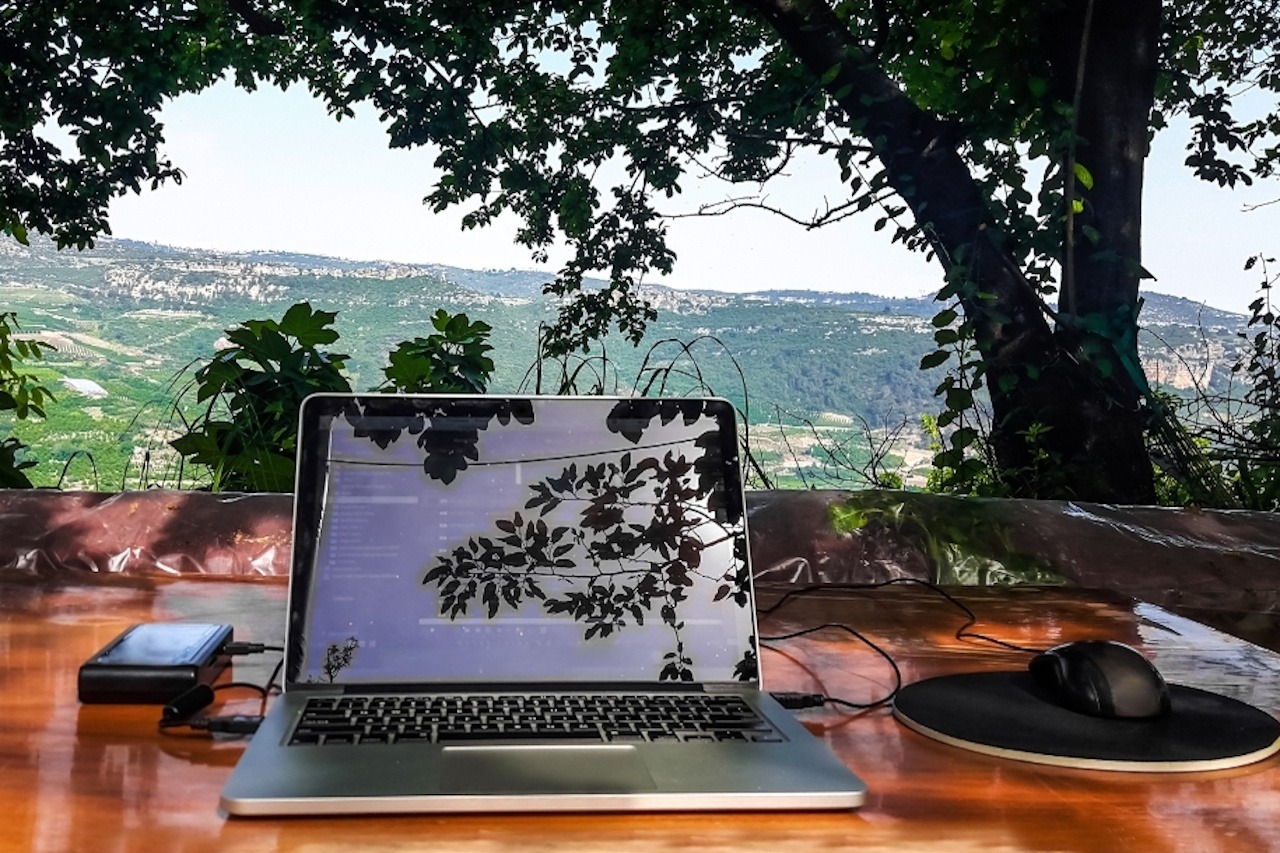
When OpenAI released ChatGPT to the general public in November 2022, I was reluctant to be drawn into the hype. In fact, it was several years before I asked ChatGPT to do anything for me. I remember that moment clearly – a friend asking me, in a pinch, for an interfaith prayer to open a school’s academic year. I didn’t have time or energy to help out, but, before refusing the request, I wondered how ChatGPT would respond – and I was mesmerized! It was exactly what was needed, available in seconds, and better, I believe, than anything either of us could have come up with.
Around the same time, I came across an article published in 2024 at the Yale School of Environment. It came as a shock to me to learn that the widespread use of generative artificial intelligence would result in enormous environmental footprints, with direct responsibility for carbon emissions from non-renewable electricity and for the consumption of millions of litres of fresh, clean water used to cool the delicate electronics.1
I learned, too, that standard cloud data centre facilities are around the size of two football fields, whereas hyperscale facilities for massive cloud and AI computing are 10 times this and more, occupying 1 or even 2 million square feet. While the simple A.I. that autocorrects my text messages will run on a smartphone, the models that write a poem or draft an email – or compose a prayer, for that matter! – are too big for personal devices and depend on specialized GPUs (Graphical Processing Units), typically housed in cloud data centres, for those capabilities.2
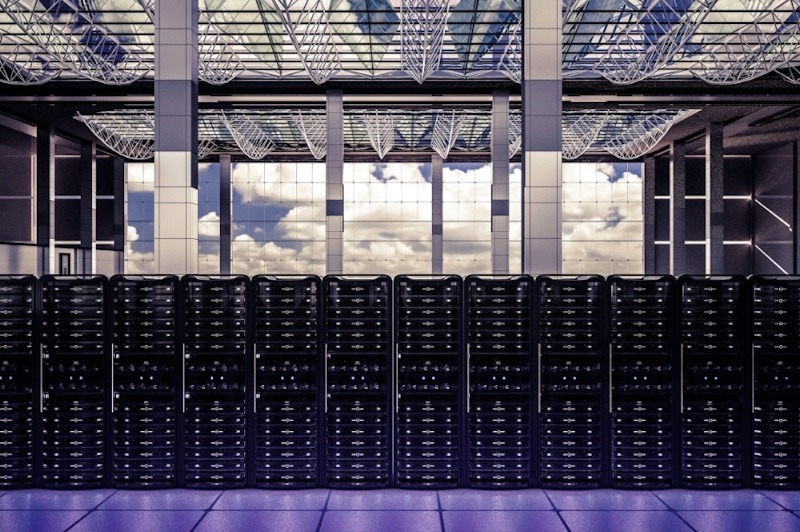
Today, awareness of these impacts has reached the public arena and communities are pushing back. In Canada, major demonstrations are currently challenging the surge from 5 hyperscale facilities to 143 proposed or under-development projects. Besides the strain on electrical grids and water consumption, protestors cite concerns over land use, noise pollution, air degradation and potential water contamination.3
Globally, the movement to halt the proliferation of data centers has been growing for years, and the sharpest conflicts are about water. Tania Rodriguez, founder of the Chilean water rights group Mosacat, told Time magazine in 2024,
“We don’t need more data centers here taking our water so people in the Global North can draw funny pictures on AI.”4
Back in front of my personal device, I find myself in an all-too familiar place – discerning between need and want, reflecting on the impact of my actions on God’s creation and on our world’s most vulnerable:
- When is my AI use really necessary?
- How can I reduce it?
- How am I called to take a stand to ensure this innovation protects the common good?
Pope Leo XIV, in his recent Magnifica Humanitas, articulates the challenge,
“In the era of artificial intelligence, when human dignity is threatened by new forms of dehumanization, ours is the pressing duty to remain profoundly human.”5
1 David Berreby, “As Use of A.I. Soars, So Does the Energy and Water It Requires,” Feb 6, 2024, https://e360.yale.edu/features/artificial-intelligence-climate-energy-emissions.
2 Ibid.
3 The Globe and Mail, “The resistance to AI data centres in Canada,” Jul 20, 2026, https://www.youtube.com/watch?v=fS–dUihAkg&t=7s.
4 Cathy Rogers, Saul Levin, Philip Eubanks, WAGING NONVIOLENCE, “The Fight Against AI Data Centers Is Spreading Globally,” Jul 30, 2026, https://truthout.org/articles/the-fight-against-ai-data-centers-is-spreading-globally/.
5 Leo XIV, Magnifica Humanitas [Encyclical Letter on Safeguarding the Human Person in the Time of Artificial Intelligence] (May 15, 2026), sec. 15, https://www.vatican.va/content/leo-xiv/en/encyclicals/documents/20260515-magnifica-humanitas.html.

Claudia Stecker is a Sister of Our Lady of the Missions (RNDM). She was missioned to the Philippines in 1997 and worked as an educator, first, in Cotabato, at Notre Dame University, and, later, in Manila, at Asian Social Institute. Her subject areas included pastoral sociology, leadership, music and education. Claudia was also employed by Kuya Center for Street Children where she took part in establishing a microfinance initiative among urban poor families. Over the years, Claudia served the congregation, too, in leadership, formation and finance management, returning to Canada in 2021. From 2023, she has been missioned to New York, USA, where she serves as a host community member in a LifeWay Network safehouse for women survivors of human trafficking.


Thanks for this very thought-provoking reflection, Claudia. You have capture the dilemma between the propensity for good and the propensity for harm of this new technology. I want to stay consciousness and make helpful choices; and this is often hard. The environmental cost of AI is extraordinary, isn’t it?!
Thanks for this, Claudia. Our community is feeling the impact directly, as Bell has been approved for and started construction on an AI data centre just outside Regina. The pace at which the project was presented and approved was dizzying, and before the public really had much warning it was a fait acclompi. The water issue is huge for us, as is the potential for increased noise and increased power rates, and raises much uncertainty for the future as we become hotter and drier. And we recently found out that our provincial government in its wisdom deemed an environmental assessment was not required as they seem to trust Bell’s assurances that the project will “meet or exceed” environmental requirements.
And I am reminded by your comment about discerning need and want of an observation many years ago to me by one of our surgeons regarding a medical issue: “just because we can, doesn’t mean we should”.
Oh my, Claudia! Your piece is really having me look at how I use digital space. I have resisted putting my data in “the cloud” and often feel frustrated when my digital photos seem to be placed there automatically, filling up the free space and initiating warnings that my “iCloud Storage is Full” followed by an invitation to pay a monthly fee for more storage. Your writing has helped me to realize that the cost to the environment is significantly more important than this financial cost to me of a monthly fee for extra storage space. And, this is not even considering the environmental impact of all the online searches I do. I’m also aware of the irony that my writing this comment is requiring storage space in some data centre…this is like a confusing maze that will take some intentional efforts to escape. Thank you for writing this reflection.
Thanks so much for this reflection, Claudia! It really got me thinking.
When I was attending university, I worked in a small server room (really a small data centre). I remember how much air conditioning and electricity that one room required. When I think about today’s AI data centres with tens of thousands of servers, the scale is almost unimaginable…
It leaves me wondering about our priorities. If we can provide all the resources needed to keep servers cool and running efficiently, shouldn’t we also be able to ensure that every person has access to clean water, clean air, and relief from extreme heat? At least, I’d like to think that a human being is just as important as a server.