“It’s a trick! A dirty trick!”
Doesn’t that just raise your blood pressure a few points? If it did for Jesus, he didn’t let it show.
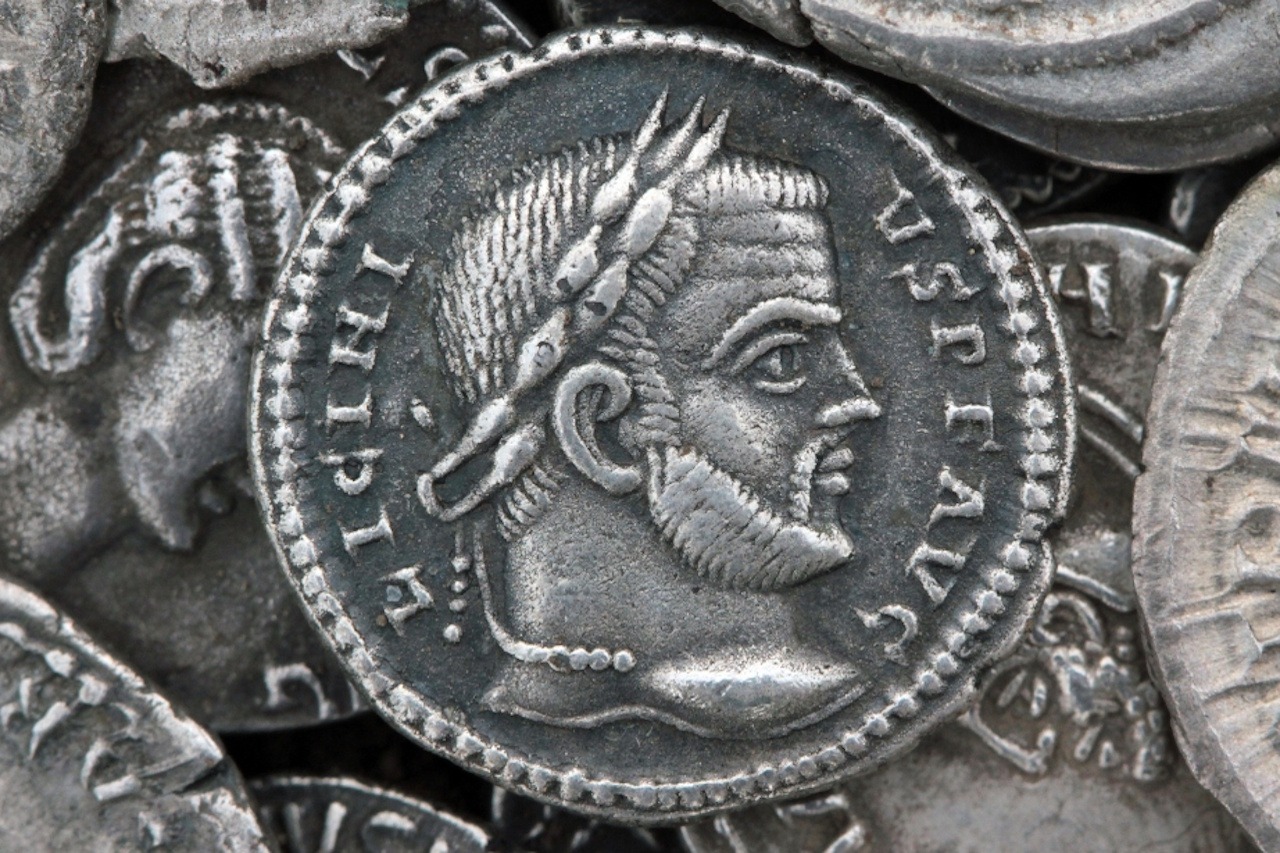
In first-century Palestine, colonized by the powerful and brutal Roman Empire, the inhabitants were required to pay taxes to the Emperor. You needed to secure special Roman currency to do it, not the shekels or talents we hear of when a local transaction is mentioned, but a denarius. A Roman denarius.
This is the coin that Jesus called for when he was accosted by members of local Jewish subgroups that had already taken umbrage at his preaching, his ministry and his popularity. In Matthew’s gospel this story is set in Jerusalem, shortly after Jesus’ entrance in procession on a donkey among a “very large crowd” (Mt 21: 1-11), and his angry overturning of the moneychangers’ tables in the Temple (Mt 21: 12-13.)
The moneychangers made their living by exchanging Roman currency for the Jewish coin needed to pay the Temple tax, since paying with a coin that bore the image of the Emperor would violate the commandment against idols — “graven images.” In any case, Jesus now had enemies, even more enemies than before, and right in the heart of the city of Jerusalem.
In Matthew’s account, the Pharisees, accompanied by a small contingent of Herodians (a group Matthew could afford to alienate since they no longer posed a threat to his late first century church community), thought they could entrap Jesus by posing an either/or question. If Jesus had answered that it was right to pay taxes to the Emperor he would alienate the restive Jewish people chafing under oppressive colonial rule. If he had said it was not right, the brutal might of the occupying government would come down on him and relieve the local Jewish authorities of the distasteful task of prosecuting this dangerous outlaw. Either way it would be a win.
Jesus, of course, cleverly drove it down the middle.
And they backed off. For the moment.
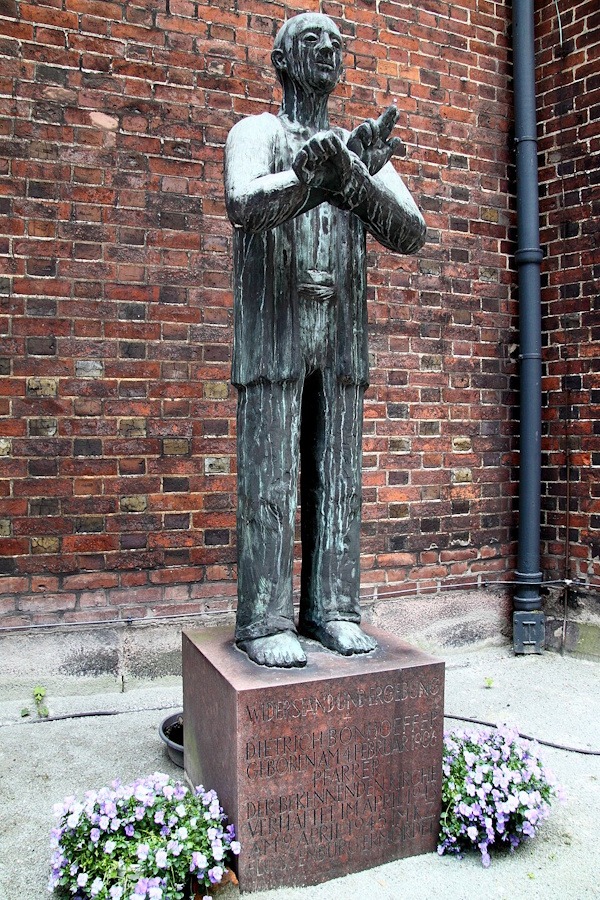
In 1930’s Germany, Christians both Catholic and Protestant faced a similar dilemma that could (and for some, did) cost them their lives: whether the churches should cooperate with Hitler’s Third Reich. The Evangelical Lutheran church split over the question: one contingent called themselves “German Christians” and cooperated with the government’s demands to “aryanize” the church and to submit to Nazi government policies. A dissenting group, the “Confessing Church,” issued the Barmen Declaration in 1934 calling for resistance against Nazi ideological pressure on Christian preaching and the suppression of church organizations, as well as calling for the independence of the church.
In 1937 Pope Pius XI issued a letter, Mit brennender Sorge (“With burning concern”) to be read from the pulpit in Roman Catholic Churches, effectively calling for resistance to the encroachment of Nazi ideology and control. This letter was addressed to the people, not to church authorities (the Vatican had signed a concordat with Germany early in Hitler’s regime), and without naming Hitler, called the people to refuse cooperation with Nazi racial theories and neo-pagan ideology that subordinated the churches to the State. Catholics were urged to follow their conscience.
Many clergy and faithful paid with their lives. Very early on, an entire barracks at Dachau concentration camp was reserved for politically dissenting clergy. A number of those who were involved with the resistance, like Lutheran theologian Dietrich Bonhoeffer, were executed. A very few, like Archbishop Clemens August von Galen of Münster, squeaked through untouched, to the end of the war. Bonhoeffer coined a poignant and relevant expression: “the cost of discipleship.”
And here we are in October 2026. Far-right wing movements are on the rise around the world, and authoritarian quasi-dictators preen and shout from balconies, channeling rage and fear among their constituents into turbulent social unrest.
When Jesus said “Give to Caesar…” the Greek word apodote means to “give back, return.” The image on the Roman coin is that of Caesar, but the image of God – the imago Dei – is imprinted on every human being. What, and how much, are we called to give back? And what are we called to give forward, in order to incarnate the image of God within this too-often damaged world?
© Susan K. Roll
*Lightly revised from the Reflection of October 11, 2020.
Photo Credit: “Sculpture of Dietrich Bonhoeffer by Fritz Fleer in front of St. Peter’s Church, Hamburg” by David Meisel, Wikipedia.
License: https://creativecommons.org/licenses/by-sa/4.0/

Susan Roll retired from the Faculty of Theology at Saint Paul University, Ottawa, in 2018, where she served as Director of the Sophia Research Centre. Her research and publications are centred in the fields of liturgy, sacraments, and feminist theology. She holds a Ph.D. from the Catholic University of Leuven (Louvain), Belgium, and has been involved with international academic societies in liturgy and theology, as well as university chaplaincy, Indigenous ministry and church reform projects.