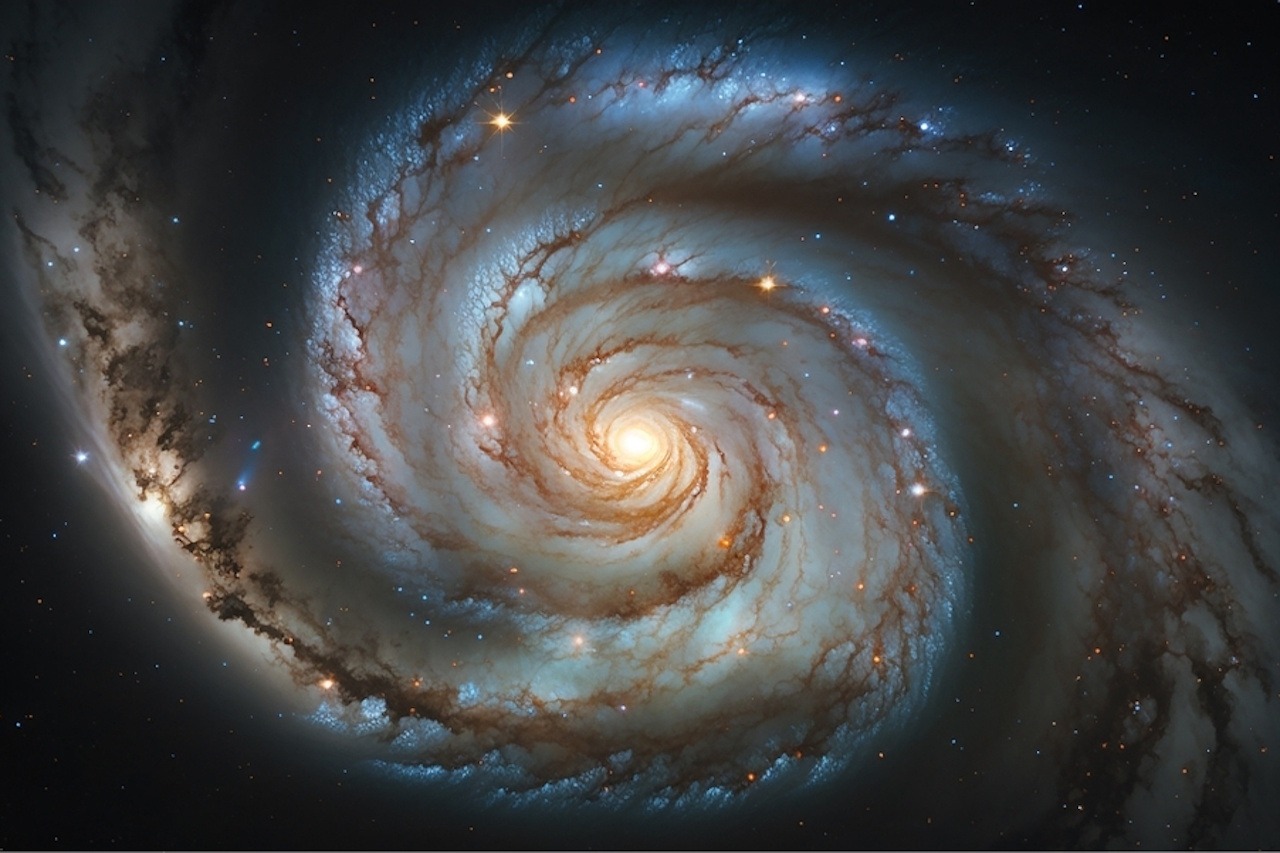
We don’t know how it all started. We do know there are at least two trillion galaxies out there. Undoubtedly more. Human imagination filled in the rest. And so we have inherited ancient stories of the origins of the cosmos, or at least of this particular planet — stories of “how it all began.”
This doesn’t answer why the eminent scholars we’ve called elsewhere the Lectionary Gnomes made these particular selections for Trinity Sunday in Year A. The obvious choice might have been the very end of Matthew, with its reference to baptizing
“in the name of the Father, and the Son, and the Holy Spirit,”
a formulation from the late first century.
It’s possible that the Revised Common Lectionary uses the first, or Priestly, account of creation from Genesis 1-2 for Trinity Sunday because of its use of the first person plural pronoun for God.
“Let us make them in our own image…”
Both early church and 20th century theologians interpret this as a trinitarian God.
Let’s take the bait, and go further into the underlying building blocks of this Creation account. The story is not historical but mythological,
“a primeval event and not the beginning of history,”
writes Scripture scholar Werner Weinreich. It’s called “priestly” partly because of its responsorial, strophic liturgical structure.
Many of the accounts in ancient Near East cultures involve darkness and overpowering water. There’s a strong parallel, for example, in the Babylonian creation myth, the Enuma elish. In this story the young god-hero Marduk attacks the mother goddess Tiamat, kills her, dismembers her and uses the parts of her body to create the earth – well, that’s the version I learned in an undergraduate religious studies course. Tiamat was the goddess of the deep, dangerous, chaotic salt waters. The corresponding word used in Genesis was tehom, the deep waters.

So the male god destroys the female goddess, mother of the Abyss, the Great Big Sea, the source of primeval chaos, and by shattering her body he creates order. In the Genesis account, God is a transcendent creator-patriarch, and the chaos is undifferentiated, not personified, and not exactly dismembered. At least Judeo-Christian belief was spared a matricide. Is there something else going on?
Notice the motif of domination in each story – the triumph of the young hero in the Enuma elish, and in Genesis the singular power of the transcendent God who commands order and structure into being, then delegates dominating power to the two human beings over other living creatures and the earth as such. The “chaos,” sometimes configured as the female principle, is forever defeated. How might that play out in the moral(s) drawn from the stories? What human ideology would thus be provided with an eternal, primeval, divine warrant?
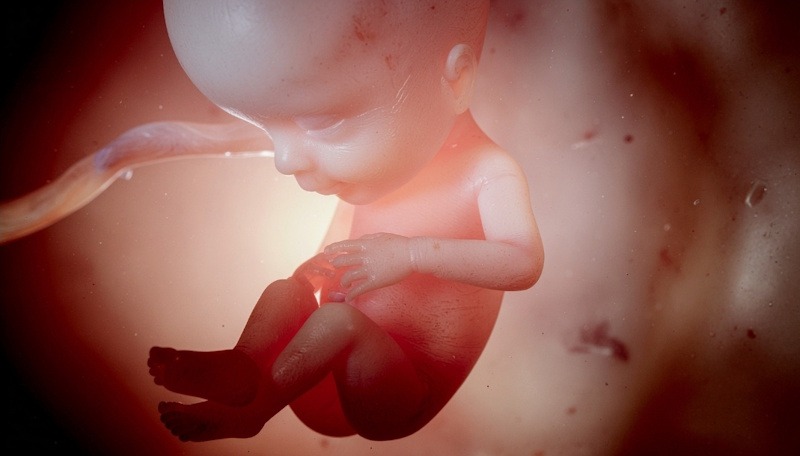
Think about this: how did each of us humans come into being? Nine months, in the female body, in the dark, nourished, cushioned by her flesh, suspended in – water. When the waters broke, we were born. There was no going back.
The story of the creation of the cosmos, spun out in the imagination of ancient peoples, is actually the story of every single individual who ever lived on the earth.
Darkness and water provide the stuff of nourishment, growth, and protection.
The goodness of creation has been seriously underrated.

Susan Roll retired from the Faculty of Theology at Saint Paul University, Ottawa, in 2018, where she served as Director of the Sophia Research Centre. Her research and publications are centred in the fields of liturgy, sacraments, and feminist theology. She holds a Ph.D. from the Catholic University of Leuven (Louvain), Belgium, and has been involved with international academic societies in liturgy and theology, as well as university chaplaincy, Indigenous ministry and church reform projects.