
The tiny packets of seed sat on my kitchen cupboard for a week or two. The daughter of a neighbour lady who had recently died had passed them out saying,
“Please plant these forget-me-nots in memory of my mother.”
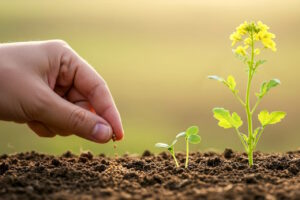
Soon I remembered that, years ago, forget-me-nots had grown wild on the cool floor of the woods behind my house, down by the creek. So I planted the seeds on the north side of the house, where they would have shade and enough run-off water.
And nothing happened. Zero. Rien. Nichts. Nothing grew.
So the intended symbol wasn’t there, but the memories were. Her mother was a very, let’s say, memorable character, with or without the forget-me-nots. I’m smiling right now thinking of her.
Our Gospel parable this week uses symbolic imagery from nature that would have spoken directly to hearers in an agricultural community. Jesus used an image that needed little or no explanation. In fact, the original parable story with a single simple point is probably authentic, from the source material Matthew used. The part-by-part explanation was added only later, perhaps by Matthew himself, to apply the story to the situation of early Christians who found themselves in more complex and threatening circumstances. The apocryphal Gospel of Thomas has only the original parable. So we have two separable pieces here.
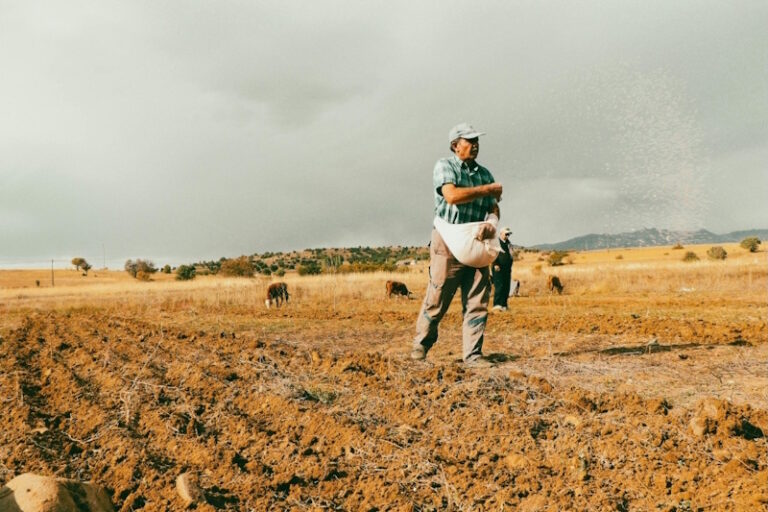
Another aspect of the story that may not be evident at a surface reading is how the seed was sown. You might remember the old hymn,
“We plough the fields and scatter
the good seed on the land,
But it is fed and watered by God’s almighty hand.”
Certainly if your garden has the kind of clumpy soil that mine does, that’s how you do it. You get the tiller out first and break up the clods.
But that’s the opposite of how cultivation was done in ancient Palestine. The sower simply walked over the ground and broadcast the seed. Think about it. The soil that had been pounded down along the road couldn’t be ploughed anyway. Thorny soil would have resisted the plough. As for rocky soil with only a thin layer of topsoil at best, some crops might grow but many won’t in any case. (My paternal grandparents owned a farm that could be described back then as a “dirt farm,” because the crop that grew best on such a farm was, well, dirt.)
I’m bringing in these points because there’s a long preaching history of using this reading in effect, to guilt the hearers. This is especially true when the story is coupled with the later allegorical explanation –
“Ooh, am I guilty of not listening to the word of God, or not acting on what I’ve heard?”
And that’s not to disparage the value in asking ourselves,
“Just how open am I to hearing a sometimes thorny message in a spiritual source? Why am I resisting? Is there something I need to face? Something I need to work on?”
But don’t miss the wonderful cosmic reverberations in this agrarian story. All the elements of new life and persistence in the face of discouragement are right here in life-giving metaphors. Seeds that contain the germ of new life. Rich soil, needed to promote nourishment and flourishing of the new life. The role of the sower – someone who started the process in motion with an end in sight. It wasn’t just a haphazard natural occurrence. And look at the wide range of success that was possible. Anglican commentator Reginald H. Fuller points out that the usual yield would have been about seven-and-a-half percent. He writes,
“What we see is a tremendous harvest despite the loss of some of the seed. The climax comes at the end, and as so often in Jesus’ parables contains an element of deliberate absurdity: a hundredfold yield is fantastic… There was much frustration in Jesus’ ministry. Few followed him. He encountered much hostility from the authorities of his day.”
And often, so do we. We struggle to persist despite repeated setbacks. We may face opposition. It may seem that nothing’s going to grow.
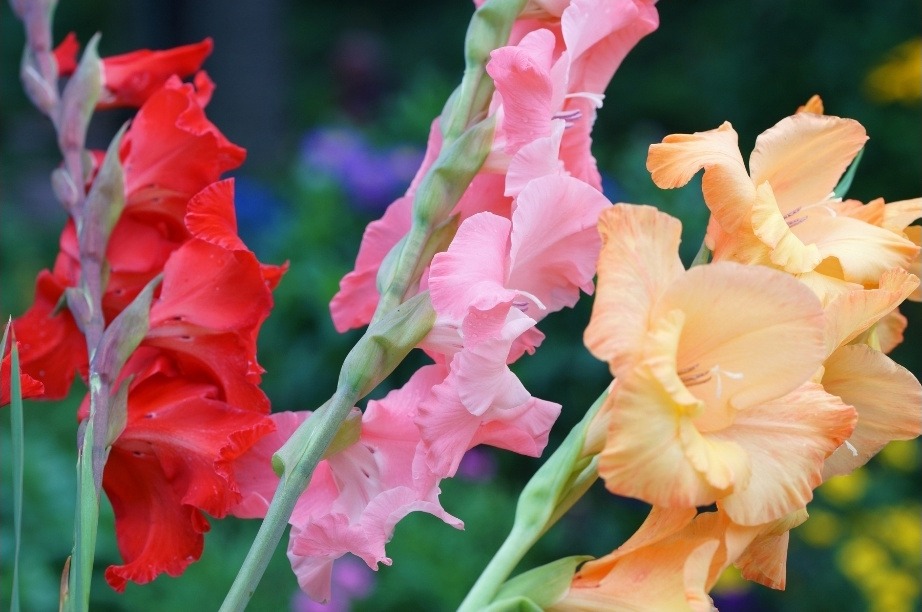
My grandparents on the dirt farm grew gladiolas to sell at the market in the autumn. Some beautiful flowers just seem to love bad growing conditions.
© Susan K. Roll
*Lightly revised from the Reflection of July 16, 2023.

Susan Roll retired from the Faculty of Theology at Saint Paul University, Ottawa, in 2018, where she served as Director of the Sophia Research Centre. Her research and publications are centred in the fields of liturgy, sacraments, and feminist theology. She holds a Ph.D. from the Catholic University of Leuven (Louvain), Belgium, and has been involved with international academic societies in liturgy and theology, as well as university chaplaincy, Indigenous ministry and church reform projects.