
There’s Pentecost and then there’s, well, Pentecost.
Luke and John tell very different stories of Pentecost, and we get to hear them stacked up against each other this week. It’s another helpful reminder not to absolutize the literal surface reading of a text, particularly a story. We need to dig deeper and stay alert to the use of symbolic expression.
To start with, for the Johannine community the Holy Spirit comes upon the gathered disciples with the gentle subtlety of a breath, right away on the day of Easter. But the gift of the Spirit is coupled with what sounds like a formal commission to control the forgiveness of sins. Huh?
The reference here is not to confession, penance and absolution, nor to guilt. In the words of commentator Matt Skinner,
“Jesus is not appointing the church as his moral watchdog” (…good to know…), “nor does he commission it to arbitrate people’s assets and liabilities on a heavenly balance sheet.”
It’s not about what people have done or haven’t done, it’s more about what they haven’t seen, or recognized, or accepted. This comes after what they had just seen, in the form of Christ resurrected and moving among them, beggared belief.
Yet precisely in that daring belief, so daring that the one who hadn’t been present refused to believe it until he could physically touch the evidence for himself — in that belief lay the potential for freedom. “Set free” or “release” would have been a more accurate translation of “forgive,” at least because of the overtones of sin and sinfulness we associate with “forgive.” Those who had known Jesus were commissioned to spread genuine freedom, a freedom from fear. “Creator sets free” is the name for Jesus in the First Nations translation of the Bible.
Luke, when he tells the story in Acts, basically picks up the occasion of the next major event on the Jewish festal calendar at that time. Luke was written a generation earlier than John; even earlier than that, the first account of the events after Easter in 1 Corinthians 15 doesn’t mention the giving of the Spirit at all. Acts doesn’t tell us how many were in the room when the Spirit blew through, but interestingly, the Greek uses non-gender specific language. These early Christians, women and men, spoke in languages familiar to the diverse audience that was gathered, and caused absolute amazement, a reversal of the Hebrew Bible story of the Tower of Babel. The driving motive here is to depict the universality of the Spirit-filled community of Christians. Those who were separated by geographic origin, culture and language, and unable to communicate with each other otherwise, now find their human divisions transcended by a means they could not possibly have forged themselves. The effect of the Spirit was nothing less than cosmic, transcending human ambitions and human limitations.

“Freedom” is a word used too often in contemporary political discourse, not to free all persons from injustice, but to suggest that the freedom of some persons in privileged positions can be secured by stripping others of the freedom inherent in their human dignity. Even scarier – by persons in influential positions who claim to be following Christ.
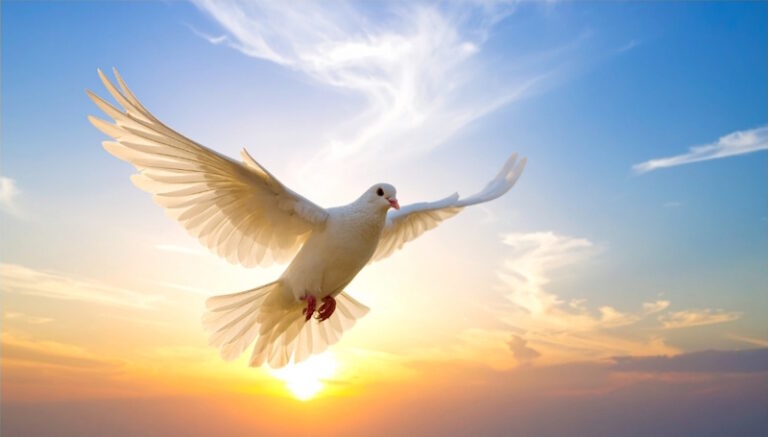
When the high winds of the Holy Spirit blew through a closed room at Pentecost, and propelled the earliest Christians to spread the good news, no one was excluded. What has been called the “democracy of the Spirit” gives a voice – and an understandable one at that – to all.
© Susan K. Roll
*Edited from the Reflection of May 28, 2023

Susan Roll retired from the Faculty of Theology at Saint Paul University, Ottawa, in 2018, where she served as Director of the Sophia Research Centre. Her research and publications are centred in the fields of liturgy, sacraments, and feminist theology. She holds a Ph.D. from the Catholic University of Leuven (Louvain), Belgium, and has been involved with international academic societies in liturgy and theology, as well as university chaplaincy, Indigenous ministry and church reform projects.