
Reflection for the Feast of the Ascension / Seventh Sunday of Easter A
Ascension Sunday: Acts 1: 1-11; Psalm 47; Ephesians 1:17-23; Matthew 28:16-20
Seventh Sunday of Easter: Acts 1:6-14 (RCL and RM Canada), 12-14 (RM US); Psalm 68 (27 in RM US); 1 Peter 4: 12-14, 5:6-11 (RCL and RM Canada) 13-16 (RM US); John 17: 1-11.
As we’ve said before (in these or similar words), Luke was nothing if not a master storyteller.
So what do we make of the story in Acts (and Luke) that Jesus rose upward from the earth’s surface and disappeared behind a cloud, never to visibly return?
In the Hebrew scriptures, the prophet Elijah was believed to have ascended to the heavens in a chariot, and as a result, would someday return again. Before too long, Christians came to believe that Christ, like Elijah, had ascended in the direction of the East, and would return again from the East. A pattern of ascension above the clouds combined with an anticipated return of the prophet in an undefined future was already familiar to the Hebrew people when Luke was writing.
What sense can we make of the Ascension account today? Especially since we can be quite sure the earth is not flat, and that the sky above its surface contains over two trillion galaxies.
Actually quite a lot, but we have to read under the surface. And some highly respected Scripture scholars and theologians can help with that.
Raymond E. Brown in A Risen Christ in Eastertime writes,
“Many commentators think it unusual that Luke includes an ascension scene in his resurrection account … Yet an element in this ascension is the termination of Jesus’ earthly appearances… Luke is giving Old Testament coloring to the idea of a final appearance that existed before the Gospels were written.”
He tells the story again at the start of Acts, but this time the context is more explicit: Jesus had appeared numerous times over a forty-day period, even at meals. “Forty days” was a conventional expression meaning, “quite a lot of time,” recalling the forty years in the desert. Both represent a prolonged time of preparation for the challenge to come. His friends were to remain in Jerusalem, awaiting a baptism with the Spirit, to strengthen them to undertake the mission he was entrusting to them. They saw him depart, followed (in Acts) by a renewed promise that he would return.
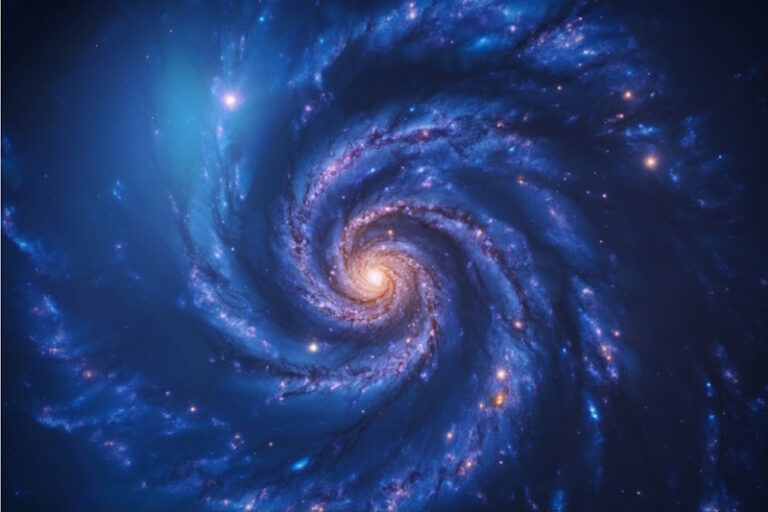
It would not be too much to say that the symbolic import of the story of the Ascension is to broaden out, infinitely, the living, loving, grace-filled, dynamic presence of Christ not only in space but in time. The Cosmic Christ, we might say today. We speak of “the living presence of Christ,” of seeing the face of Christ in the faces of other Christians who have died and risen with Christ in baptism, and that the sacraments are acts of Christ himself among his people. The story of the Ascension acts as a capstone to the incarnation, death and resurrection of Christ, not to close off the narrative, but to propel it widely and wildly into the future and across the universe, known and unknown.
Two significant theologians of the 20th century saw this clearly. Yves Congar saw that, in the Ascension, the Holy Spirit makes Christ’s work unceasingly real in the present, not just in the past — an ongoing extension in time, not a disappearance into space. The task of Christians as a result is to carry forth the action of the Spirit to transform the world.
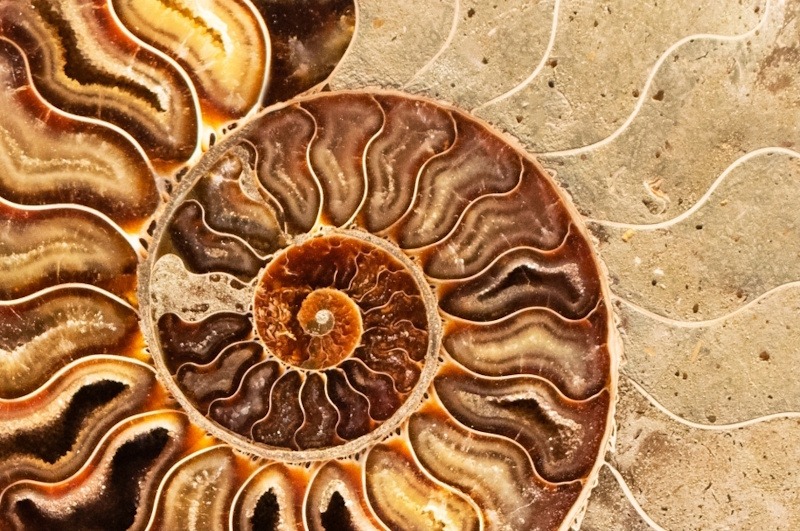
For Pierre Teilhard de Chardin the Incarnation of Christ is fulfilled in this Ascension, an evolutionary, cosmic event by which Christ fills the entire universe, transforming the material nature of the universe into Spirit, thus overcoming matter and death. Christ transcends space and time, and, in his cosmic nature, enables Christians to see his presence and work everywhere and always, even when most hidden, and to evolve toward full unity, the “Omega Point.”
The Ascension account made possible, not just cosmic energy, but our own energy.
In the words of commentator Jin Young Choi, it
“generates a movement that is not centripetal but centrifugal.”
And it’s only the beginning.
© Susan K. Roll
*With a few bits from the Reflection of May 16, 2021.
Susan Roll retired from the Faculty of Theology at Saint Paul University, Ottawa, in 2018, where she served as Director of the Sophia Research Centre. Her research and publications are centred in the fields of liturgy, sacraments, and feminist theology. She holds a Ph.D. from the Catholic University of Leuven (Louvain), Belgium, and has been involved with international academic societies in liturgy and theology, as well as university chaplaincy, Indigenous ministry and church reform projects.