“Have you ever stood in a forest and felt that you weren’t simply looking at nature—you were somehow with the forest?”
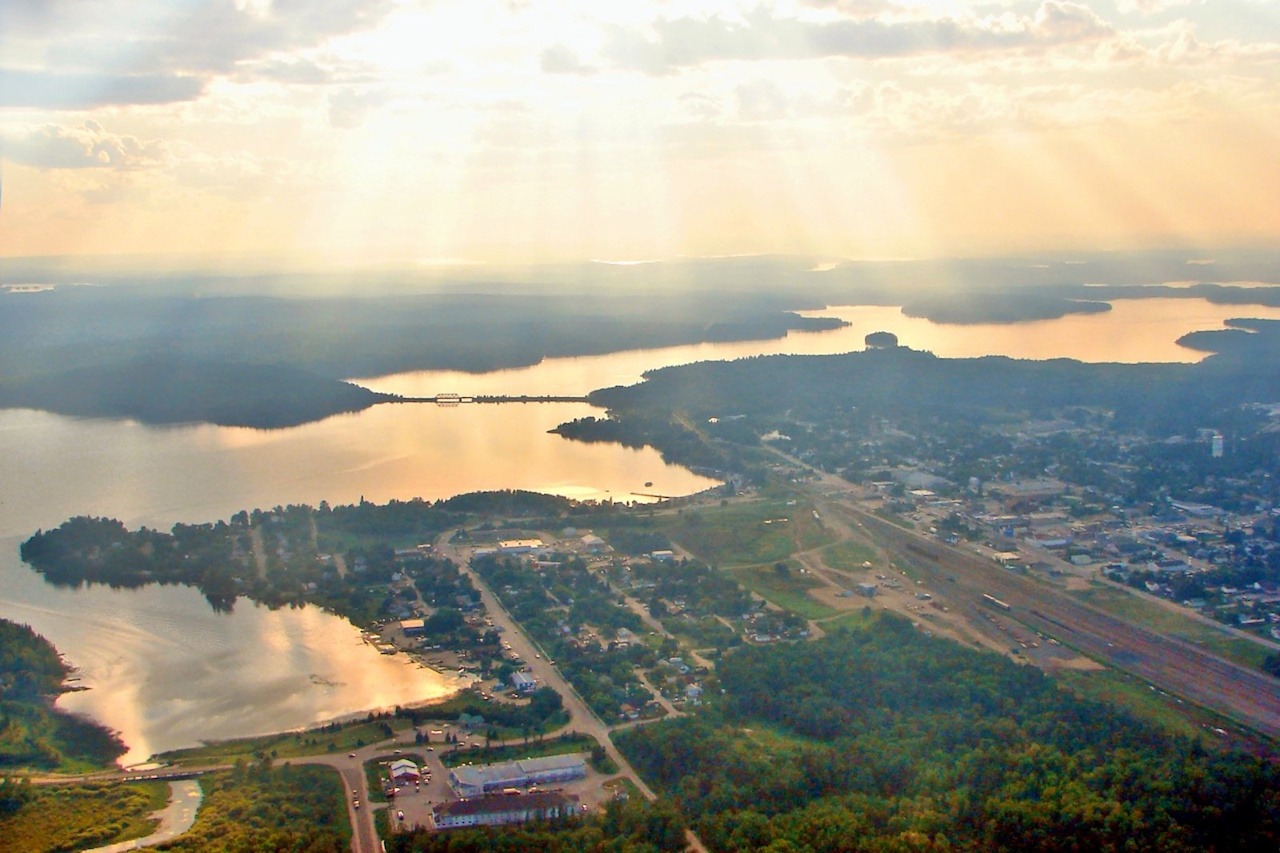
This question was put to me recently, and my response took me back to around 1970 when I visited our Sisters then living in Sioux Lookout, ON. As a young woman from the prairies, I stepped into the expansive boreal forest of the Canadian Shield, and for the first time in my life, I “heard the silence” of the forest. A hush came over me. I was transfixed. Returning to that experience in memory, I still feel that original spaciousness and awe.
Many years later, I became familiar with Thomas Berry’s statement that
“The universe is a communion of subjects, not a collection of objects.”1
I have repeated that line like a mantra, for many years, and it has become a framework for understanding that feeling I had in Sioux Lookout.
At the heart of Berry’s insight is a profound shift in understanding reality and our place as humans within it. He challenges all of us to see the world as more than a set of things/objects to be measured, analyzed, owned, managed, or exploited. Instead, Berry invites us to recognize that every part of creation exists as a subject in relationship to every other subject. As I become increasingly grounded in this very large truth, I feel like I am entering the Sioux Lookout forest ever more deeply
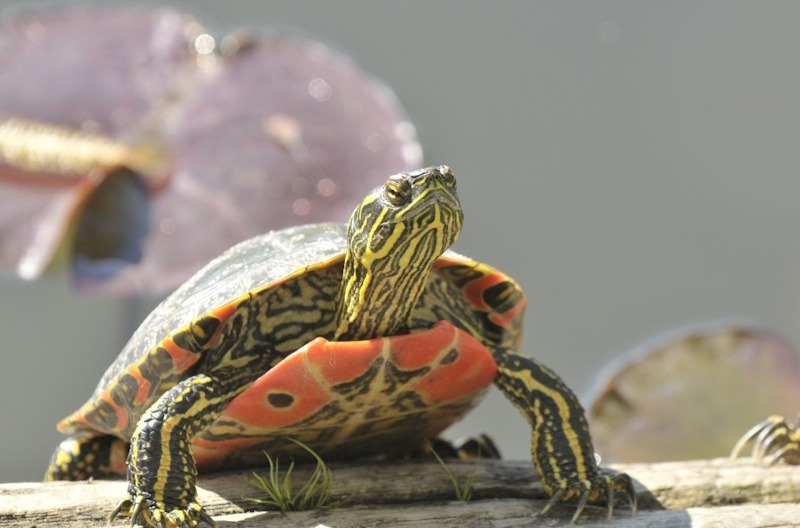
Sallie McFague tells a story from her youth that further illuminates this relational process. Her family owned a small cabin on a Cape Cod lake and from the time she was about nine years old she was allowed to go alone in a rowboat, to hunt for painted turtles. She often went early in the morning,
“which increased my enormous sense of adventure: to go alone to this … remote area to hunt, indeed, stalk turtles was a privilege around which I could scarcely contain my excitement. I spent hours hunkered down in the boat, creeping up, with the help of a canoe paddle, to the sleeping turtles sunning themselves on lily pads.”2
However, McFague says, the real significance of this “close encounter with a mysterious and fascinating other species … with their ancient lineage … and immense difference” was that turtles became her link to nature.
“It is as if turtles opened up a pathway for me into the natural world, giving me a bridge to pass over into that other world.”3
The realities of climate change are becoming increasingly severe, and simultaneously are increasingly being denied in the national conversation. We need this deepening sense of relationship, deepening love for creation, and experiencing ourselves as a communion of subjects, to overcome our lethargy, willful blindness and denial about climate change.
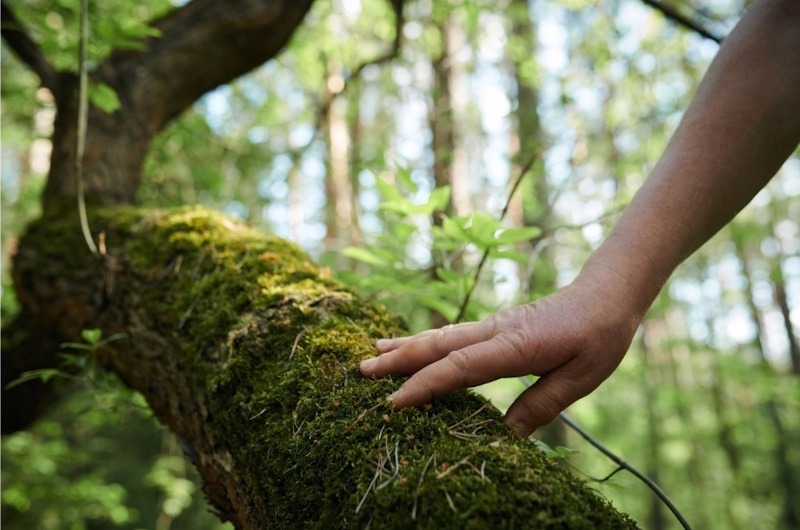
The forest of Sioux Lookout and a lake in Cape Cod tell two stories of being grasped by creation, in such a way that perceptions change and we change. We experience being part of a communion of subjects. There are billions of such stories in our world. We need to tell and hear them all, that we might find the consistent resolve to love this planet with fierce tenderness, and act courageously on her behalf.
1 Berry, Thomas. Evening Thoughts: Reflecting on Earth as Sacred Community. Berkeley, CA: Counterpoint, 2006, 17.
2 McFague, Sallie (1998) “The Loving Eye vs. the Arrogant Eye: A Christian Critique of the Western Gaze on Nature and the Third World,” Macalester International: Vol. 6, Article 12. Available at: http://digitalcommons.macalester.edu/macintl/vol6/iss1/12
3 Ibid.
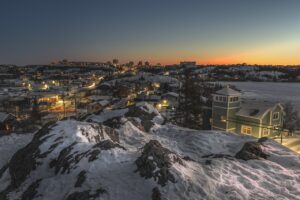
Photo credit: Aerial view of Sioux Lookout, Ontario, Canada By P199 – Own work.
License: CC BY-SA 3.0, https://commons.wikimedia.org/w/index.php?curid=21471358
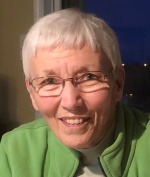
Veronica Dunne is a Sister of our Lady of the Missions (RNDM), who has primarily worked as an educator and counsellor in institutional and community based settings in Canada. She has also served with the RNDMs outside of Canada in Senegal, Peru, and Aotearoa New Zealand.
A 2002 Doctor of Ministry graduate from the University of St. Michael’s College, Toronto School of Theology at the University of Toronto, she subsequently served as director of the Doctor of Ministry program at St. Stephen’s College at the University of Alberta in Edmonton. Her current research interests are in eco-theology and cosmology, and their intersections with indigenous cosmologies and spiritualties.
She presently serves on the RNDM leadership team in Canada.
I, too, have shared your experience with forest, Veronica. First, in the giant redwood forest of the west coast of California, then in the temperate rain forest of the west coast of Vancouver Island. I felt immersed in mystery and life and it almost brought me to my knees in awe. I felt blessed by the presence of these majestic trees, some centuries old. These were transformative moments for me. Now, I go out into our yard, surrounded by trees both ours and neighbours, and it too is sanctuary for me. And I know in my heart that the natural world will be here long after we are gone, and that gives me both hope and peace. Thank you for this, and for the Thomas Berry quote which, I think, might be the subject of my next crosshatch project!!